
In February 2026, U.S. Secretary of Defense Pete Hegseth extended an invitation to Moscow, Idaho pastor Doug Wilson to lead a Christian prayer service at the Pentagon. The invitation generated immediate and considerable national attention: not least because Wilson has, over the . . . Continue reading →
Young Restless and Reformed
Why Caution About Jonathan Edwards Is In Order
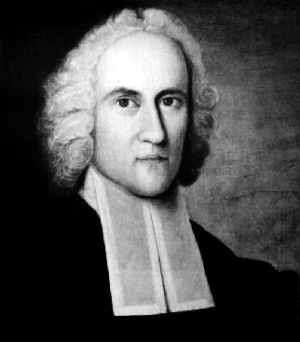
Jonathan Edwards (1703–58) is America’s most famous theologian and perhaps its most famous philosopher too. He is an important and influential figure and is worth seeking to understand for these reasons alone. We should think about Edwards for other reasons, however. He . . . Continue reading →
Book Review: Young, Restless, And No Longer Reformed By Austin Fischer
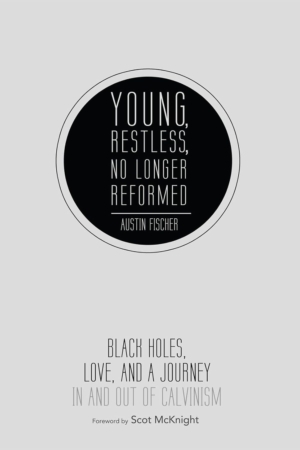
Young, Restless, and No Longer Reformed is about Austin Fischer. No matter what the author’s intent was, it is hardly a book about theology and is very much a work arising from Fischer’s feeling that he has far more to say and . . . Continue reading →
Do Reformed Christians Confess The Sabbath?

Justin Taylor has posted material from Tom Schreiner’s 40 Questions About Christians and Biblical Law, which argues, “I do not believe the Sabbath is required for believers now that the new covenant has arrived in the person of Jesus Christ.”1 Schreiner considers the . . . Continue reading →
The “New Christian Right” Mirrors YRR?
We are now1 supposed to call the Online, Sometimes-Somewhat-Reformed Christian Nationalists and their assorted adjacencies the “New Christian Right” rather than the opprobrious but apt denominator “Woke Right.” Well, that’s fine—movements have the risky right to attempt rebranding. Remember “New Coke”? Nomenclature aside, we’ve noticed . . . Continue reading →
Of Militants And Moderates

Darryl Hart (as always) has a provocative (in the best sense) article at Old Life.1 His use of the categories “militants” and “moderates” is very useful and helpful. To anticipate a criticism: yes, Reformed people can sometimes be jerks.2 Neither Darryl nor . . . Continue reading →
The Fork In The Road For The “New Calvinists”

Thanks to Darryl Hart for pointing us to this challenging essay by Dale Coulter, who self identifies as a “Classical Pentecostal” in the holiness tradition.1 He writes on the official blog of the Regent University School of Divinity. He favors the Edwardsean . . . Continue reading →
The Problem of the Minimalist Definition of “Reformed”

An essay on being Reformed was brought to my attention (the essay is no longer published on the original source) many years ago now. It is an interesting piece because it represents a widely held position among Evangelicals and the broader Reformed . . . Continue reading →
Polity Matters: How Reformed Churches Might Have Handled The Chandler Situation

Matt Chandler is the lead pastor of The Village Church, a megachurch of about 14,000 members in Flower Mound, TX, which is a northern suburb in the Dallas-Ft Worth metroplex (it is the top of the triangle of the three). After the . . . Continue reading →
Richard Muller—Jonathan Edwards And The Absence Of Free Choice: A Parting Of Ways In The Reformed Tradition
Lost Audio Recovered

Richard Muller’s lost lecture on Jonathan Edwards’ doctrine of free choice. Continue reading →
Charles Stover Discovers The Reformed Confession

It was my first staff meeting serving as a youth intern in my hometown church. My pastor, who had graciously allowed me to test my gifts in the pulpit before I went off to Bible college, wanted to know where I stood . . . Continue reading →
An Overlooked Aspect Of The Story: PCA Influence On Acts 29 And Mars Hill

Regular readers of the Heidelblog and listeners of the Heidelcast will know that considerable time has been spent here analyzing and interacting with the podcast series produced by Christianity Today and hosted by Mike Cosper (see the resources below).
Was The Rise And Fall Of Mars Hill Podcast Series A Mistake?
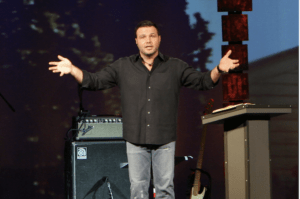
This is the argument of Jason Estopinal. He appeals to Proverbs 10:19, 1 Thessalonians 4:11; Philippians 4:8, Proverbs 3:30, and Matthew 18 and concludes that Christians should not be fascinated by what one critic has called the “failure porn” of the Christianity Today podcast . . . Continue reading →
Reformation Day, The Trinity, And The Culture War

Some objected to the critics of the Federal Vision that the social crisis is too great that to be arguing about the Federal Vision. That objection has resurface in recent days in the wake of a social media post in which a prominent member of the Young, Restless, and Reformed Movement and a Baptist theologian has argued, “The Father is the Father because he sends the Son. The Son is the Son because he submits to the Father’s will. The Spirit is the Spirit because the Father and the Son send Him. There is no Trinity without the order of authority and submission” (emphasis original). As one might imagine, this line of reasoning has prompted a considerable response. In response to the critics, some have re-stated the same argument made by the Federal Visionists and their enablers in 2008: “Are we really going to start arguing about ESS again? With all the other stuff going on in the world, this is the battle some of you want to fight? Again? I seriously do not understand some of you. Like, at all.” Continue reading →
You Are Not A Canonical Actor Or How To Avoid Nightmare Alley

Episode 8 of the Christianity Today podcast, “The Rise and Fall of Mars Hill,” illustrates the degree to which the restless, feather-swallowing (according to Luther) anti-canonical spirit has influenced modern evangelical theology, piety, and practice. The Reformation principle (if not always its practice) . . . Continue reading →
Mark Driscoll And The Danger Of “God Told Me”
I am catching up Christianity Today’s podcast series, “The Rise and Fall of Mars Hill. The August 30, 2021 episode, “Questioning the Origin Myth: A Rise and Fall Short Story,” centered around what, in Reformed theology, piety, and practice, we call the internal call to ministry. In our understanding of Scripture and its outworking in the life of the church there are two aspects to the call to ministry, the internal and the external. Continue reading →
John Piper, Future Grace: The Purifying Power of the Promises of God, rev. ed. (New York: Multnomah, 2012)—A Thorough Review

Pastor John Piper is well-known for his role in sparking the “young, restless, and Reformed” movement, mainly through his emphases on God’s sovereignty and serious expository preaching. There are no doubt numerous present members of Reformed churches who ended up there because of initial investigations of Reformed theology that began with hearing or reading John Piper. Personally, Piper was my first exposure to a thorough and biblical explanation of predestination in some of the appendices of the 2003 edition of Desiring God, which I was told to read shortly after becoming serious about my faith. Continue reading →
Evangelicalism’s Backstreet Boy Is Now Ex-Evangelicalism’s Backstreet Boy
Joshua Harris is back in the limelight. He made his name as the young author of I Kissed Dating Goodbye, and was thereby a key inspiration for the purity movement in American evangelicalism. Then, after a stint as pastor of an evangelical . . . Continue reading →
The Unexamined Premise Behind Mars Hill: Transformationalism
One of the unexamined themes Of the podcast series, The Rise and Fall of Mars Hill, is the stated purpose of the Mars Hill congregation and movement: to transform the Seattle metro. Continue reading
Yes, He Really Does Teach Final Salvation Through Works
John Piper has been teaching “final salvation through works” (his language) at least since the publication of Future Grace (1995). Continue reading