

Can you hear me now? Continue reading →

Can you hear me now? Continue reading →

It is a great temptation to think that the same God who created and sustains us, who so loved us that he gave his only begotten Son for us (John 3:16), who granted to us new life and true faith, who has . . . Continue reading →

The superscription of this psalm says that it is “A Psalm of David.” There is nothing in the psalm to make us think otherwise, and the circumstances from David’s life described here are familiar to us. Out of jealousy and unbelief, Saul . . . Continue reading →
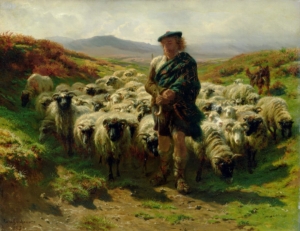
The faithful service of the ruling elder is most valuable. Paul says, “Let the elders who rule well be considered worthy of double honor, especially those who labor in preaching and teaching” (1 Tim 5:17). One of the most important things Paul . . . Continue reading →

Before the Apostles’ Creed was fully formed, the ancient postapostolic church confessed the “rule of faith” (regula fidei). One of the first places we see the rule is in Irenaeus’s Against Heresies, which dates to about AD 180. Book 1 included this . . . Continue reading →
Matt Tuininga, amigo y antiguo alumno, escribió una interesante entrada en Christian in America en la que relata el conflicto entre el consistorio y algunos habitantes de Ginebra sobre cómo los padres debían nombrar a sus hijos.1 Escribe: Durante la época de . . . Continue reading →

In the ongoing dialogue regarding the relations between Christ and culture, one of the slogans that gets tossed about concerns a nature/grace dualism. I see people using this expression as if everyone knows what it means or as if it means the . . . Continue reading →
You may have likely heard or read something about Christian nationalism. Regular readers of this space will be familiar with this movement.1 As it exists in the USA, among those who identify as Reformed—whether they are actually Reformed is quite another question . . . Continue reading →
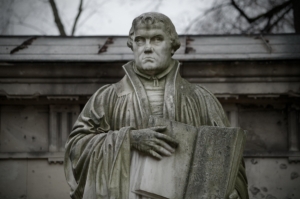
Nowhere in the Gospels, perhaps nowhere in the New Testament, is the union between Christ and believers and its implications taught more clearly than in John 15:1–17. Jesus outlines the truth that he is the vine and those who are united to Him by the Holy Spirit in true faith bear fruit. Jesus says he will consummate this union by laying down his own life for his friends, those whom he has chosen. Continue reading →

In the video he tells the story of how he visited John MacArthur as he, MacArthur, was dying. He recounts how he began by doing something “that men do not often do to men like him but should do all the time. I walked in and I said ‘Dr. MacArthur, is it well with your soul? Are you reading the Word, talk to me about your prayer life. How is your communion with Christ?’” Continue reading →

May the road rise to meet you Continue reading →

Durante nuestro último año de secundaria (1978-79), tres de nosotros salimos a comer. Nuestra escuela secundaria pública tenía un campus abierto, lo que significaba que se nos permitía ir y venir siempre y cuando asistiéramos a clase. Nos amontonamos en el Ford . . . Continue reading →
Many Christians today take it as an article of faith that God must deliver Christians from trials and tribulations. This is an age in which Benny Hinn’s ridiculous books have sold millions, and he is but the latest charlatan selling health and . . . Continue reading →
In the second petition of the Lord’s Prayer every Christian prays, “Your kingdom come, your will be done, on earth as it is in heaven” (Matt 6:10). This is an implicit recognition that we do not presently live in heaven. Continue reading →

That slogan puzzled me the first few times I heard it, but I think I understand it more clearly now. I was puzzled because the word scholar means “student.” It is a Latin word derived from the noun schola, or school. A scholar is . . . Continue reading →
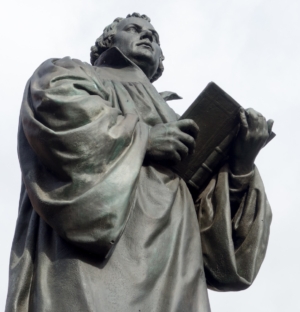
Se a evidência objetiva e histórica é tão clara quanto afirmo sobre a definição histórica da palavra reformado, por que esse debate existe? Novamente, as raízes desse debate encontram-se, em parte, na maneira como os batistas pensam sobre si mesmos e sobre os . . . Continue reading →
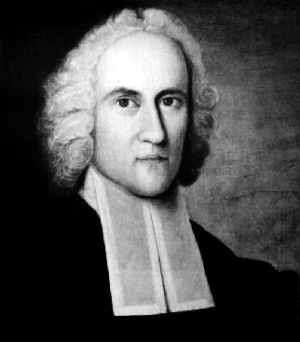
Jonathan Edwards (1703–58) is America’s most famous theologian and perhaps its most famous philosopher too. He is an important and influential figure and is worth seeking to understand for these reasons alone. We should think about Edwards for other reasons, however. He . . . Continue reading →

The truth is that elder visits can too often be like a home visit from a dentist. We all dread the dentist because we know that he is a bearer of bad news, not good news. Continue reading →
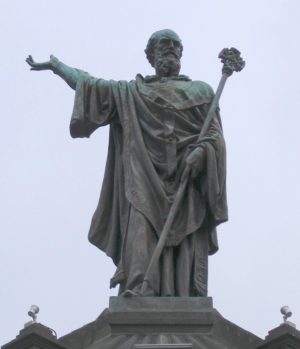
The History Channel reminds us that on November 27, 1095, Pope Urban II ordered the First Crusade. Before 1979 it was more difficult than it is today to imagine such a thing, a leader of a world religion ordering a military crusade to conquer . . . Continue reading →
It’s a trap! Continue reading →