
For though Christ the Lord at the last supper instituted and delivered to the Apostles this venerable sacrament under the forms of bread and wine, yet that institution and administration do signify that all the faithful are by an enactment of the . . . Continue reading →
10 Reasons Not to Pope

Shane is, as they say on sports-talk radio (at least in Omaha and Lincoln), “doing work” at the Reformed Reader.
Non Habemus Papam. Christus Solus Noster Mediator et Pontifex Maximus

Resurgent Catharism?

In the 2nd century, the Fathers faced one of the greatest threats ever to confront the Christian faith and church: Gnosticism. The gnostics taught a hierarchical scale of being in which salvation meant being delivered from our status as creatures. Salvation was . . . Continue reading →
Cartwright: The Bishop Of Rome Grew Beyond The Limits Of Christian Ministry
Indeed to apply it to the true Roman Church, or the right succession in the Apostolic see, which was in the days of S. John, or in the time of the Christian Emperors, it were both folly and blasphemy: but to apply . . . Continue reading →
The Myth of the Papacy

You know by now that Benedict XVI has abdicated the papacy and the college of Cardinals have been preparing to elect a new pope. on Tuesday they are set to begin the process of actually electing a new pope. Over the next . . . Continue reading →
Heidelcast 12: Worship, Baptism, And Romanism
On Worship, Baptism, and Romanism

David writes with a question on worship, which we may paraphrase thus: If we can do something in worship on a Wednesday night Bible study or in personal devotions why can’t we do it in a Sunday morning service? Ken asks whether . . . Continue reading →
Chalcedon Rejects Primacy Of Rome
Rome is a Sect
Following in every way the decrees of the holy fathers and recognising the canon which has recently been read out—the canon of the 150 most devout bishops who assembled in the time of the great Theodosius of pious memory, then emperor, in . . . Continue reading →
Heidelcast 11b: Reforming Worship, Confession, And Marriage
Rummaging around the old hard drive I found a lost episode of the Heidelcast from December 2009. Sam wrote to ask about whether and how to approach his church about reforming their worship service. He also asked about the degree to which . . . Continue reading →
Heidelberg Conference on Reformed Theology

Long before there was a Young, Restless, and Reformed movement, there was a movement of young, settled, and confessionally Reformed pastors and theologians in Heidelberg. It began in the late 1550s and continued until 1576 when they were all ejected—for being Reformed. . . . Continue reading →
All Heretics Quote Scripture
An HB Classic
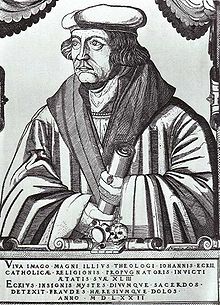
One of the Ecks (there were two) is (or was it Bob Godfrey?) reputed to have said (I can’t find the reference), “All heretics quote Scripture.” If he said it, he meant it as rebuke to Luther’s appeal to Scripture. Of course, . . . Continue reading →
But The Whole Three Persons Are Co-Equal And Co-Eternal
Whosoever will be saved, before all things it is necessary that he hold the catholic faith; which faith except every one do keep whole and undefiled, without doubt he shall perish everlastingly. And the catholic faith is this: That we worship one . . . Continue reading →
Updated Audio/Video Resource Page

Sorry to mar the HB with my visage but the technical wizard must be obeyed and failure to use an image will bring a stern warning from him who must be obeyed. Anyway, I’ve updated the audio/video resource page from the more . . . Continue reading →
Van Til: Yet This Is Not The Whole Truth
Yet this is not the whole truth of the matter. We do assert that God, that is, the whole Godhead, is one person…. In other words, we are bound to maintain the identity of the attributes of God with the being of . . . Continue reading →
RRC Now Available on Kindle and iTunes!
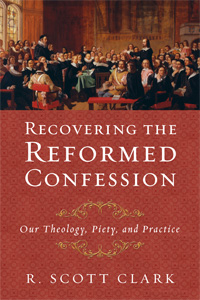
Due to popular demand or just the ordinary movement of technology Recovering the Reformed Confession is now available via Kindle and iTunes for $9.99. As always, the hardcopy is available through the Bookstore (ding, ding!) at Westminster Seminary California. If the sound effects make . . . Continue reading →
Hide Your Pets

Yale University was founded by conservative congregational ministers in the early 18th century. For those who haven’t been looking much has changed at Yale since its founding. You can catch up a bit via William F. Buckely’s Jr’s 1951 classic, God and . . . Continue reading →
Berger: The New American Secularism Is In Defense Of The Sexual Revolution
Let me venture a sociological hypothesis here: The new American secularism is in defense of the sexual revolution. Since the 1960s there has indeed been a sexual revolution in America. It has been very successful in changing the mores and the law. . . . Continue reading →
Too Legit, Too Legit to Quit
MC Hammer Called. He wants His Costume Back

A “Not At This Time” Culture

7 minutes and 16 seconds. That’s how long nurses at Glenwood Gardens nursing home, in Bakersfield, CA, had to render aid to Lorraine Bayless. She was 87 years old and now she is dead. Perhaps you’ve heard the audio of the 911 call. . . . Continue reading →
Chicken of the Sea?

Reformed Churches have long posted a rooster-shaped weather vane atop their church buildings as a silent warning to their members not to deny Christ (Matt 26:34). The Church By the Sea in St Petersburg, FL is a congregational church founded in 1944. . . . Continue reading →