To say that our faith saves us means that we do not save ourselves even in the slightest measure. Very different would be the case if our salvation was said to be through love…. J. Gresham Machen, What Is Faith? (1946), 173–4.
Sanctification
What The Heidelberg Liturgy Teaches Us About Grace, Faith, And Sanctification

The medievals had a saying: the law of praying is the law of believing (lex orandi, lex credendi). By it they meant to say that what we do in worship affects our theology. If you want to change theology of the future change . . . Continue reading →
Heidelcast 98: Salvation, Good Works, And Conditions

We in the Reformed world are in the midst of another controversy over sanctification, salvation, good works, and conditions in the covenant of grace. Are we justified by grace alone through faith alone but saved by grace, through faith and works? Is . . . Continue reading →
Strangers And Aliens (4): Living As Resident Aliens (1 Peter 1:13–21)

Peter wrote this epistle to be circulated among Christian congregations in Asia Minor (modern day Turkey). He wrote to them about their faith, their hope, and their life living in this world—God’s world—as those who have been delivered out of Egypt, as . . . Continue reading →
Through Good Works? (1)

Introduction In Reformed theology the noun salvation is typically used in two ways. Sometimes it is used as a synonym for justification. When used this way it does not include sanctification since, according to the Reformed confession, justification is a declarative act . . . Continue reading →
Strangers And Aliens (6): Like Newborn Infants (1 Peter 2:1–3)

The word “therefore” is more important in Scripture than we probably realize. It signals a relationship between what is being said now to what was just said. Remember, the chapter divisions we have in Scripture are not original. They were introduced into . . . Continue reading →
Turretin: We Do Good Works Because We Live By The Gospel
XV. Although we acknowledge the necessity of good works against the Epicureans, we do not on this account confound the law and the gospel and interfere with gratuitous justification by faith alone. Good works are required not for living according to the . . . Continue reading →
Vermigli On The Causal Relations Among Predestination, Vocation, Justification, And Good Works
It is possible if the effects of predestination are considered together with one another, that one may be the cause of another. But they cannot be the causes of the divine purpose. For calling, which is the effect of predestination, is the . . . Continue reading →
The Synod Of Dort On Election, Conditions Of Salvation, And Fruit (1)

The Reformed churches have endured discussions and disagreements about salvation (justification, sanctification, and deliverance from the wrath to come) before. Beginning in the late 16th century a Reformed minister in Amsterdam began offering significant revisions of the Reformed understanding of Scripture. Early . . . Continue reading →
An Important Distinction Between Kinds And Functions Of Conditions

When we use the word “condition,” the first sense that probably comes to mind, in English usage, is the first definition offered by the Oxford English Dictionary: “convention, stipulation, proviso.” There is another sense to the word, however, as it was used . . . Continue reading →
Perkins: Grace Admits No Partner Or Fellow
[The Galatians] joined the works of the law with Christ and his grace in the cause of their justification and salvation. Here it must be observed that they which make a union of grace and works in the cause of justification are . . . Continue reading →
The Synod Of Dort On Election, Conditions Of Salvation, And Fruit (2)
Does The Doctrine Of Perseverance Turn The Covenant Of Grace Into A Covenant of Works?
Here the true nature of the Remonstrant doctrine of perseverance emerges: God helps those who help themselves by cooperating with his “assisting grace.” This is quite another picture of salvation. Here God has not parted the Red Sea and led us through, by the hand, as it were (Jer 31:32; Ex 14:16). Rather, according to the Remonstrants, God has covenanted to co-act with those who do what lies within them (facientibus quod in se est, Deus non denegat gratiam). Continue reading →
Perkins: Faith Is The Instrument Of Salvation
Objection 8. In respect of God, who is truth itself, we are to believe the promise in particular: yet if we respect our own unworthiness and indisposition, we are to fear and in some part to doubt. For the promise of remission . . . Continue reading →
Another Helpful Distinction: Filial Versus Servile Fear

I was fortunate to have been raised in a two-parent family. I had a great Dad. I had what today would be considered an “old school” upbringing. Mom did most (maybe all) of the spanking but Dad made his presence felt. There . . . Continue reading →
Burying The Lead On Baxter
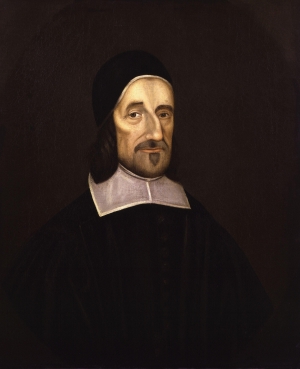
There is a phrase in journalism called “burying the lead” (or, since about 1979, the cloying variant lede). The lead (lede) is the paragraph in which the most important, salient facts are contained. In the old days (c. 1975), the writer was . . . Continue reading →
Resources On Prayer

D. C. McAllister’s excellent essay in The Federalist and a question from regular HB reader Clinton suggests that a resource post on prayer might be helpful: Audio Audio: The Role of Prayer in Sanctification Audio: The Pilgrim’s Prayer (1) Audio: The Pilgrim’s Prayer . . . Continue reading →
Sibbes On The Sealing Of The Spirit
‘Who hath anointed us, and sealed us.’ Anointing and sealing go together. The same God anoints us doth also seal us. Both are to secure us of our happy condition. Now Christ is the first sealed: John 6:27, ‘Him hath the father . . . Continue reading →
The Logic Of Fruit As Evidence
The Patristic Period One of the earliest concerns of the Christian church, beginning with the apostles and intensifying through the patristic and medieval periods, was that those who profess the Christian faith should live in a way befitting their profession of faith. . . . Continue reading →
Justified Through Our Faithfulness?
Introduction As I mentioned in an earlier post in Romans 2:13 Paul writes, “For it is not the hearers of the law who are righteous before God, but the doers of the law who will be justified” (ESV).1 The chapter begins with . . . Continue reading →
Strangers And Aliens (15a): Turning The Other Cheek (1 Peter 3:8–12)

When a group faces external pressure, criticism, or perhaps even persecution of some kind it may lead to internal fractures and schism. The Apostle Peter was aware of this possibility among the congregations in (modern) Turkey. He has been urging them to respond appropriately to those outside the congregation but in this section he turns his attention to those within the congregation. How ought they to relate to one another? Continue reading →