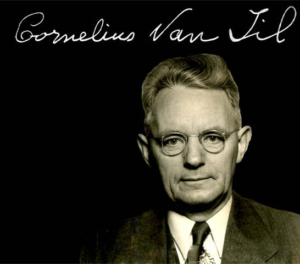
More than 30 years ago, when I first came into contact with Reformed theology, piety, and practice (the Reformed confession broadly defined), I also came into contact with a movement within the Reformed world known as “Christian Reconstructionism” and its child “theonomy.” . . . Continue reading →
Twofold Kingdom
Heidelcast 22: On The Relation Of The Kingdom To The Church
Steven writes to ask whether the Kingdom of God is synonymous with the visible church or whether it is broader than the visible church? These questions have been particularly a matter of discussion since the rise of the Dutch neo-Calvinist movement in . . . Continue reading →
The Revision of Belgic Confession Article 36 on Church and State
Eugene Osterhaven called this “the most difficult and disputed” article in the confession.1 As will appear below, the desire to revise this article has existed in the Reformed churches in both the Netherlands and in the USA since the late 19th century . . . Continue reading →
“Common” is Not “Neutral”
An HB Classic
One of the more frequent criticisms of the attempt to appropriate the older Reformed “two kingdoms” (or as Calvin put, “a twofold kingdom”) approach to Reformed ethics for a post-Constantinian setting, as distinct from the “transformationalist” or some versions of neo-Kuyperianism, is . . . Continue reading →
Ridderbos: The Kingdom Of God Is Not Brought By Human Action
[The] absolutely theocentric character of the kingdom of God in Jesus’ preaching…implies that its coming consists entirely in God’s own action and is perfectly dependent on his activity. The kingdom of God is not a state or condition, not a society created . . . Continue reading →
In Order for Leviathan to Flourish He Must First Kill Natural Law
An HB Classic
Stanley Fish proposes to go back to Thomas Hobbes. The Leviathan (Whale)-like civil authority is precisely why our founders said: “We hold these truths to be self-evident…” and appealed to “the Laws of Nature and of Nature’s God” and to the “the . . . Continue reading →
Perkins On The Mediatorial Kingship Of Christ
Therefore Christ, as he is God, has under him, emperors, kings, princes to be his vicegerents; who therefore are called gods (Ps 82:1). But as he is Mediator, i.e., a priest, prophet, and king of the church, he has no vicegerent, vicar, . . . Continue reading →
How Christians Are And Aren’t Distinguished From The Rest Of Humanity
For Christians are not distinguished from the rest of humanity by country, language, or custom. 2 For nowhere do they live in cities of their own, nor do they speak some unusual dialect, nor do they practice an eccentric way of life…4For . . . Continue reading →
Heidelcast 15: Belgic Confession 36 on the Civil Magistrate and the Advance of the Gospel
An HB Classic
What is the role of the civil magistrate in advancing the ministry of the church? The HC had mail from Jason about Belgic Confession Art 36 on the civil magistrate. At first reading it seems to teach that the magistrate needs to . . . Continue reading →
Of Hotels and 2 Kingdoms
An HB Classic
In view of the Oregon case in which a baker faces prosecution for refusing to make a wedding cake for a homosexual couple, it seemed like a good idea to re-post this. The original context was the challenge that there’s no good . . . Continue reading →
The Oath, Comforts, and Hardship
William Perkins: Two Kingdoms As The Answer To Monasticism
This serves to decry unto us the blind error of many ages before us, wherein it has been thought, and is by Papists at this day, to be a state of perfection, to live as a monk or hermit out of all . . . Continue reading →
2K-Kuyperian Rapprochement at Covenant College
Mike Horton, my colleague at WSC, spoke recently at Covenant College (Lookout Mt, GA) on the connections between a two-kingdoms analysis and the various neo-Kuyperian approaches to the relations between Christ and culture. Matt Tuininga was there and filed this report at . . . Continue reading →
Must We Change Our Theology to Vote for Mitt?
Veteran readers of the HB may remember that I expressed concern in 2009 over a comment by William Evans, The Younts Professor of Bible and Religion at Erskine College, about what he called the need for a “decisive break with the ordo . . . Continue reading →
Audio: John Bolt on What America Owes Jesus as Lord-Theocratic Fears and Patriotic Ambitions
It’s been delightful to have Calvin Theological Seminary prof, John Bolt, on campus for the last two days. He spoke Wednesday on Herman Bavinck and yesterday on “quiet theocracy.”
On Christian Freedom, Two Kingdoms, and the Right Use of Scripture
I’m grateful that you’re reading Recovering the Reformed Confession and that you took the time to write. I don’t know that I will be able to satisfy your concerns. It may be that we disagree on some basic issues. Let me try . . . Continue reading →
Truth and Consequences: The Politics of Abortion
URCNA Pastor, the Rev Dr Brian Lee, a WSC grad, has another stimulating OpEd piece in today’s Daily Caller. “The course of my life roughly coincides with the post-Roe v. Wade abortion debate in America. The Supreme Court decision was issued on . . . Continue reading →
Lee: Christianity Neither Conservative Nor Socialist
URCNA Pastor, the Rev Dr Brian Lee, a WSC grad, has an stimulating OpEd piece in today’s Daily Caller. He argues “Both the Christian Right and the Christian Left get the question of Christianity and politics wrong. Christianity is not politically conservative . . . Continue reading →
The Social Crisis is Too Great to Be Arguing About… (Updated)
The various social crises facing the West are great but the Roman empire was already in crisis when God the Holy Spirit empowered Christ’s apostles to take the gospel to the ends of the earth. Rome fell. The gospel and Christ’s church continued. Another empire, Christendom, replaced the old Roman Empire but it fell too. The kingdom of God, as manifested chiefly in this world in the visible, institutional church, continued. Social crises are important but they aren’t more important than the gospel. Seeing that is a key difference between actually being Reformed and being just another social conservative with a passing interest in the Reformation (as it suits whatever social agenda is in view). Continue reading →

Office Hours: VanDrunen on Living in God’s Two Kingdoms
The latest episode of Office Hours is out via iTunes and RSS. David VanDrunen talks about his new book, Living in God’s Two Kingdoms. Here is the episode. This episode is available now on iTunes. We’re taking calls at 760 480 8477. . . . Continue reading →