XXVII. The grace of God and the merit of Christ are not opposed, but subordinated because they are viewed here in different respects (kat’ allo kai allo): grace in respect of us, both in the giving of the surety and in the . . . Continue reading →
History of Reformed Theology
Vermigli On The Causal Relations Among Predestination, Vocation, Justification, And Good Works
It is possible if the effects of predestination are considered together with one another, that one may be the cause of another. But they cannot be the causes of the divine purpose. For calling, which is the effect of predestination, is the . . . Continue reading →
Office Hours: What Happened To Reformed Orthodoxy? (2)

In the well-researched and written volume, Calvin Meets Voltaire: The Clergy of Geneva during the Age of Enlightenment, 1685-1798, Eighteenth-Century Studies Series (Ashgate: 2014), Jennifer Powell McNutt argued that there was more continuity, than has sometimes been thought, between 18th-century Genevan theology, piety, . . . Continue reading →
New In Print: William Perkins On Galatians
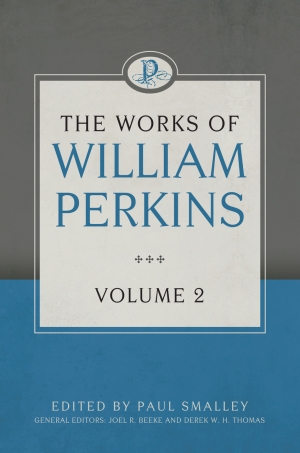
William Perkins (1558–1602) is one of the most important of the English Reformed writers of the late 16th and early 17th centuries and yet he is among the least read in the modern era. One reason for this is because his works . . . Continue reading →
William Perkins On Textual Criticism And The Preservation Of Scripture
Before I come to the consideration of these words, a doubt must be resolved. For some men may say that this is epistle is corrupted because these words are wanting in sundry translations and editions of the Bible. And Jerome says that . . . Continue reading →
Calvin To The King Of Poland On The Scope Of Reformation
But the chief thing is, that Christ, the Sun of Righteousness, has so irradiated your mind with the light of his Gospel, that you understand that the true way of governing the Church is no other than what is to be derived . . . Continue reading →
Biblicism: A Trojan Horse Full Of Rationalism
Over against the magisterial Reformers and the Roman Catholic theologians of the day, theologians like Michael Servetus, Giovanni Blandrata, Valentine Gentile, and Laelius and Faustus Socinus examined the text of Scripture in a strictly linguistic and non-traditionary exegesis and found no doctrine . . . Continue reading →
On This Date: Tyndale Martyred For The Gospel

William Tyndale (c.1494–1536) was one of the most important figures in the English Reformation. He not only helped to transmit to the English-speaking world Luther’s rediscovery of the gospel of free acceptance with God for the sake of the imputed righteousness of . . . Continue reading →
William Perkins On Will Worship
VI. Will-worship, when God is worshipped with a naked and bare good intention, not warranted by the word of God (Col. 2:23; 1 Sam 13:9,10, 13).1 Hitherto may we add Popish superstitions in sacrifices, meats, holidays, apparel, temporary and bead-ridden prayers,2 indulgences, . . . Continue reading →
What The Socinians Denied And Taught On Faith And Justification
1. That justifying faith, or that faith whereby we are justified, is our receiving of Christ as our Lord and Saviour, trusting in him and yielding obedience to him. 2. That faith, in justifying, is not to be considered as a hand . . . Continue reading →
Perkins On Churches And Sects
As for the assemblies of Anabaptists, Libertines, Antinomies, Tritheists, Arians, Samosatenians, they are no Churches of God, but conspiracies of monstrous heretics judicially condemned in the primitive Church, and again by the malice of Satan renewed and revived in this age. The . . . Continue reading →
Peter Martyr On Law And Gospel (Revised)
There be some which divide the holy Scriptures into four parts, and describe some books as well of the Old Testament as of the New to laws, some to histories, some to prophecies, and other some again to wisdom. But it is . . . Continue reading →
Office Hours: What Happened To Reformed Orthodoxy? (1)
In the well-researched and written volume, Calvin Meets Voltaire: The Clergy of Geneva during the Age of Enlightenment, 1685-1798, Eighteenth-Century Studies Series (Ashgate: 2014), Jennifer Powell McNutt argued that there was more continuity, than has sometimes been thought, between 18th-century Genevan theology, . . . Continue reading →
Overturning The Reformation In 1617–18
The government of the Scottish Church was thus completely subverted in its external aspect. The crown was now determined to see whether with equal ease it was possible to introduce the ceremonies of the English Church. James ordered repairs to be made . . . Continue reading →
A Brief History Of Covenant Theology

The roots of Reformed covenant theology are as deep as the Christian revelation and tradition is old. Its importance to the Reformed faith cannot be overstated. The great Princeton theologian, B. B. Warfield called federal (covenant) theology, “architectonic principle” of the Westminster . . . Continue reading →
St Bartholomew’s Day 1572: An Orgy Of Popular Violence
Long-range prospects for the Reformed churches in France appeared almost hopeful in the summer of 1572. The Peace of St. Germain (1570) that concluded the third civil war had granted significant political, military, and religious concessions to the Huguenots. The Catholic Duke . . . Continue reading →
Office Hours: Calvin And Voltaire
When most of us think about the history of Reformed theology, if we think about it at all, we tend to think first of Calvin and then we typically jump to Jonathan Edwards, then perhaps to Princeton and thence to our own . . . Continue reading →
Identity Markers: Why Some Axioms Persist

Peter Berger has been an influential and important sociologist of religion for more than 50 years. He is presently Professor Emeritus of Religion, Sociology and Theology and Director of the Institute on Culture, Religion, and World Affairs at Boston University. To review a . . . Continue reading →
Heidelberg 75: The Supper Is More Than A Memory (3)

75. How is it signified and sealed to you in the Holy Supper, that you do partake of the one sacrifice of Christ on the cross and all His benefits? Thus: that Christ has commanded me and all believers to eat of . . . Continue reading →
The Hungarian Reformed Sanctified The Sabbath
We perform divine service publicly according to the sanctification of the Sabbath as follows: by teaching, listening, administering the sacraments, assembling together. On these days, we forbid work that hinders the public sanctification of the Sabbath, As did Christ and the apostles. . . . Continue reading →