The Moralists Will Be Back

An HB Classic

It is an historical fact that moralism (the confusion of justification with sanctification) never dies, it just goes dormant periodically. The Reformation defeated 1000 years of moralism only to see forms of it re-emerge in the Protestant churches even before Luther died. . . . Continue reading →

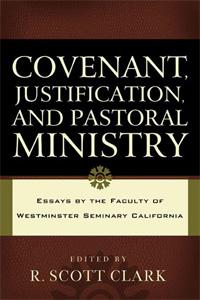
CJPM Now Available as an E-Book

Apropos of recent discussions on the HB P&R Publishing has released CJPM as an e-book on iTunes for $9.99. The hardcopy is still available for $18.99 at the bookstore.

Federal Vision Audio

In 2007 the Synod the United Reformed Churches in North America adopted a nine point declaration against the self-described federal vision movement. They described these points as “pastoral advice.” Here’s a written exposition of the Nine Points. These nine talks (below) also explain . . . Continue reading →

When Is a Church Not a Church?

An HB Classic

I was searching for something the other day and ran across chapter 18 of the Scots Confession (1560) which speaks to the “Notes” (from the Latin, nota or “mark” or “indicator”) of the True Kirk (church). I’ll return to the Scots Confession . . . Continue reading →

Is The Gospel Preached Or Lived?

An HB Classic

Colin raised this question a while back on Unashamed Workman. He asked for comments and, as Mike had just touched on this during the Westminster Seminary California Missional and Reformed Conference, I piped up: Hi Colin, This business of “living the gospel” . . . Continue reading →

Bavinck On Gospel In The Narrow Sense

And indeed, strictly speaking, there are no demands and conditions in the gospel but only promises and gifts. Faith and repentance are as much benefits of the covenant of grace as justification (and so forth). Herman Bavinck, Reformed Dogmatics, 4.454 (HT: James . . . Continue reading →

Is Faith a Work?

The question comes (paraphrasing): Since Scripture says, “believe,” (e.g. Acts 16:31) it seems that we are commanded to believe. If the command to believe is an imperative and an imperative is “law,” and if the answer to the command “believe” is faith, . . . Continue reading →