
The Church of Rome in a manner confounds the law and the gospel, saying that the gospel, which is the new law, reveals Christ more clearly than Moses’ law did, which they call the old law. But this is a wicked opinion, . . . Continue reading →
Romanism
Pourquoi Je ne Traverserai Pas le Tibre Avec Mark Galli

L’expression «traverser le Tibre» [swimming the Tiber] est une métaphore pour désigner la conversion du Protestantisme au Catholicisme Romain. Je n’ai pas été en mesure de déterminer ses origines, mais le Dictionary of Christianese online fait remonter l’expression à 1963, ce qui, . . . Continue reading →
Why I Will Not Follow Mark Galli Across The Tiber
The phrase “swimming the Tiber” is a metaphor for converting from Protestantism to Roman Catholicism. I have not been able to determine its origins but the online Dictionary of Christianese traces the expression to 1963, which, if true, would mean that it . . . Continue reading →
New Resource Page: On Roman Catholicism

From time to time, evangelicals and a few from the confessional Presbyterian and Reformed churches to convert to Romanism. They do so for a variety of reasons but one commonality among them is ignorance of the history of the Western church, the . . . Continue reading →
Perkins: Christ Did Not Obey And Die To Make Our Works Meritorious
Objection 2. Christ by His death, merited that our works should merit life everlasting. Answer. That is false. All we find in Scripture is that Christ, by His merit procured pardon of sin, imputation of righteousness, and life everlasting. And it is . . . Continue reading →
ICYMI: Indulgences Are Still A Thing In Rome (And The Reformation Still Matters)

The Reformation was a complex event, which happened for many reasons but the triggering event on which many have focused over the centuries was Martin Luther’s Ninety-Five Theses (1517). Though provocative, theses were not themselves all that radical. Luther’s discovery of the basics . . . Continue reading →
Heidelcast 138: With Darryl Hart On Why You Should Not Convert To Rome

Darryl Hart is Distinguished Associate Professor of History at Hillsdale College. He holds degrees from Temple, Harvard, and Johns Hopkins and has taught in numerous schools, including Westminster Seminary California where we will colleagues for a few years. He is one of . . . Continue reading →
Turretin: The Romanists Admit A Forensic Sense To “Justify” But They Also Have A Two-Stage Justification
V. Hence arises the question with the Romanists concerning the acceptation of this word—whether it is to be taken precisely in a forensic sense in this affair; or whether it ought also to be taken in a physical and moral sense for . . . Continue reading →
Trueman: Francis Makes Orthodox Protestantism Attractive
While we may never know the truth about his recent alleged denial of Christ’s divinity, the fact that the story was plausible witnesses to the lack of theological understanding that has characterized his pontificate from the start. Not since the glory days . . . Continue reading →
Owen Contra Romanist Corruptions Of Reformed Worship And Theology
Now, such were the innovations of the late hierarchists. In worship, their paintings, crossings, crucifixes, bowings, cringings, altars, tapers, wafers, organs, anthems, litany, rails, images, copes, vestments,—what were they but Roman varnish, an Italian dress for our devotion, to draw on conformity . . . Continue reading →
Sometimes The QIRC Leads To Rome
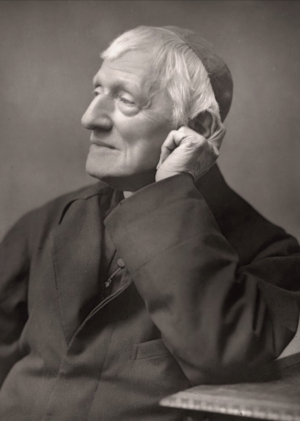
As I was running errands this past Saturday I listened to a podcast in the Ricochet network hosted by Mark Bauerlein, himself a convert to Rome from atheism, in which he interviewed a convert to Rome (from evangelicalism) about the impending canonization . . . Continue reading →
The Difference Between Magic And Ministry

As a child I was fascinated by “magicians” such as Harry Blackstone Jr. For a few dollars one could order a kit or study library books and learn to do “magic.” Of course, it was not magic at all. It was merely . . . Continue reading →
Where Is The Church Heading?

Introduction None of us knows the specifics of the future. There are a few things that every Christian knows from Scripture about the future. We know that Christ shall return (Acts 1:11), that there shall be a bodily resurrection (1 Thess 4:16), . . . Continue reading →
Where Is The Church Heading? (2)

From time to time, Protestants have been tempted to think that the Roman communion has been dealt a fatal blow. History, however, tells us that though she has been wounded from time to time, she always returns. However vigorous the Reformed churches may be in some parts of the world (e.g., Brazil, South Korea, and Nigeria) the confessional Presbyterian and Reformed churches in North America (NAPARC) are tiny compared to the Roman communion. Continue reading →
William Perkins: Who Are The True Catholics?

There are truly important works that have simply been forgotten or unjustly ignored. One of those is William Ames’ Fresh Suit Against Human Ceremonies in defense of the Reformed theology and practice of worship. Another is William Perkins’ 1597 treatise, A Reformed . . . Continue reading →
Why The Reformed Churches Do Not Re-Baptize Roman Converts
XXVIII. In this belief we declare that, properly speaking, there can be no Church where the Word of God is not received, nor profession made of subjection to it, nor use of the sacraments. Therefore we condemn the papal assemblies, as the . . . Continue reading →
The Church Of The Holy Elaboration

One of the highlights of the Spring semester is the opportunity to read through and discuss the Belgic Confession. Yesterday, as we worked through articles 24–27, a theme emerged. One of the great differences between the Roman communion and the Reformed communions is . . . Continue reading →
Jacques Lefèvre d’Étaples On Lent
“There are men nowadays who teach a foolish godliness instead of Christ’s doctrine. What does it profit me to fast new Lents or to pay my tithes? Why trust myself to formulas of prayer of unknown authors and leave aside the prescriptions . . . Continue reading →
Gregory I Against An Earthly Universal Bishop
Consider, I pray thee, that in this rash presumption the peace of the whole Church is disturbed, and that it is in contradiction to the grace that is poured out on all in common; in which grace doubtless thou thyself wilt have . . . Continue reading →
Why American Evangelicals Convert To And Imitate Rome
Some 57,400 American Protestants converted to Roman Catholicism between 1831 and 1860… Protestants reacted strongly to such Catholic proselytizing. They attributed the Catholics’ success in part to the cultural appeal of their imagery and art. Accordingly, Protestants began to make use themselves . . . Continue reading →