

The main concern is that TGC comprises folk who do not confess the same understanding of the church and sacraments. Continue reading →
The main concern is that TGC comprises folk who do not confess the same understanding of the church and sacraments. Continue reading →

Just finished recording another session with Steve Baugh on Hebrews. This episode covered Hebrews 7:18–28. This is the fourth season and we’re approaching our 100th episode. In that time we’ve discussed many things, including a lot of Scripture, but this is the . . . Continue reading →

USA Today has a story on recent Pew Forum survey that shows that 48% of Americans are “Protestant,” 22% Roman, and 20% are slotted under “none,” and 6% under “other” (the greater share of which one guesses is Islam, which is gaining . . . Continue reading →

John Preston (1587–1628) was a Reformed English theologian and preacher. He was dean of Queens College, Cambridge, master of Emmanuel College, Cambridge, regular preacher at Lincoln’s Inn, and chaplain to the King. His Wikipedia entry seems accurate enough. James T. O’Brien has . . . Continue reading →
Michael Kearney writes: “The vivid image of howling, prowling dogs, occurring not once but twice in Psalm 59, is completely omitted from the text, as are the references to the “swords in their lips” (v. 7) and “the sin of their mouths” (v. 12).” Continue reading →

Part 4. In part 4 we saw that William Perkins taught that believers are given new life by the Spirit and by the same Spirit given faith and through that faith united to Christ. It is particularly useful to be aware of . . . Continue reading →
James Oord summarizes a provocative passage from Eugene Peterson about worship: Peterson points out that experience-driven worship was the hallmark of Baalism, the religion of the Canaanites in the Old Testament era. Their entire worship structure was focused on catering to emotions. . . . Continue reading →

It’s easy to subscribe to the HB. Click on the RSS image to the left or the one on the right. You can read the HB in your RSS reader via your web browser (or if you use a Mac you can . . . Continue reading →
THE CHART Period Time Dominant Question(s) Significance Christian Antiquity Ascension to 1650 (Old World) What has God said? Locus of authority is extrinsic Modernity 1650-1914 (Old World) 1789-1968 (New World) Has God said? Locus of authority is intrinsic (via rationalism, empiricism or . . . Continue reading →
The theme for Season 4 of Office Hours is “Hebrews: Jesus is Really Better.” Steve is Professor of NT at Westminster Seminary California. He teaches our course on Hebrews and has been studying it for about 30 years. You can hear episode . . . Continue reading →
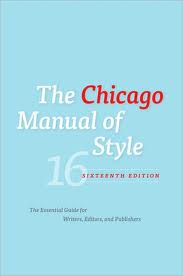
I admit it. I’m a huge fan of the Chicago Manual of Style. I started paying attention with CMS 14 and have bought successive editions through CMS 16. In my field most things need to conform to CMS 15 or 16. So, . . . Continue reading →

Thabiti Anyabwile has a stimulating and thoughtful post about a controversy that, except for the interwebs, I would have missed altogether. It apparently arose over a rap song. Hence my ignorance. Now, if was Al Green, Booker T. and the MGs, or . . . Continue reading →

Alan Jacobs posted this copy of W. H. Auden’s undergraduate lit survey at 95 Theses. at the University of Michigan from the academic year 1941–42. Was it extraordinary then? It would certainly be considered so now and perhaps even grounds for censure . . . Continue reading →