

Josiah writes to the HB: Often when we think of the reformation we think back to 1517 when Martin Luther nailed the 95 Thesis on the church door in Wittenberg Germany but we describe it in such a way that it’s almost . . . Continue reading →

This is season 8 of Office Hours and we are celebrating the 500th anniversary of the Reformation. This is part 2 of a three-part introduction to the Reformation. In part 1 we looked briefly at the background to the Reformation in the . . . Continue reading →
Josiah writes to the HB: Often when we think of the reformation we think back to 1517 when Martin Luther nailed the 95 Thesis on the church door in Wittenberg Germany but we describe it in such a way that it’s almost . . . Continue reading →

It is widely held and assumed that the Reformation was a modern event. Reformation studies, where they still happen in state-funded universities, are nearly always categorized as “early modern.” Historians of the 16th and 17th centuries regularly describe themselves as scholars of . . . Continue reading →
Though the Catabaptists, who pretend to be so directed by the Spirit that if they stand still suddenly or go forward suddenly, they put it down to the Spirit, are not wrong (for we do not live, much less move, without the . . . Continue reading →

Video courtesy the Lynden United Reformed Church (Lynden, WA) where Bob Godfrey and I spoke earlier this month for their Reformation Conference: Luther Nailed It.
In October of 1545, Heinrich von Wolfenbüttel (1489–1568), the Romanist Duke of Braunschweig-Lüneberg-Wolfenbüttel, in the process of a attempting to recover lands taken from him by the Protestant Schmalkald League (in 1542), was taken captive along with his sons. The Lutheran territories . . . Continue reading →

It was on 18 April 1521 that Luther appeared before the powers of this world and, ostensibly, the next at at the Diet of Worms. It was there he announced publicly the formal cause of the Reformation, sola Scriptura. That doctrine says that . . . Continue reading →

It is Reformation Day 2020. As far as I know, magisterial (Reformed and Lutheran) Protestants have been observing October 31 as Reformation Day since the 17th century. Longtime readers of this space will may remember my critique of October 31 as Reformation . . . Continue reading →

I had fun talking with Nick Fullwiler of the Guilt, Grace, Gratitude podcast about the history of the Reformation. What led to it and why did it happen? Is there a new Reformation under way today? Do we need a Reformation today . . . Continue reading →
John Calvin (1509-64) was one of the most significant figures in the history of the West. He was among the major Protestant Reformers in the sixteenth century. He contributed significantly to the Reformed wing of the Reformation. He was an industrious Bible . . . Continue reading →
One of the most interesting bits of Oxford history is the story of the Oxford Martyrs and the statue by which they are remembered. The history of the monument itself is fascinating. In 1833, John Henry Newman (1801‑90), an Anglican priest, began . . . Continue reading →
…Yet I dissent from Chalk’s genealogy of modernity. He goes on to argue that this notion of the autonomous, emotivist self can be traced to Martin Luther. In part this is because Chalk depends upon Jacques Maritain’s Three Reformers: Luther, Descartes, Rousseau . . . Continue reading →

Martin Luther (1483–1546) is one of the most important figures in Western history. He is one of the most important figures in world history but the probabilities are that most Christians, including those of us in the Reformation traditions, who trace our . . . Continue reading →
The facts of the controversy are rather simple. Jerome Bolsec who was a Carmelite monk and doctor of theology in Paris, was drawn to the Reformation and so forced to leave France. By early 1551 he had settled in the canton of . . . Continue reading →
The “French Religious Wars” describes a series of eight civil wars fought out between 1562 and 1598. An estimated three million people perished, fifteen percent of the French population. Although the antagonists wore their inherited religious labels of “Protestant” or “Catholic,” social . . . Continue reading →

With his characteristic clarity and story-telling ability, R. C. Sproul’s Luther and the Reformation: How a Monk Discovered the Gospel reveals the lines of connection between the personal crises of Martin Luther’s life and the development of his theological thought. As the . . . Continue reading →

The Reformation made clear the distinction between law and gospel in reference to the Old and New Testaments of Scripture. Continue reading →

©R. Scott Clark. All Rights Reserved. Resources How To Subscribe To Heidelmedia The Heidelblog Resource Page Heidelmedia Resources The Ecumenical Creeds The Reformed Confessions The Heidelberg Catechism Recovering the Reformed Confession (Phillipsburg: P&R Publishing, 2008) Why I Am A Christian Support Heidelmedia: . . . Continue reading →
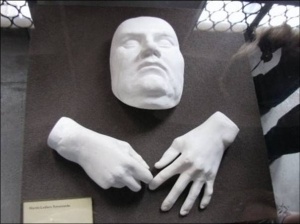
On reflection, it is rather amazing that an obscure Augustinian monk from a German backwater, teaching in an obscure school, was able to turn the Holy Roman Empire on its ear. Just as amazing is the fact that the greatest known powers . . . Continue reading →

The value of church history is not always immediately obvious to everyone. In particular, Americans seem generally allergic to history. This is true of American Christians who are influenced by the American prejudice against history. Look at the History Channel (but only . . . Continue reading →