Our church order has a separate article on ecclesiastical feast days which stands in a long tradition on this subject, going right back to the beginnings of Reformed churches in the Netherlands. In the following I wish to investigate the purpose and . . . Continue reading →
History of Reformed Theology
Turretin: Good Works Are Necessary Not As The Instrument But As Evidence Of Salvation
Although we acknowledge the necessity of good works against the Epicureans, we do not on this account confound the law and the gospel and interfere with gratuitous justification by faith alone. Good works are required not for living according to the law, . . . Continue reading →
Polanus: Christ Subjected Himself To The law For Us Not To Qualify Himself
Paul supplies the tenth argument in Galatians 4:4–5: “After the fullness of time came, God sent His Son, born from a woman, made subject to the Law, to redeem those who had been subject to the Law, that we might receive adoption.” . . . Continue reading →
Polanus: Baptism Teaches Us The Imputation Of Christ’s Active Obedience
We seek the ninth argument from Galatians 3:27, “Whoever among you who has been baptized into Christ, has been clothed with Christ.” The meaning is that the church is necessary for Christ as to be covered with clothes, and under it to . . . Continue reading →
Review Roundup: Covenant Theology (Part 3)

The covenant theology roundup continues with part 3. Continue reading →
Polanus: Galatians 3:10 Teaches The Imputation Of Christ’s Active Obedience
In Galatians 3:10 the apostle supplies the eighth argument: “As many as are of the works of the law and under the curse. For it is written: ‘Cursed is everyone who does not remain in all things, which are written in the . . . Continue reading →
Why Caution About Jonathan Edwards Is In Order

Jonathan Edwards (1703–58) is America’s most famous theologian and perhaps its most famous philosopher too. He is an important and influential figure and worth seeking to understand for these reasons alone. We should think about Edwards for other reasons, however. He is the theologian par . . . Continue reading →
Baxter’s Biographer: He Adhered To His Errors On Justification To The End
To give a concise and accurate opinion of these Aphorisms, is no easy task. This difficulty arises from the great number of separate propositions, which are neither always consistent with truth nor with one another. As a book, it abounds in moral . . . Continue reading →
Heidelvideo #4—On The Distinction Between Law And Gospel (Part 3)

In Heidelvideo episode 4 Dr Clark responds to some criticisms of the Reformation distinction between law and gospel. Continue reading →
Heidelvideo #3—On The Distinction Between Law And Gospel (Part 2)
In Heidelvideo episode 3 Dr Clark continues a three-part series on distinguishing law and gospel. Continue reading →
New Translation In Print: Rollock On Romans
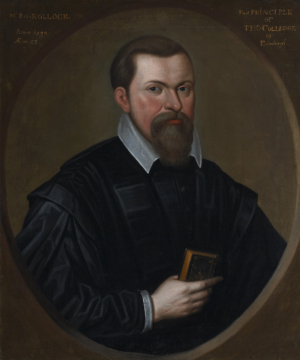
Robert Rollock (1555–98) did not live very long but he was a hard-working Scotsman who left his mark on Reformed theology and especially in biblical commentary and the development of Reformed covenant theology. In his introduction to Rollock’s commentary on Ephesians, Casey . . . Continue reading →
Owen Versus Tombes On Infant Baptism
The passages are these:— He was thirty years old when he came up to be baptized. Then, when he had the mature age of a teacher, he came to Jerusalem, so that all would reasonably accept him as a teacher. For he . . . Continue reading →
Luther On Bound Choice: Celebrating The Recovery Of The Doctrine Of Sola Gratia (Part 2)—Erasmus Of Rotterdam

When Desiderius Erasmus (1466–1536) was born, the printing press was about fifteen years old. Paul II was Pope. Frederick III was Holy Roman Emperor. What we think of today as the Netherlands was ruled by the House of Burgundy. Luther would not . . . Continue reading →
Ursinus’ Arguments That “This Is My Body” Is A Promise Of Grace Translated With An Introduction

The Heidelberg Reformation Association presents the first ever translation of a brief work on the Lord’s Supper by Zacharias Ursinus and translated by Dr Lee Irons. Continue reading →
Muller On Beza’s Translation And The Limbus Patrum
Rendering “sheol”: Beza and Acts 2:27. Beza, for example, worried textually and linguistically over the problem of the citation of Psalm 16:8–11 in Acts 2:25–28. Specifically, verse 10 of the Psalm (Acts 2:27) had been used in the church as one of the . . . Continue reading →
Benedict Pictet Contra The Limbus Patrum
We must observe, also, that the soul, after this life, goes either into heaven or into hell, and into no other place; for the scripture mentions no other, neither purgatory, nor limbus, nor subterranean caverns, nor Lethean streams; whatever is asserted in . . . Continue reading →
New Insight Into Olevianus And Ursinus On The Imputation Of Active Obedience

The publication of this new research, completed only in the last month, may surprise some readers, disappoint others, and delight still others but it is important research that changes what we know about the origins and development of the controversy over the . . . Continue reading →
Bavinck On The Limbus Patrum
Moreover, all have their own task and place. Roman Catholics assume that after death Old Testament believers waited in the limbo of the fathers and were not released until Christ freed them at his descent into hell; and they also believe that . . . Continue reading →
Vos On The Limbus Patrum
What is the limbus patrum of Roman Catholics? The limbus patrum (limbo of the fathers) is the place where the believing fathers of the Old Testament had to stay in a state of expectation before the coming of the Messiah. After His death on the cross, . . . Continue reading →
Calvin Contra The Limbus Patrum
Others interpret it differently: that Christ descended to the souls of the patriarchs who had died under the law, to announce redemption as accomplished and to free them from the prison where they were confined. To back up this interpretation, they wrongly adduce . . . Continue reading →