

Divine grace is a beautiful thing. Though it is not a thing that we can hold on to or put under a microscope, it is a disposition of an Almighty God. What makes this grace of God so beautiful is that we . . . Continue reading →
Divine grace is a beautiful thing. Though it is not a thing that we can hold on to or put under a microscope, it is a disposition of an Almighty God. What makes this grace of God so beautiful is that we . . . Continue reading →

In the seventeenth century, the first question of the Westminster Larger and Shorter Catechism asked the perennial question of humanity: What is our purpose? What is the goal of life? The answer has been important for Christians in the centuries since: Man’s chief end is to glorify God and enjoy him forever. This answer contains much wisdom and points us to the true meaning of our lives. Continue reading →

In this episode Dr. Clark talks about evangelicals and the Bible. Continue reading →
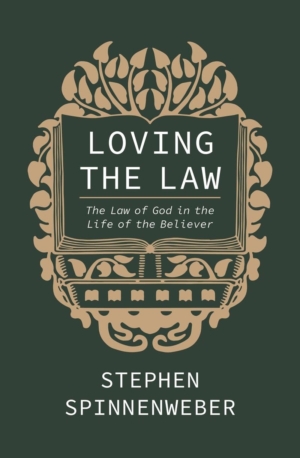
“The law is good and just and right” (Rom 7:12). So says the apostle Paul, but many Christians today do not believe that statement. The question such Christians ask may sound like, “Well, what use is the law for us if Christ . . . Continue reading →
And, indeed, if the faithful and elect children of God were perfectly renewed through the indwelling Spirit in this life, so that in their nature and all their powers they were completely free from sin, they would need no law, and therefore . . . Continue reading →
Is there a need in the Christian life for the preaching of the Law? Should pastors proclaim the Law, such as the demands of the Decalogue, from the pulpit in the Christian congregation? Does the Law play a role in the Christian’s . . . Continue reading →

At the most recent Shepherds Conference held at Grace Community Church, GCC pastor/elder Phil Johnson responded, at some length, to some criticisms of The Gospel According to Jesus, which criticisms were published here in 2019. Continue reading →
Obj. 3. We ought not to desire that which God does not desire to give us in this life, and which we cannot obtain. But God does not desire to give us perfect obedience to the law in this life. Therefore it . . . Continue reading →
Obj. 2. He who commands impossibilities, commands things which are not profitable. God commands impossibilities in his law. Therefore he commands things which are useless, and so by consequence the law itself is of no use. Ans. This argument is nearly the . . . Continue reading →
Obj. 1. That which cannot be kept, is taught to no purpose. The law cannot be kept. Therefore it is to no purpose that it is taught in the church of Christ. Ans. There is here a fallacy in urging that as . . . Continue reading →
There is much antinomianism in the modern evangelical church. By antinomianism I mean the rejection of a fixed moral law and specifically to the rejection of God’s moral law as summarized in the Ten Commandments and applied in the New Testament to . . . Continue reading →
In an article in By Faith Online (Feb, 2021) Megan Fowler writes, “Moses Lee believes Gen Z isn’t asking philosophical questions about epistemology [theory of knowing]. Gen Z wants to know that the gospel is beautiful and true, and that it is deeply concerned about justice.” Continue reading
Over the years as a pastor, I have been asked why making an image of Jesus is wrong. In fact, I have been frequently criticized for my position that making images of Jesus is forbidden in the second commandment. I have come . . . Continue reading →
Objection: But does not the apostle say, Rom. 6:14. ‘Ye are not under the law but under grace?’ and Gal. 5:22, 23. ‘But the fruit of the Spirit is love, joy, peace, &c.—against such there is no law?’
Q. 112. What is God’s will for you in the ninth commandment? A.That I never give false testimony against anyone, twist no one’s words, not gossip or slander, nor join condemning anyone rashly or without a hearing. Rather, I should avoid, under penalty . . . Continue reading →

For confessing Protestants, there is no question whether believers are under the civil and normative uses of the law. To deny the normative use (the third use) is the definition of antinomianism, a scourge which Martin Luther opposed in the 1520s, against which the Lutherans confess in the Book of Concord (1580), and which the Reformed have always opposed. The Heidelberg Catechism (1563) organized the Christian faith under three headings: Guilt (Law), Grace (Gospel), and Gratitude (Sanctification). The third part of the catechism contains an exposition of the moral law of God, the decalogue (Ten Commandments). The Westminster Standards also affirm and explain the moral law and apply it to the Christian life not in order that we might be keep it and thereby be justified and saved but because we have been justified and saved by grace alone (sola gratia), through faith alone (sola fide) in Christ alone. Continue reading →

2017 is a “Reformation Year.” It is the 500th anniversary of Luther’s 95 Theses and an opportunity to remember the Reformation basics. One of those is the distinction between law and gospel. One of the five most basic distinctions Luther recovered for . . . Continue reading →
To me there appears no doubt that, by antithesis, there is a comparison here made between the doctrine openly set forth in the Law, and the hidden and incomprehensible counsel of God, concerning which it is not lawful to inquire…. It is . . . Continue reading →

Paul was not a Gnostic, a Valentinian, an Anabaptist, a Familist, nor an Antinomian. He was a sinner saved and justified freely through faith alone, a Christian living in union and communion with Christ, seeking to bring his life into conformity to all of God’s holy moral law. Continue reading →
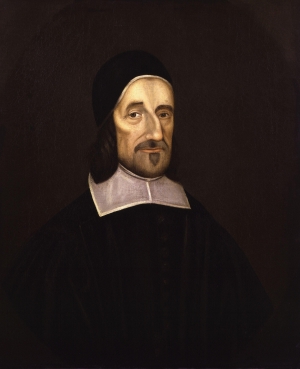
Judged by the mainstream of Reformed theology and particularly by confession of by the Reformed Churches, Richard Baxter (1615–91) was not Reformed. Remarkably, because many are not aware of what Baxter taught about the central issue of the Reformation, the article by . . . Continue reading →