It became evident (to me at least) that Moltmann’s way of going about things is thoroughly [H]egelianised. He is not an anthropomorphite simply because he is sentimental about God, wanting a God near to him, nor because of jejune bible study. His . . . Continue reading →
Doctrine of God
Reformed Orthodoxy On Holiness Of The Spirit
The Spirit, further, is called “Holy” because, on the one hand, of “his unsullied purity and glorious majesty”—not, however, as if he were holier than the Father and the Son, for all are holy and “the divine holiness, being infinite, does not . . . Continue reading →
Bavinck: Our Knowledge Of The Trinity Is Only Grounded In Scripture
Now, over against all those who want to base the doctrine of the Trinity on rational grounds, we must undoubtedly maintain that we owe our knowledge of this doctrine solely to God’s special revelation. Scripture alone is the final ground for the . . . Continue reading →
Helm: Modified Classical Theism And The Evangelical Big Top
It occurs to me that in this convergence of views in the direction of what is called ‘modified classical theism’ there is the makings of a theology for the ‘big tent’ of evangelicalism, a formula for providing space for the various disparate . . . Continue reading →
Every Day Is Father’s Day For Christians

Q. 26. What do you believe you when thou say, “I believe in God the Father, Almighty, Maker of heaven and earth”? That the eternal Father of our Lord Jesus Christ, who of nothing made heaven and earth with all that in . . . Continue reading →
Providence (4): Not A Chance In The World
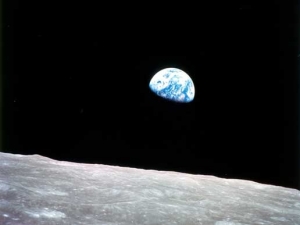
In part 3 we considered the “as it were” principle when thinking and talking about God and his providence. We talk about chance all the time. “Not a chance” or “He never gave me a chance” and in those cases we’re talking . . . Continue reading →
Providence (3): The “As It Were” Principle
In part 2 we considered the biblical and confessional Reformed teaching that the triune God is actively present, sustaining and governing all that is. In our account of the doctrine of providence we use an interesting little expression that is freighted with . . . Continue reading →
Providence: God’s Active, Almighty, Present Power (2)
In the previous post we considered what it means to say “I believe in God the Father almighty. One of the most scurrilous things that some neo-Pentecostalists have alleged against the historic Christian view of God is that we are Deists. Quite . . . Continue reading →
Providence: God’s Active, Almighty, Present, Power (1)
From the moment Adam sought to grasp equality with God (Phil 2), from the moment he mysteriously rebelled against God’s sovereignty and hiddenness (“You shall be as God”), from the moment he ceased to love and adore the triune God, since that . . . Continue reading →
Creator, Sustainer, Father (2)
In the first part we looked at the doctrine of God embedded in Heidelberg Catechism Q/A 26. The catholic (universal) Christian doctrine of God summarized in the catechism is in antithesis to modernist doctrine(s) of God in process or contingent upon us creatures. . . . Continue reading →
Uncreated, Immense, Eternal
But the Godhead of the Father, of the Son, and of the Holy Spirit is all one, the glory equal, the majesty coeternal. Such as the Father is, such is the Son, and such is the Holy Spirit. The Father uncreated, the . . . Continue reading →
Perkins: God Is In Perpetual Action
Hitherto we have spoken of the perfection of Gods nature: Now followeth the life of GOD, by which the Divine Nature is in perpetual action, living, and moving in it self. Psal. 42. 2. My soule thirsteth for God, even for the . . . Continue reading →
Does God Change?

In Reformed theology, the doctrine of God is at the headwaters. What we say about God touches every locus of theology. It shapes our theology, piety, and practice. When we say that humans are created in the image of God, we cannot . . . Continue reading →
Helm Critiques Frame’s Perspectival Theism
In The Doctrine of God (2002) we find Frame discussing God’s relationship to time and space. (The sections are reproduced almost verbatim in Frame’s recently published doorstopper, his one volume Systematic Theology. (On God and time compare pages 557f. of The Doctrine . . . Continue reading →
Muller On Reformed Orthodoxy On Double Procession And The Filioque
2. The demonstration of the filioque: “double procession.” The traditionally Western trinitarian concept of the double procession of the Holy Spirit was consistently upheld by the Reformers and argued with some vigor against the Greek Orthodox view. The Reformed exegetes, moreover, understood . . . Continue reading →
The Irony Of Denying Divine Impassibility: A Greek God
This is why most of theologians who espouse a suffering God intentionally advocate a panentheistic notion of God”that is, that while God is potentially more than the cosmos, the cosmos is constitutive of His very being. (Those theologians who espouse a suffering . . . Continue reading →
Creator, Sustainer, Father (1)
One of the most basic impulses of the Enlightenment and post-Enlightenment west has been to get rid of God. The Enlightenment brought a revolution. In Christian antiquity, God was and we were becoming. In Modernity (and late modernity) we are and God . . . Continue reading →
One God, Three Persons. Full Stop.

The biblical, catholic, Christian doctrine of the Trinity is startlingly brief: God is one in three persons. Yet, the moment we pronounce that little formula, we’ve stepped off the pavement and into deep waters. To those outside the faith, our claim that . . . Continue reading →
It’s Not Divine Simplicity And Complexity. It’s Just Simplicity. Period.
In earlier generations simplicity was regarded as an indispensable aspect of an orthodox doctrine of God. Anglicans, Presbyterians, Congregationalists, and Baptists all confessed that God is “without parts” and the Belgic Confession even made divine simplicity its opening affirmation: “We all believe . . . Continue reading →
Should I Buy It?

Frequently I receive the question in my inbox: “Should I buy this book?” What I would like to say is, “Yes, buy every book but don’t buy every book you buy.” I think it is a good idea to own and read . . . Continue reading →