Because Adam sinned, we are all born dead in sins and trespasses (Ps 51:5; Eph 2:1–4). By nature we are “children of wrath” (Eph 2:3), idolaters (Gal 4:8), at war with God, given to all manner of wickedness (Gal 5:19–21). God is . . . Continue reading →
Assurance
Luther: The Enemy Does Not Present To Us The Whole Christ
So far as the words are concerned, we know all this very well and can discourse on it. But in the struggle, when the devil tries to mar the image of Christ and to snatch the Word from our hearts, we discover . . . Continue reading →
What Not To Do When Visiting The Dying

In the video he tells the story of how he visited John MacArthur as he, MacArthur, was dying. He recounts how he began by doing something “that men do not often do to men like him but should do all the time. I walked in and I said ‘Dr. MacArthur, is it well with your soul? Are you reading the Word, talk to me about your prayer life. How is your communion with Christ?’” Continue reading →
Olevianus On How The Articles Of The Apostles’ Creed Give Us Assurance And Comfort
Give me some guidance as to what I should do to derive a firm confidence and sure comfort from the articles of faith. A. First of all, for each and every article of faith think about God’s promise that if you believe . . . Continue reading →
Berkhof: The Minute Examination Of The Soul Does Not Produce Assurance
In the eighteenth century the religious life of Europe suffered from the blight of Rationalism. Religion became a matter of the intellect only, and religious truth was made to depend on rational arguments. Religious certainty was identified with a rational insight into . . . Continue reading →
Berkhof: Assurance Was A Tower Of Strength For The Reformers
The Reformers rejoiced in the assurance of salvation as a tower of strength. This Christian certitude made them irresistible in their attacks on the church of Rome and adamant in resisting the onslaughts of the enemy. They were the first to place . . . Continue reading →
Video: Mortimer Adler And Charles Van Doren On How to Read a Book

In this video from 1975, Mortimer Adler and Charles Van Doren discuss how to read a book, the art of reading, and more. Continue reading →
Video: Assurance In Luke 7

In this episode Pastor Mike Abendroth looks at Luke chapter 7 and what it teaches us about the assurance of faith. Continue reading →
Luther: We Pray For Trivial Things And Neglect God’s Majesty
We too are in the habit of praying for trivial and insignificant things. When we pray, we don’t take into account the great majesty of God. If God wanted to give us only petty and superficial things, he wouldn’t have given us . . . Continue reading →
Luther’s Cure For Spiritual Depression
My dearest Spalatin, I heartily sympathize with you and earnestly pray our Lord Jesus Christ to strengthen you and give you a cheerful heart. I should like to know, and am making diligent inquiries to find out, what your trouble may be . . . Continue reading →
But What About My Works?
I have been asked many times, in the context of biblical counseling, about the relationship between a person’s faith and their good works. In most cases, the person asking the question was struggling at some level with their own sense of assurance of pardon from . . . Continue reading →
Can I Have Assurance?

Joel asks, “Is it possible for a person to want/desire to know Christ as his/her Savior and not be among the elect?” HC 21. What is true faith? True faith is not only a certain knowledge whereby I hold for truth all . . . Continue reading →
Why Reformed Folk Become Lutheran

Over the years I have watched a trickle of Reformed folk leave confessional Reformed churches for confessional Lutheran churches and in every case of which I know there was one reason: assurance. In Lutheranism, those folk found a clear, unequivocal message of . . . Continue reading →
Getting The Gospel Right: The Heidelcast, The Pactum Podcast, NoCo Radio, And Theocast

This is a special episode of the Heidelcast recorded together with my friends Mike Abendroth, from No Compromise Radio, Pat Abendroth and Mike Grimes from the Pactum Podcast, and Jon Moffit and Justin Perdue of Theocast podcast. We gathered last Friday evening . . . Continue reading →
Heidelminicast: Covenant Theology Gives Us Assurance Of Salvation
These are some of our favorite Heidelquotes. Something to think about from the Heidelcast. If you are subscribed to the Heidelcast or the Heidelblog (see below) you will receive these episodes automatically. All the Episodes of the Heidelcast How To Subscribe To Heidelmedia . . . Continue reading →
New In Print: Gospel Assurance: A 31 Day Guide to Assurance
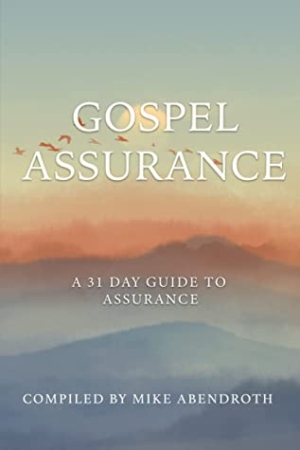
Christians often ask great questions about the doctrine of assurance of salvation: What is assurance of salvation? Do you know that you are going to heaven when you die? Is Assurance possible in this life? Can a Christian temporarily lose their . . . Continue reading →
Heidelcast For July 17, 2022: Every Tribe, Tongue, And Nation (8): First Head Of Doctrine (5)
In this episode Dr Clark continues his series on the Canons of Dort where we are looking at the First Head of Doctrine of the Canons of Dort, articles 12 and 13. The Synod was responding to the problem of assurance. The . . . Continue reading →
Witsius On Aspects Of True Faith
A True faith in God through Jesus Christ is the principal act of that spiritual life, which is begun in the elect by regeneration, as well as the fountain head, from whence, all those living works which follow after regeneration, proceed: the . . . Continue reading →
What Is Assurance?
During the darkest moments of our lives—when it feels we’re taking more delight in sinstead of Christ—where should we turn for the assurance of our salvation? All believers struggle with this at times. Even John Calvin said he could not “imagine any . . . Continue reading →
New Resource Page: On The Assurance Of Salvation

One of the animating forces that drove the Reformation was problem and doctrine of assurance. In the medieval church (as in the Roman communion and in some Protestant quarters today) it was ordinarily impossible for a Christian to have confidence that he had been saved and was accepted by God. Tragically, one finds this sort of approach among some evangelicals and even among some ostensibly Reformed writers. Continue reading →