
The government of the Scottish Church was thus completely subverted in its external aspect. The crown was now determined to see whether with equal ease it was possible to introduce the ceremonies of the English Church. James ordered repairs to be made . . . Continue reading →

A Brief History Of Covenant Theology

The roots of Reformed covenant theology are as deep as the Christian revelation and tradition is old. Its importance to the Reformed faith cannot be overstated. The great Princeton theologian, B. B. Warfield called federal (covenant) theology, “architectonic principle” of the Westminster . . . Continue reading →
The Difference Between What We Know And What We Think We Know
…much of what is commonly written on the history and development of the western liturgy is dependent upon reconstructions…. —D. M. Hope, “Liturgical Books” in Cheslyn Jones, Geoffrey Wainwright, and Edward Yarnold, ed. The Study of Liturgy (NY: OUP, 1978), 66.
Heidelberg 115: The Three Functions Of The Law In The Christian Life

In the ancient world a teacher (a pedagogue) was not your friend nor your therapist. He almost a legal figure whose job it was to see that you had done your lessons properly, that you made memorized your vocabulary and paradigms and . . . Continue reading →
Heidelberg 114: Between Moralism And Antinomianism (2)

Paul was not a Gnostic, a Valentinian, an Anabaptist, a Familist, nor an Antinomian. He was a sinner saved and justified freely through faith alone, a Christian living in union and communion with Christ, seeking to bring his life into conformity to all of God’s holy moral law. Continue reading →
The Constantinian Turn Was Definitive
The conversion of Constantine marks a watershed in the patristic period. In the second and third centuries the Church was a relatively private community, suffering from time to time the threats and the actuality of imperial persecution and looking for the end . . . Continue reading →
Heidelberg 114: Between Moralism And Antinomianism (1)
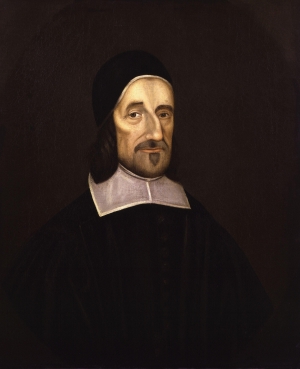
Judged by the mainstream of Reformed theology and particularly by confession of by the Reformed Churches, Richard Baxter (1615–91) was not Reformed. Remarkably, because many are not aware of what Baxter taught about the central issue of the Reformation, the article by . . . Continue reading →
What’s Wrong With Participation Trophies?

Heidelberg 113: Being Content

In a world in which we seem to be surrounded by death and corruption, it is most difficult to imagine what it must have been like to be without sin but we were created “in righteousness and true holiness.” We were not . . . Continue reading →
Office Hours: The Great Disappointment, Graham Crackers, And American Religion

Nineteenth-Century American religion was wild and wooly. It began with an outbreak of Pentecostalism and concluded with the death of Dwight L. Moody and the beginning of the end of Old Princeton. In between saw the rise of Mormonism, the Second Great . . . Continue reading →
A Mortal Wound To Free Exercise?
The If nothing else, it’s comforting to know that Colorado can force an orthodox Islamic butcher to make sausages for a polyamorous bisexual bachelor/bachelorette party, so long as no one asks the butcher to outwardly promote swine and free love. Not only . . . Continue reading →
Some Anglican Practices To Which The English Reformed Objected In 1603
In the Church service: that the cross in baptism, interrogatories ministered to infants, confirmation, as superfluous, may be taken away; baptism not to be ministered by women, and so explained; the cap and surplice not urged; that examination may go before the . . . Continue reading →
Nazi Policy: Abort The Unwanted
The Slavs are to work for us. Insofar as we do not need them, they may die. Therefore, compulsory vaccination and German health service are superfluous. The fertility of the Slavs is undesirable. They may use contraceptives or practice abortion, the more . . . Continue reading →
Straight Outta Noyon

Heidelberg 112: Your Speech Shall Accord With Objective Reality

In the garden the Evil One began by questioning the veracity of God’s Word: “Has God really said, ‘You shall not eat of any tree in the garden’?” (Gen 3:1b). The woman collaborated with the Evil One by adding to the Lord’s . . . Continue reading →
Confessional Presbyterian Church Plants In The UK

Recently I learned about a relatively new church plant of the Evangelical Presbyterian Church in England and Wales in Sheffield, Leeds, and Manchester. The pastor is the Rev. Dr. Kevin Bidwell. In addition to the work in Sheffield, they are also actively working . . . Continue reading →
St Bartholomew’s Day 1572: An Orgy Of Popular Violence
Long-range prospects for the Reformed churches in France appeared almost hopeful in the summer of 1572. The Peace of St. Germain (1570) that concluded the third civil war had granted significant political, military, and religious concessions to the Huguenots. The Catholic Duke . . . Continue reading →
Heidelberg 110–111: You Shall Not Steal

The eighth commandment says: “You shall not steal” (Exod 20:15). I recall following Mom down the grocery aisle and picking grapes as a I went. I was probably 5 or 6. I saw the grapes. They looked good and I wanted some. . . . Continue reading →
Antinomianism Is The Fruit Of Over-Realized Eschatology
Those who do not see the Law as valid in the life of the Christian must also assert that this world has passed away and that the new world has already been inaugurated. This proposition must be firmly rejected because only at Christ’s . . . Continue reading →
Heidelberg 108–109: You Were Bought With A Price (2)

God’s Word is very clear about sexual immorality. Leviticus 18 illustrates how God views sexual immorality. It prohibits adultery and moves immediately in the next verse to warn against not offering one’s children to Molech, to a prohibition against male homosexuality, which . . . Continue reading →