
…1. As to doctrinal legalists, we might bewail and refute the legal schemes that take place in the world. I name these two: 1. The Popish Scheme, denying the imputation of Christ’s righteousness. The imputed righteousness of Christ is blasphemed by the . . . Continue reading →
Justification
When Old Testament Scholars Do Historical Theology

It comes out about as accurate as Historical Theologians doing serious Old Testament work. I say this because I recently asked whence folk (Federal Visionists among them) get the idea that Martin Bucer’s soteriology marked a substantial break from Martin Luther’s. I . . . Continue reading →
Simul Iustus et Peccator: The Role of Justification in Pastoral Counseling

As shepherds of Jesus’s flock, pastors wrestle with the wounds and waywardness of the human heart. They counsel the guilty, who are consumed by self-condemnation. They counsel the defensive, who try to deflect God’s heart-piercing word through self-justification and blame-shifting. Continue reading →
Justification by Faith Alone: No Christian Life without It
Whenever the doctrines of justification and sanctification are to be considered, the instinctive reaction of a Protestant ought to be to draw a distinction between them. Continue reading →
Why Evangelicals Cannot Be Trusted With The Bible

Carolyn Arends wants to give an argument for the benefits of God’s moral law, but she lacks the categories by which to do it. Her argument has only two categories: good/bad, and relationships. The title and subtitle of her essay should alarm . . . Continue reading →
Video: “Our Hermit Broke Through”—The Reformation’s Defense Of Sola Fide

Last January, Dr Clark joined Dr Mike Horton, Dr Jonathan Linebaugh, Dr Andreas Stegmann, and Dr Ashley Null to celebrate the Reformation solas in a conference put on by the Wittenberg Center for Reformation Studies. Here is Dr Clark’s talk on the . . . Continue reading →
When Pastors Do Not Pay Attention

Remarkably, after two decades of controversy over the self-described Federal Vision movement, there are pastors and teachers who do not seem to understand it.1 One can see why one might have been confused in the early days of the discussion, but now, . . . Continue reading →
Regensburg And Regensburg II: Trying To Reconcile Irreconcilable Differences On Justification

Introduction When in 1618 the Reformed theologian J. H. Alsted (1588–1638) declared that the Protestant doctrine of justification is that “article of faith by which the church stands or falls” (articulus stantis et candentis ecclesiae), he was only repeating what all Protestants . . . Continue reading →
On Precisionism And Latitudinarianism (Again)

In 1520 Martin Luther published one of his most influential treatises, On the Babylonian Captivity of the Church. In it he attempted to set the church free from bondage to human opinion by unleashing again, as it were, God’s Word as the . . . Continue reading →
Why Caution About Jonathan Edwards Is In Order
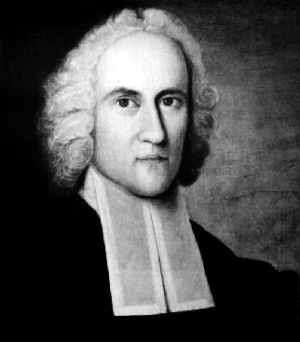
Jonathan Edwards (1703–58) is America’s most famous theologian and perhaps its most famous philosopher too. He is an important and influential figure and is worth seeking to understand for these reasons alone. We should think about Edwards for other reasons, however. He . . . Continue reading →