For more than 75 years, Camp IdRaHaJe has welcomed children each summer to hear the Gospel, build character, and grow in faith. Nestled in Bailey, Colorado, the camp’s name comes from a simple hymn lyric: “I’d rather have Jesus.” In 2024, the . . . Continue reading →
Top Five Posts For The Week Of October 13–19, 2025

These were the top five posts for the week of October 13–19. Continue reading →
Heidelcast For October 19, 2025: Have This Mind: Philippians (1)

In this episode Dr Clark begins a new series, “Have This Mind” Continue reading →
Heidelcast: Superfriends Saturday: Anointing With Oil | Is the Word “Psalms” Inclusive Of Non-Inspired Songs?
It’s a Superfriends Saturday on the Heidelcast! Continue reading →
Young Ministers With Older Elders
As I lifted my hands, scanned the room, and gave my first benediction, the realization that I really was a pastor now hit me like a ton of bricks. From now on it was my job to “shepherd the flock of God… . . . Continue reading →
Home At Last: Psalms 132–134—Part 1: A Dwelling Place (Psalm 132)

Arrival. It is a beautiful word, is it not? Making it to your vacation spot or returning home after a long journey—it is good to arrive when the destination is desirable. And there is no more desirable destination than God’s presence, and . . . Continue reading →
Video: R. Scott Clark’s Monumental New Heidelberg Commentary

R. Scott Clark chats with the Presbycast about his new book: The Heidelberg Catechism: A Historical, Theological, & Pastoral Commentary. Continue reading →
The Federal Vision And The Reformed Hermeneutic
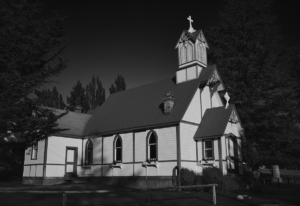
One of the most frequent claims made in defense of the self-described Federal Vision (hereafter FV) is the claim that they are “only following the Bible.” A corollary of that is the claim that Reformed confessionalists “have already decided in advance what . . . Continue reading →
Second Circuit Rules For Christian School
Mid Vermont Christian School forfeited a girls’ playoff basketball game to avoid playing a team with a transgender athlete. The school believes that forcing girls to compete against biological males would affirm that those males are females, in violation of its religious . . . Continue reading →
Review: Remember Death: The Surprising Path To Living Hope By Matthew McCullough
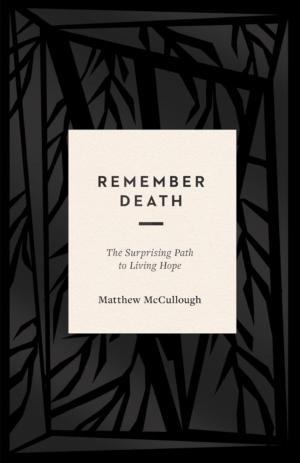
We are all going to die! It is not just a line from some movie script. It is a basic truth: No person will escape death. Unless Christ returns first, you will die, I will die, and everyone else will die as . . . Continue reading →
Whose Kingdom, Which Power?
The pressure is immense. Then, we open social media and see absolutely no uniformity of agreement on how this should be done. There is pastoral disarray, it seems. Some of the most popular social media pastors are calling us to war, yes, . . . Continue reading →
Heidelminicast: Can Baptists Be Catholic? (Part 2)
In this episode Dr Clark begins a new series, “Can Baptists be Catholic?” Continue reading →
Catholic-Protestant Differences (Part 2)
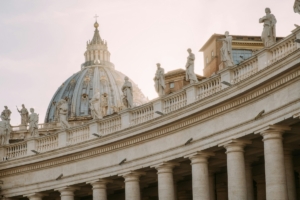
Many/most expressions of the visible church on earth have some central administrative office, an office that serves the various particular churches administratively. Rome goes beyond this, however, and its pope is not merely an administrative official; he has authority to settle matters of faith and practice . . . Continue reading →
Heidelminicast: Can Baptists Be Catholic? (Part 1)
In this episode Dr Clark begins a new series, “Can Baptists be Catholic?” Continue reading →
Berkhof: The Minute Examination Of The Soul Does Not Produce Assurance
In the eighteenth century the religious life of Europe suffered from the blight of Rationalism. Religion became a matter of the intellect only, and religious truth was made to depend on rational arguments. Religious certainty was identified with a rational insight into . . . Continue reading →
Nihilism And The American Middle
In recent years, a new form of terror has emerged: decentralized, digitally driven violence organized not around coherent ideologies but around memes, fantasies, and nihilistic impulses. The perpetrators of this low-grade terror campaign do not belong to hierarchical organizations or pursue concrete . . . Continue reading →
The Tender Love A Father Has: The Christian’s Comfort, Even In Death (Part 7)

We have been considering lately how the resurrection gives us hope right now and in the face of death. The resurrection, however, also affords the Christian a glorious hope for the future, and so today we want to give some attention to . . . Continue reading →
Heidelminicast: Grammar Guerrilla (30): “Pray for” And “Pray to”
In this episode Dr Clark continues his series on grammar. Continue reading →
A Reformation Anglican Response To The Appointment Of Dame Sarah Mullally As Archbishop Of Canterbury
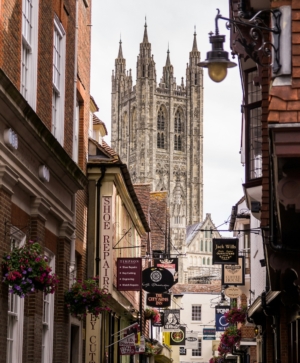
The recent announcement that Dame Sarah Mullally will become the 106th Archbishop of Canterbury marks a watershed moment for the Church of England and the wider Anglican Communion. While the British government hails this appointment as a historic milestone, many within the . . . Continue reading →
Calvin: Christ Is The Mirror Of Our Election
First, if we seek God’s fatherly mercy and kindly heart, we should turn our eyes to Christ, on whom alone God’s Spirit rests [cf. Matt. 3:17]. If we seek salvation, life, and the immortality of the Heavenly Kingdom, then there is no . . . Continue reading →