
Here indeed is pure and real religion: faith so joined with an earnest fear of God that this fear also embraces willing reverence, and carries with it such legitimate worship as is prescribed in the law. And we ought to note this . . . Continue reading →
Five Solas
Confessions Of A Former Charismatic

Dr. Clark, A few weeks ago you posted a warning against the desire for ongoing prophecy. [See also this—Ed.] In it you told a story of what happens when people look to words from God beyond Scripture. I wanted to stand as . . . Continue reading →
Resources On Continuing Revelation

Since the Second Great Awakening, in the 19th century, modern evangelical theology, piety, and practice has come to be dominated by various species of what are really expressions of the original Anabaptist theology, piety, and practice in the sixteenth century. They were . . . Continue reading →
The Practical Danger Of “Continuing Prophecy”
When I first met my husband-to-be, it was like a dream come true. We met on a missions trip. He was kind, considerate, actively serving in the church, spiritually mature, and handsome, too. Our friendship grew quickly and within months we were . . . Continue reading →
Office Hours: The Holy Spirit And Sola Scriptura

One of the dominant trends in global Christianity is the growth of the Pentecostal and the Charismatic movements. A 2011 study published by the Pew Research Center’s Forum on Religion and Public Life says that more than 500 million Christians globally identify . . . Continue reading →
Calvin: Jesus Preached The Law To Teach Us Our Need For A Savior
Now it is certain that in the Law there is prescribed to men a rule by which they ought to regulate their life, so as to obtain salvation in the sight of God. That the Law can do nothing else than condemn, . . . Continue reading →
Muddying The Distinction Between Justification And Salvation
Biblicism is the attemp to read the bible by itself and by one’s self, i.e., in isolation from the church. Sola scriptura means that Scripture alone is the sole, final authority for faith and life but it does not mean to declare either . . . Continue reading →
Manton: Lent Is Just Another Phony Tradition
That they [Romanists] cry up a private, unproved, unwritten tradition of their own, as of equal authority with this safe and full rule, which is contained in this written Word of God. Their crime and fault may be considered, partly with respect . . . Continue reading →
Pentecostalism Is Not New
Montanism was a second-century movement whose leader Montanus claimed to receive direct revelation from God. In addition, two of his “prophetesses,” Priscilla and Maximilla also claimed to receive such revelation. Such revelations were often accompanied by strange behavior. When Montanus had these . . . Continue reading →
Warfield: What the Perspicuity Of Scripture Does And Does Not Do
The third property of Scripture adduced, is its perspicuity (section 7): and here again the Confession is no less precise and guarded than clear and decided in its assertions. The perspicuity of Scripture is sharply affirmed, in the sense that the saving . . . Continue reading →
Calvin Against Continuing, Extra-Biblical Revelation
Furthermore, those who, having forsaken Scripture, imagine some way or other of reaching God, ought to be thought of as not so much gripped by error as carried away with frenzy. For of late, certain giddy men have arisen who, with great . . . Continue reading →
Office Hours: What Does It Mean To Say To God Alone Be The Glory?
When one enters the Reformed world one find that we still use Latin phrases from time to time. Particularly we will hear or read people using a few Reformation slogans frequently. We call them the Solas: Sola gratia (by grace alone), sola . . . Continue reading →
Perkins: Grace Admits No Partner Or Fellow
[The Galatians] joined the works of the law with Christ and his grace in the cause of their justification and salvation. Here it must be observed that they which make a union of grace and works in the cause of justification are . . . Continue reading →
Audio: One Final, Glorious, Sovereign Word

Here is the audio from the morning sermon at Trinity OPC (Novato) from a couple of Lord’s Days ago:
Biblicism: A Trojan Horse Full Of Rationalism
Over against the magisterial Reformers and the Roman Catholic theologians of the day, theologians like Michael Servetus, Giovanni Blandrata, Valentine Gentile, and Laelius and Faustus Socinus examined the text of Scripture in a strictly linguistic and non-traditionary exegesis and found no doctrine . . . Continue reading →
Heidelcast 98: Salvation, Good Works, And Conditions

We in the Reformed world are in the midst of another controversy over sanctification, salvation, good works, and conditions in the covenant of grace. Are we justified by grace alone through faith alone but saved by grace, through faith and works? Is . . . Continue reading →
Fall Conference Season 2015: Identity, Eschatology, And Authority

It is the fall conference season. Here are three gatherings about which you might want to to know. One confronts the problem of identity: do we define ourselves the way the culture would have us do it or is there a better way? The second gathers a stellar group of Reformed teachers to help us through “end times” and the third focuses on the Biblical and Reformation doctrine of “Scripture alone.” Continue reading →
What The Heidelberg Liturgy Teaches Us About Grace, Faith, And Sanctification

The medievals had a saying: the law of praying is the law of believing (lex orandi, lex credendi). By it they meant to say that what we do in worship affects our theology. If you want to change theology of the future change . . . Continue reading →
John Brown of Haddington On Conditions In The Covenant Of Grace
When condition is improperly taken, and signifies no more than what particular duties as performed must, in the order of nature, precede the enjoyment of particular promised benefits, many things may be called conditions; for holiness must precede eternal happiness…. True repentance . . . Continue reading →
The Question Is Not Whether But Why?
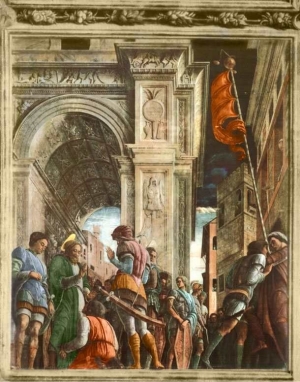
Do Reformed Christians ignore the Epistle of James? Particularly, have those who confess the Reformed theology, piety, and practice been guilty of ignoring James’ teaching in 2:14–17. Whether James has been ignored in recent years is a difficult assessment to make. How . . . Continue reading →