

What is one thing you badly want to do but is just not in the cards? You may dream of playing basketball at a high level but Providence made you short. You would love to climb mountains but your fear of heights . . . Continue reading →
Article
What is one thing you badly want to do but is just not in the cards? You may dream of playing basketball at a high level but Providence made you short. You would love to climb mountains but your fear of heights . . . Continue reading →
HeidelQuote
Lastly, justification by works causes trouble and disquietness to the conscience. No man’s conscience can be appeased before God’s wrath is appeased, and God’s wrath cannot be appeased by any works. For the best works the regenerate can do are imperfect, and . . . Continue reading →
Heidelcast

In this episode of the Heidelcast, the Superfriends discuss the command to “Be Fruitful and Multiply”. Continue reading →
Heidelvideo

Dr. R. Scott Clark examines why many are drawn to Roman Catholicism and explains why the Papacy is an essential, yet historically late, development that defines the Roman Church. Continue reading →
Article
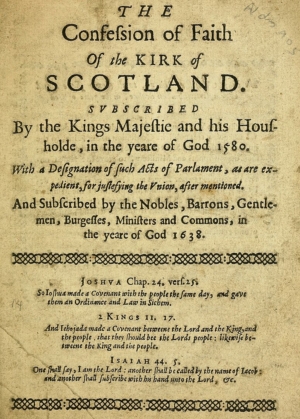
Embora não seja particularmente popular, seja em nosso atual meio secular, seja em nossa atual amnésia eclesiológica, continuo a crer que ter, manter e exigir uma confissão é bom para nós. Em suma, uma confissão é boa para a nossa saúde, mesmo . . . Continue reading →
HeidelQuote
In the Gospel of John, we read the English verb “to believe” fifty-four times in the English Standard Version. By contrast, the original Greek verb πιστεύω (pisteuō), which underlies and is commonly translated as forms of “believe,” occurs ninety-eight times in John’s . . . Continue reading →
HeidelQuote
I write not as a theologian, minister, or church officer, but as a woman and an ordinary PCA churchgoer who has a real stake in the continuing faithfulness of the church. Decisions made at the General Assembly and in presbyteries are not . . . Continue reading →
Book Review

In the seventeenth century, the first question of the Westminster Larger and Shorter Catechism asked the perennial question of humanity: What is our purpose? What is the goal of life? The answer has been important for Christians in the centuries since: Man’s chief end is to glorify God and enjoy him forever. This answer contains much wisdom and points us to the true meaning of our lives. Continue reading →
Heidelminicast
In this episode Dr. Clark talks about Reformed Theology. Continue reading →
Article
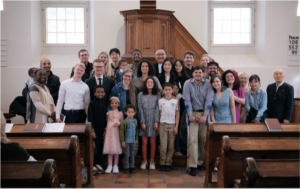
Dear Friends, It is with joy that I share with you an update about our English-speaking, church-planting work Frankfurt Presbyterian Church, which, by the Lord’s grace, has experienced modest growth over the past two years and is slowly but surely taking root . . . Continue reading →
HeidelQuote
Thus Baxter, by the initial rationalism of his ‘political method’, which forced scripture into an a priori mould, actually sowed the seeds of moralism with regard to sin, Arianism with regard to Christ, legalism with regard to faith and salvation, and liberalism . . . Continue reading →
Heidelminicast
In this episode Dr. Clark talks about Reformed Theology. Continue reading →
HeidelQuote
When it comes to any matter related to the Christian life—which is, in fact, every matter—our first priority is to ask what God desires for his people. This is true not only in our personal lives but also in matters of God’s . . . Continue reading →
Article
It is absolutely astonishing for anyone to desert the gospel of grace and peace for another so-called gospel. That is why we see next the double damnation of “other gospel” preachers in verses 8–9: But even if we or an angel from . . . Continue reading →
Heidelminicast
In this episode Dr. Clark talks about Reformed Theology. Continue reading →
News & Announcements

These were the top five posts for the week of February 16–22, 2026. Continue reading →
Article

That slogan puzzled me the first few times I heard it, but I think I understand it more clearly now. I was puzzled because the word scholar means “student.” It is a Latin word derived from the noun schola, or school. A scholar is . . . Continue reading →
HeidelQuote
Meanwhile, [Petrus] Dathenus led a rather checkered life. His preaching soon brought him into difficulties, even with William of Orange, the leader of the fight against Spain. The prince wanted to grant Roman Catholics freedom of worship, but Dathenus strenuously opposed such . . . Continue reading →
Heidelcast
In this episode Dr Clark continues the series, “Have This Mind” Continue reading →
HeidelQuote
Baxter’s writings are a strange theological mix. He was one of a few Puritans whose doctrines of God’s decrees, atonement, and justification were anything but Reformed. Though he generally structured his theology along Reformed lines of thought, he frequently leaned towards Arminian . . . Continue reading →