
“Just searched “federal vision” at meet the Puritans.com and there are no returns. Puritans have everything to say re Tullian and nothing to say re FV” —Mihai Corcea on Twitter.
Justification
Berkhof On The Necessity Of Good Works (UPDATED)
3. THE NECESSITY OF GOOD WORKS. There can be no doubt about the necessity of good works properly understood. They cannot be regarded as necessary to merit salvation, nor as a means to retain a hold on salvation, nor even as the . . . Continue reading →
A Brief Refresher On Norman Shepherd’s Doctrine Of Conditions In The Covenant
…Just as Adam was obliged to meet the conditions of the covenant that God graciously established with him, so believers are obliged to meet the conditions of the covenant of grace in order to inherit eternal life. Just as Christ was obliged . . . Continue reading →
The Nine Points of Synod Schereville

In light of the current discussion, it seems appropriate to re-post these brief points with some explanatory resources below. We are rehashing some of the same issues, particularly points 7–9. These points were adopted as “pastoral advice” to the churches by the . . . Continue reading →
Our Sins Won’t Be Revealed
XVII. Further, if it is asked here whether the sins of the pious equally as well as of the wicked will be revealed, we answer that the negative seems more probable to us. (1) On account of the judge, who since he . . . Continue reading →
Berkhof On The Standard Of Final Judgment
The standard by which saints and sinners are judged will evidently be the revealed will of God. This is not the same for all. Some have been privileged above others, and this naturally adds to their responsibility, Matt 11:21–24; Rom. 2:12–16. This . . . Continue reading →
Olevianus On Romans 2:13

In 1529, one of Luther’s principal opponents, Johannes Eck (1486–1541) published the first edition his Enchiridion Against Luther and Other Enemies of the Church a refutation of the Protestant errors. Under the heading, “De fide et operibus” he proposed thesis that “faith . . . Continue reading →
Colquhoun: Repentance Does Not Give Us Title To Eternal Life
How then can his repentance atone for his iniquities, or entitle him to the favour of God and to the happiness of heaven? How can that evangelical repentance, which he is incapable of exercising till after his sins be all forgiven on . . . Continue reading →
Romans 2:13—Justified Through Our Faithfulness?
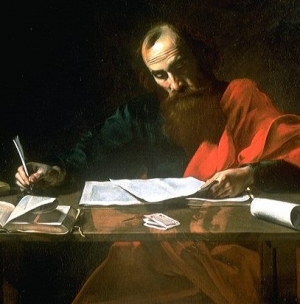
As I mentioned in an earlier post in Romans 2:13 Paul writes, “For it is not the hearers of the law who are righteous before God, but the doers of the law who will be justified” (ESV).1 The chapter begins with matter of . . . Continue reading →
Romans 2:13—Justified Through Our Faithfulness? (2)
In part 1 we began looking at a neglected aspect of the current controversy over justification and sanctification. What has been neglected is a 1978 proposal that, at the judgment, “faithful disciples” will be justified before God through their faithfulness. The current controversy . . . Continue reading →
Romans 2:13—Justified Through Our Faithfulness? (3)
In part 2 we considered Romans 2:13 in its own context (Romans 1:18–3:20) and the impulse to distinguish between an initial stage of justification sola gratia, sola fide, on the basis of Christ’s righteousness imputed, and a final stage of justification in . . . Continue reading →
Luther’s First Lecture On Romans 2:13 (1515–16)
13. But the doers of the Law will be justified. This passage is interpreted in a twofold way by blessed Augustine in chapter 26 of On the Spirit and the Letter. First in this way:The doers of the Law will be justified means that through . . . Continue reading →
Calvin’s Commentary On Romans 2:13
…they gloried in the mere knowledge of it: to obviate this mistake, he declares that the hearing of the law or any knowledge of it is of no such consequence, that any one should on that account lay claim to righteousness, but . . . Continue reading →
Romans 2:13—Justified Through Our Faithfulness? (4)
In part 3 we began looking at a document, from 1978, which proposed a two-stage doctrine of justification. It recognized that there is some risk, some difficulty, in speaking of a present justification and a future justification. Nevertheless, the document contends that . . . Continue reading →
Charles Hodge On Romans 2:13
VERSE 13. For not the hearers of the law. This verse is connected with the last clause of the preceding, and assigns the reason why the Jews shall be judged or punished according to the law; the mere possession or knowledge of . . . Continue reading →
Witsius And Turretin On The Necessity And Efficacy Of Good Works In Salvation

Introduction There is no question among orthodox, i.e., confessional, Reformed folk whether good works are necessary as a consequence, evidence, and a fruit of justification and sanctification by grace alone, through faith alone. There is no question whether God’s moral law, whether summarized in . . . Continue reading →
Calvin On Romans 2:13 In His Institutes
That they indeed quote Paul in the same sense does them very little good: “The doers of the law, not the hearers, are justified” [Rom. 2:13 p.]. I do not intend to evade the question through Ambrose’s solution: that this was said . . . Continue reading →
Augustine On Romans 2:13
Now he could not mean to contradict himself in saying, “The doers of the law shall be justified,” as if their justification came through their works, and not through grace; since he declares that a man is justified freely by His grace . . . Continue reading →
What About Love? A Crucial Piece Missing From The Sanctification Debate

While the debate rages (or rambles) on in Reformed circles about the Christian’s motivation for obedience, a piece that seems to be missing from much of the discussion is the crucial role that love plays in our obedience to our Heavenly Father. . . . Continue reading →
Calvin On God’s Gracious Acceptance Of Our Works In Christ
Not For Justification
In this way we can admit not only that there is a partial righteousness in works (as our adversaries maintain), but that they are approved by God as if they were absolutely perfect. If we remember on what foundation this is rested, . . . Continue reading →