
The church historian Eusebius declared himself in the strongest manner against images of Christ in a letter to the empress Constantia (the widow of Licinius and sister of Constantine), who had asked him for such an image. Christ, says he, has laid . . . Continue reading →
Heidelminicast: Canons of Dort: 1.1-12

In this episode Dr. Clark talks about the Canons of Dort. Continue reading →
Thoughts on Capital Punishment (Part One)

The matter of the death penalty in this country is highly debated. This was not always the case. Roman Catholicism opposes the death penalty, and with the increase of Roman Catholic immigration to the United States, capital punishment for capital crimes is no longer simply assumed. Roman Catholic opposition to the death penalty was not always the case. After all, Rome used to execute people for teaching or writing heresy. Continue reading →
The Surgeon’s Mercy: Christ And The Healing Of Lust

You have heard that it was said, “You shall not commit adultery.” But I say to you that everyone who looks at a woman with lustful intent has already committed adultery with her in his heart. If your right eye causes you to sin, tear it out and throw it away. For it is better that you lose one of your members than that your whole body be thrown into hell. And if your right hand causes you to sin, cut it off and throw it away. For it is better that you lose one of your members than that your whole body go into hell. (Matt (5:27–30) Jesus’s words in Matthew 5:27–30 confront us with an unsettling clarity. They are difficult not only because they speak so directly about sex and lust but because they expose realities that are . . . Continue reading →
Top Five Posts For The Week Of May 25–31, 2026

These were the top five posts for the week of May 25–31, 2026. Continue reading →
Prior To Constantine Only The Gnostics Used Images Of Christ
Previous to the time of Constantine, we find no trace of an image of Christ, properly speaking, except among the Gnostic Carpocratians, and in the case of the heathen emperor Alexander Severus, who adorned his domestic chapel, as a sort of syncretistic . . . Continue reading →
Heidelcast For May 31, 2026: Heidelcast: Rome, Constantinople, or Geneva (Part 2): American Evangelical Christianity is in Crisis
American Evangelical Christianity is in crisis. The story of how it got here is an important part of this series but there are several reasons so many evangelical Christians are discontent and looking for something else, something with historical roots, with a sense of tradition, with a sense of of transcendence, with reverent worship, and with a deeper view of the sacraments. Continue reading →
A New Defense Of The Sufficiency Of Scripture
The church today finds itself amidst a revived trend of advocating for hearing God speaking to his people apart from his word. While there are new figures in this movement, the content of their message is hardly original. One can think of . . . Continue reading →
Lilies And Love Songs: The Wedding Of A King In Psalm 45 (Part 2)

Thus far in Psalm 45, our knees have gone weak with the handsome splendor of the king, standing heroic in righteousness at the head of the wedding hall. A wedding, though, involves many others besides the groom. Who else occupies this grand . . . Continue reading →
Heidelcast: Superfriends Saturday: What Exactly Was Adam and Eve’s Sin?
In this episode of the Heidelcast, the Superfriends discuss, “What Exactly Was Adam and Eve’s Sin?” Continue reading →
Halyburton On The “Evil Of Legal Preaching”
I saw the evil of legal preaching, which lies in one of two things, or in both. 1. In laying too much stress upon the works of the law, our duties and strength: Or, 2. In pressing evangelical doctrines without an eye . . . Continue reading →
Heidelvideo #18—Shroud of Turin & Federal Vision
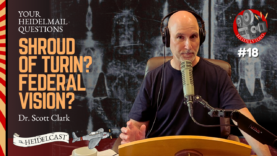
Dr. R. Scott Clark answers two listener questions: why the Shroud of Turin is an unreliable basis for faith, and how believers should understand the covenant pledge of Joshua 24:24 in light of grace. Both answers point back to the sufficiency of Scripture, the sacraments, and salvation by grace alone through faith alone in Christ alone. Continue reading →
Heidelminicast: After the Resurrection—Two Responses
In this episode Dr. Clark talks about after the Resurrection. Continue reading →
Review: To Change The World: The Irony, Tragedy, And Possibility Of Christianity In The Late Modern World By James Davison Hunter
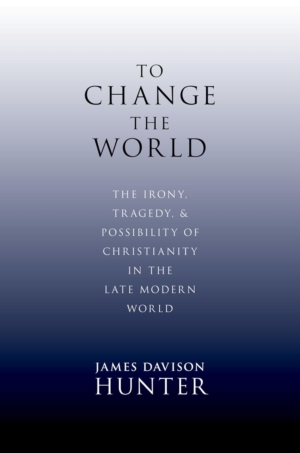
It’s all about politics. This statement is a generalization, but it is not an incorrect description of the United States cultural scene. Everything in our culture is politicized, from fast-food joints to wedding cakes to running shoes. I cannot even avoid politics . . . Continue reading →
John Brown of Wamphray: Once Justified, Always Justified
This new state of Justification is continuing and permanent; not in this sense, that God renews and frequently reiterates the enstating of them into this new relative state; but in this sense, that once justified always justified; they are fixed and preserved . . . Continue reading →
Ben Sasse On Indoor Childhood
The digital revolution is remaking nearly every aspect of modern life. A top concern of parents, educators and sociologists is screen time. How much is too much? The question points to a larger problem: American children are weirdly held hostage indoors. In . . . Continue reading →
Heidelminicast: Trump, the Pope, and Christ’s Two-Fold Kingdom
In this episode Dr. Clark talks about Trump, the Pope, and Christ’s Two-Fold Kingdom. Continue reading →
Church Planting Update: Christ Reformed Church Of Northern Kentucky

Christ Reformed Church of Northern Kentucky is a church plant overseen by Ascension Reformed Church in Cincinnati, Ohio. Launched in 2024, Christ Reformed began her pilgrim journey in Florence, Kentucky, renting space from a Wisconsin Evangelical Synod Lutheran church for Sunday evening . . . Continue reading →
Bilkes: The Church Needs Clarity On Law And Gospel
The church in our day suffers greatly from a lack of clarity on many things, but not least issues of law and gospel. Many mix law and gospel or swing too far, thereby discounting one while thinking they are doing justice to . . . Continue reading →
Heidelminicast: Canons of Dort: Preface
In this episode Dr. Clark talks about the Canons of Dort. Continue reading →