
June is the usual month for the convening of Presbyterian assemblies, but the jewel in the crown of Presbyterian reforms, replacing bishops with lengthy committee meetings, seems less impressive today than it did in 1560 when the Scots held their first General . . . Continue reading →
American Church History
John Witherspoon: Presbyterian Pastor
John Witherspoon is most famous for being the only clergyman to sign the Declaration of Independence. The most crucial part of that sentence is the recognition that Witherspoon was, from the age of 20 until his death at the age of 71, . . . Continue reading →
Samuel Davies (1723–61): Defender Of Religious Dissent Under The Established Pre-Revolutionary Church In America
Davies’ willingness to submit to the prevailing church-state arrangement should not be mistaken for passivity. He fought doggedly for the rights of non-conformists, arguing that the 1689 Act of Toleration, which protected dissenters in England, applied in the colonies. If dissenters like . . . Continue reading →
Machen: Are We Schismatics?
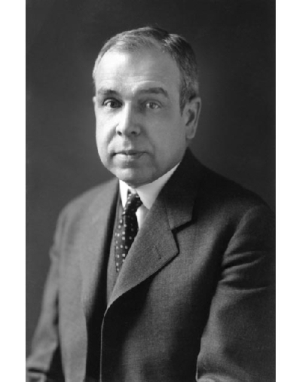
The grass withereth, the flower fadeth: but the word of our God shall stand forever.”—Isa. 40:8 When ought Christian people to withdraw from a church with which they have been connected and seek to lead other people to withdraw with them? That . . . Continue reading →
With D. G. Hart, T. David Gordon, And Presbycast On “A Presbyterian Church For Me”

Here is the audio only version: RESOURCES Subscribe To The Heidelblog! Download the HeidelApp on Apple App Store or Google Play Browse the Heidelshop! The Heidelblog Resource Page Heidelmedia Resources The Ecumenical Creeds The Reformed Confessions The Heidelberg Catechism The Heidelberg Catechism: . . . Continue reading →
Eighteenth Century Virginia Presbyterians Were Politically American
In The Case for Christian Nationalism, widely considered the strongest argument for this position, Stephen Wolfe contends that the “classical Protestant position is that the civil magistrate can punish external religion—e.g., heretical teaching, false rites, blasphemy, and Sabbath-breaking—because such actions can cause . . . Continue reading →
Video: Bob Godfrey On The Life And Significance Of “Sister”

Rev. Chris Gordon and Dr. W. Robert Godfrey delve into the fascinating and complex life of Aimee Semple McPherson, a pivotal figure in the development of both evangelicalism and Pentecostalism. They explore her groundbreaking role as a female preacher, her innovative methods . . . Continue reading →
Review: Swing Low: A History of Black Christianity in the United States By Walter R. Strickland

The earliest church experience I remember was in my hometown of Shreveport, LA. My mother made sure my brothers and I were dressed in our “Sunday best,” then loaded us into the car and drove us to a small white church building that could not have held more than sixty people. Continue reading →
Heidelminicast Q&A: Is The “Wider Hope” Of Salvation Through Natural Revelation Orthodox?

Dr Clark answers a question about the possibility of a “wider hope” of salvation through natural knowledge. Continue reading →
Heidelminicast Q&A: What About The Reformed Church In America?
Dr Clark answers a question on how Reformed Christians should think about the Reformed Church in America. Continue reading →
With Presbycast On Their 500th Episode

Scott Clark joins D. G. Hart, HRA board member Brad Isbell, Wresbyterian, and a cast of characters (for 2 hours!) to celebrate the zaniness that is the Presbycast. Continue reading →
Thirty Million
. . . By the estimation of leading religious demographers, over thirty million Christians perished under atheist regimes in the twentieth century. Tell this to friends who might insouciantly associate “secularism” with deliverance from religious violence. Tell this, too, to American history . . . Continue reading →
The Mystery of Lincoln’s Religion
If Abraham Lincoln still matters to Americans in the 21st century—and he does—a major reason is that there’s much at stake politically in how we remember him. This is as true of Lincoln’s religious beliefs as for any other part of his . . . Continue reading →
We’ve Been Dating It All Wrong: Richard Denton And The Arrival of American Presbyterianism

Pre-1700’s Presbyterianism in America is shrouded in mystique. Some would say it did not really exist since there was no formal Presbytery established until 1706. Too often it is made to appear that Presbyterianism suddenly dropped into the colonies out of nowhere, . . . Continue reading →
PCA Overture To Distinguish Laity From Officers
The Presbyterian Church in America’s (PCA) Book of Church Order (BCO) contains no glossary, but maybe it needs one. This is not to fault the BCO’s early-70’s authors—no previous generation of Presbyterians had trouble figuring out what most of the words meant, . . . Continue reading →
Small Is Beautiful
If Google is a reliable search engine, the anniversary of the Orthodox Presbyterian Church on June 11 passed without any mention by the press. The reasons are not hard to fathom. The OPC is small, and it lacks a celebrity. In an . . . Continue reading →
What The Dying Of The PCUSA Means

When, Dean Kelley published Why Conservative Churches Are Growing (New York: Harper & Row, 1972), the Protestant mainline was already in crisis. They were shrinking, and, as Kelley’s title suggests, the “conservative” churches were growing. This book was published the year before . . . Continue reading →
What’s In A Denominational Name?
Today, neither the Orthodox Presbyterian Church nor the Presbyterian Church in America bear their first chosen names. Different as the two denominations are, the reasons for their name changes and even their slates of rejected names are quite similar. And the names—those . . . Continue reading →
Three Things Dispensational Apologists Should Stop Saying
Introduction There are varieties of Dispensationalism, e.g., classic (Darby, Scofield), modified (Chafer, Ryrie), and progressive (Bock, Blaising). To be sure there are varieties of covenant theology, e.g., classic e.g., that taught in the classical period that taught the covenant of redemption (pactum . . . Continue reading →
The Presbyterian Controversy: A Review

Bradley Longfield, of Duke University, has written an important book about the struggles surrounding the formation of the OPC in the 1920s-30s. Know Yourself This book is of interest to us for three reasons. First, the OPC is family, and we have . . . Continue reading →