
1. Whosoever will be saved: before all things it is necessary that he hold the catholic faith: 2. Which faith except every one do keep whole and undefiled: without doubt he shall perish everlastingly. 3. And the catholic faith is this: That . . . Continue reading →
2014 Archive
Coming Soon: The Grand Debate

How the Lord would have his visible church organized and governed may not interest all evangelicals today but it was a question of great practical and doctrinal interest in the British Isles, in the period leading up to and including the Westminster . . . Continue reading →
It’s About Power And Conformity
The theory behind gay marriage, in short, was theory behind the entire secular left: society and the state are the all-powerful forces on which the life of the individual depends, and the most important political task—indeed, the most important task in life—is . . . Continue reading →
Dark Thoughts About The Future
Viewed objectively, these two recent controversies represent skirmishes rather than major invasions of religious freedom. But all of us view them with dark thoughts about the future. Our foreboding is justified. Progressives have long dominated an important American subculture: the university. It’s . . . Continue reading →
Office Hours: The Importance Of Wisdom

Foolishness has been a part of the human condition since the fall but it was not that way in the beginning. We were made to be wise by knowing and obeying God. After the fall, by grace alone, through faith alone, we . . . Continue reading →
It All Comes Down To Aesthetics
It is interesting that the crisis finally came only when the aesthetics flipped the other way, when Driscoll and his antics became more distasteful than the words of his critics. It is important to notice that it was not the embrace of . . . Continue reading →
Idaho Ministers Must Perform Homosexual Weddings Or Go To Jail. In America (UPDATED 10/23/14)

“For profit wedding chapels are in a position now where last week the ban would have prevented them from performing gay marriages, this week gay marriages are legal, pending an appeal to the 9th Circuit,” Warren Wilson with the Coeur d’Alene City . . . Continue reading →
Heidelcast 78: God’s Holy Law (2)

This is part 2 of the series God’s Holy Law. In order to use the law rightly we need to make some important distinctions. One of the most important of these is the distinction between law and gospel. Historically, confessional Reformed theologians . . . Continue reading →
Daniel P. Fuller’s Doctrine Of Justification: Antithetical To The Reformation
Finally, a word needs to be said about the confessional implications of Fuller’s doctrine of Justification. Fuller claims that there are “several passages in Scripture which clearly indicate that the enjoyment of God’s gracious benefits depends on meeting certain conditions” (p. 108). . . . Continue reading →
Justification By Faith Alone Is The Normative Reformed Doctrine
Way back in 2009, when the Federal Vision controversy was still going the claim was made by a proponent of the Federal Vision that there is not a single, agreed doctrine of justification by grace alone, through faith alone but rather there . . . Continue reading →
The Cornhusker

It’s Never Too Late To Face Reality

I caught a bit of the latest 30 For 30 from ESPN last night. It was the story of the 1989 World Series and the San Francisco earthquake, which many of us watched live and in color on television. The rubble and . . . Continue reading →
Melville: Two Kings, Two Kingdoms
Sir, we will always humbly reverence your majesty in public; but since we have this occasion to be with your majesty in private, and since you are brought in extreme danger both of your life and crown, and along with you the . . . Continue reading →
Another Significant Threat To Constitutional Liberties (UPDATED)

In May of this year the Houston city council passed the Houston Equal Rights Ordinance (HERO) that requires businesses and workplaces to make available restroom facilities not according to sex but according to gender identity. A group of Houston area pastors has . . . Continue reading →
Modernity: The Story Without Its Author
If there is little mystery about where the West got its faith in a narratable world, neither is there much mystery about how the West has lost this faith. The entire project of the Enlightenment was to maintain realist faith while declaring . . . Continue reading →
Now In English: Junius On True Theology
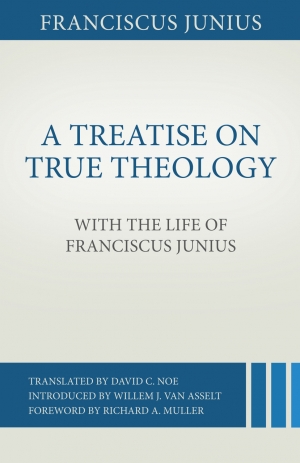
Lambert Daneau (1530–95) described Franciscus Junius as “a man of singular learning”—and that he was. His biblical scholarship was cited widely by writers from a variety of traditions in the sixteenth and seventeenth centuries. His influence on the Reformed tradition has been . . . Continue reading →
Look Ma No Instruments! Psalm 85 Set To Ebeneezer

(HT: Chortles Weakly)
Circumstances And Indifferent Until We Say No
THAT OUR OPPOSITES DO URGE THE CEREMONIES AS THINGS NECESSARY. This I prove, 1. from their practice. 2. from their pleading. In their practice, who sees not, that they would tie the people of God to a necessity of submitting their necks . . . Continue reading →
Heidelcast 77: God’s Holy Law (1)
With this episode we begin a new series: God’s Holy Law. In this episode we consider what the law is, how the moral law is distinguished from the civil and ceremonial aspects of the law, the universality of the law, its expression . . . Continue reading →
The Birds!
