

Audio and articles on the history and theology of the social gospel and on the problem of the confusion of the law and gospel as Christians seek to bring the faith to bear on contemporary social issues. Continue reading →
Audio and articles on the history and theology of the social gospel and on the problem of the confusion of the law and gospel as Christians seek to bring the faith to bear on contemporary social issues. Continue reading →

SO THANKFUL FOR THE ACTIVE OBEDIENCE OF CHRIST.
NO HOPE WITHOUT IT. Continue reading →

Resources Moses Was Not Abraham Abraham Was Not Moses Is Abraham “A” Father Or “Our” Father? (1) Is Abraham “A” Father Or “Our” Father? (2) Is Abraham “A” Father Or “Our” Father? (3) Abraham Was A Spiritual, Gracious Covenant The Abrahamic Covenant . . . Continue reading →

For the last several years several writers identified with the broader Reformed movement have proposed that Christians are saved initially by grace alone, through faith alone but finally through faith and works. There are two claims here: 1) salvation is in two . . . Continue reading →

Below are gathered the quotations, posts, and essays from the Heidelblog on the history, theology, and practice of instruments in public worship. Continue reading →

Chris writes to the HB to ask about moving from the conversionist paradigm for the Christian life to the covenantal vision for the Christian life, how does a “covenantal” approach to the Christian life appear? This is an important question. Since the . . . Continue reading →

Heidelcast listener Wes, who describes himself as a “newcomer to the Reformed faith,” writes to ask for recommendations to build a “firm foundation in Reformed theology.” Here are some preliminary recommendations. You are welcome to add your recommendations in the comments. To . . . Continue reading →

Since the Second Great Awakening, in the 19th century, modern evangelical theology, piety, and practice has come to be dominated by various species of what are really expressions of the original Anabaptist theology, piety, and practice in the sixteenth century. They were . . . Continue reading →

John Calvin was born on this date, 10 July 1509. He died in 1564. He was author of many volumes (including a massive Bible commentary, hundreds of personal letters, and public treatises), most famous of which is his Institutes of the Christian . . . Continue reading →

It is held by some who think of themselves as evangelical and Reformed that justification is by grace alone (sola gratia) but sanctification is by grace and works, i.e., that it is synergistic. To my great shame, I remember once answering a . . . Continue reading →

This page has moved»

Thanks to Reuben Settergren for setting up and maintaining these sites. The Daily Confession site takes you through the Westminster Shorter Catechism, the Children’s Catechism, The Heidelberg Catechism, The Westminster Confession, The Canons of Dort, and the Belgic Confession through the year. . . . Continue reading →

D. C. McAllister’s excellent essay in The Federalist and a question from regular HB reader Clinton suggests that a resource post on prayer might be helpful: Audio Audio: The Role of Prayer in Sanctification Audio: The Pilgrim’s Prayer (1) Audio: The Pilgrim’s Prayer . . . Continue reading →

Table Of Contents Podcasts Articles Bibliography Podcasts Heidelminicast: Grammar Guerrilla (1): Discomfort with Comfortability Heidelminicast: Grammar Guerrilla (2): Still not Comfortable with Comfortability Heidelminicast: Grammar Guerrilla (3): “Imply” is not “Infer” Heidelminicast: Grammar Guerrilla (4): Him, Her, Whom, He, She…It Really Matters . . . Continue reading →
Justin writes to the HB to ask, Dr. Clark, You’ve probably been asked this many times, and have given a clear answer on it; But with the focus on sanctification and the gospel, how do we understand passages that emphasize “striv[ing] for . . . Continue reading →

Apparently, there is only one way to speak about sanctification and it is no longer sufficient to uphold and teach the Heidelberg Catechism, the Belgic Confession, and the Westminster Standards (Reformed confessions) on justification, sanctification, and the third use of the law. . . . Continue reading →

Some HB readers have been discussing the question of fencing the Lord’s Table. Fencing is a figurative way of speaking. There aren’t literal fences in Reformed Churches. It’s a way to describe the Reformed attempt to apply Paul’s instruction in 1 Corinthians . . . Continue reading →
 There are six years of resources on the HB and several ways to access those resources. One is the categories. Another is to use the search function (or google site search—site:heidelblog.net search term). Another way to use the HB is to access the archives, which shows the HB by years, months, and categories. Thanks for your support.
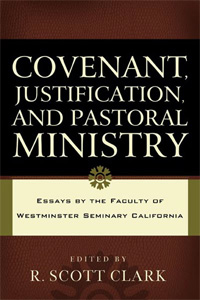
For those just getting started in covenant theology I recommend: R. Scott Clark, “A Brief History of Covenant Theology.” Audio: What Is Covenant Theology And What Are The Implications For The Church And Family? Mike Brown and Zach Keele, Sacred Bond: Covenant Theology . . . Continue reading →

The distinction between law and gospel is one of the most fundamental aspects of the Protestant Reformation. It was essential to the Reformation and it was a basic part of both early Reformed theology and Reformed orthodoxy. For a variety of reasons . . . Continue reading →