This year, at assemblies and synods across the country, we are hearing a similar concern: There is a shortage of pastors. Churches need men. Presbyteries need men. Mission works need men. Pulpits are opening, congregations are waiting, and the question keeps coming . . . Continue reading →
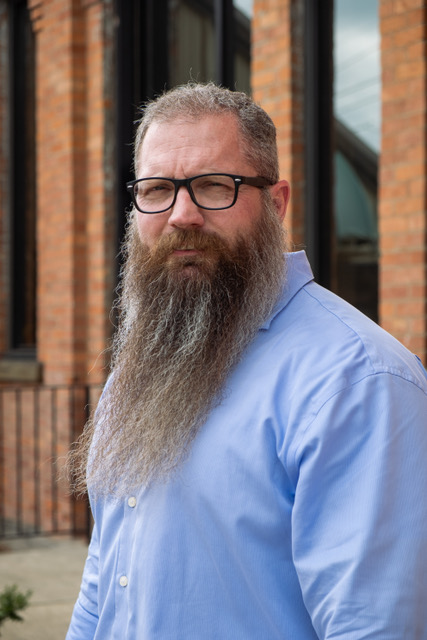
Author: Everett Henes
Everett Henes (MDiv, ThM, DMin) is pastor of Hillsdale Orthodox Presbyterian Church, where he has served since 2008. He is husband to Kimberly and father of five children and grandfather of five (and counting!). He teaches US History and Philosophy of History for Jackson College in Michigan. He is currently working towards a PhD in Humanities with a focus in US Religious History from Faulkner University. In his spare time, he enjoys competing in powerlifting and strongman and teaching homeschoolers Taekwondo.
Eyes Lifted For Mercy: Psalm 123 And The Prayer Of The Despised (Part Two)
The Pilgrim Waits at the Master’s Hand The psalmist then gives us an image: As the eyes of servants look to the hand of their master, as the eyes of a maidservant to the hand of her mistress, so our eyes look . . . Continue reading →
A Retrospective of the 2026 OPC General Assembly
The 92nd General Assembly of the Orthodox Presbyterian Church met at Geneva College from June 3–9, 2026. Geneva College, founded in 1848 and governed by the Reformed Presbyterian Church of North America—a sister NAPARC church—is a private Christian liberal arts college located . . . Continue reading →
Eyes Lifted For Mercy: Psalm 123 And The Prayer Of The Despised (Part One)
Augustine once asked what makes the heart of a Christian heavy. His answer was not simply sorrow, pain, loss, or disappointment. The Christian heart is heavy because the Christian is a pilgrim who longs for his country. Even when the world smiles, . . . Continue reading →
Christ Descended Into Hell: The Creed, The Harrowing, And The Hope Of The Gospel
The line in the Apostles’ Creed “He descended into hell” often suffers one of two fates. It is either misunderstood in a dramatic, almost mythological way, as though Christ literally entered the place of the damned after his death in order to . . . Continue reading →