
Drafted c. 1995. Last revision, 2024. § 1100 c. b. Peter Lombard (1160). Magister Sententiae). 1155–58 Lombard publishes Sententiarum libri quatuor (Sentences in Four Books), which will be mandated in at the Fourth Lateran Council (1215) as the standard textbook for theology . . . Continue reading →
Blog Archives
The Avignon Papacy
Avignon Rome Pisa 1305 Clement V 1316 John XXII 1328 Nicholas V* [1328–30] 1334 Benedict XII 1342 Clement VI 1352 Innocent VI 1362 Urban V 1370 Gregory . . . Continue reading →
Cromwell: Simul Iustus Et Peccator

Judging by his serene expression, he certainly doesn’t look like a man who should have changed England’s politics, culture and history forever. I refer to Oliver Cromwell and his expression preserved for the ages in his death mask on display at Warwick . . . Continue reading →
Has The Church Replaced Israel?

It is a common canard among Dispensationalists that Reformed theology must teach that the church “replaces” Israel. They call this “Replacement Theology.” That must is what is known as an a priori, something that someone “knows” before they’ve actually looked at the . . . Continue reading →
The Irony Of The Coming Dark Age (Updated Again)

The old schoolbook story of the middle ages describes the entire period as the “dark ages.” Of course that’s rubbish. There was a period of chaos in the early medieval period but there were also periods of remarkable learning and the renewal . . . Continue reading →
Renewed And Improved: Gillespie Against The Normative Principle Of Worship

When I first came into contact with the Reformed faith about 33 years ago, there were two things that Reformed folk had to believe: divine sovereignty and the inerrancy of Scripture. It’s not that we actively disbelieved the other elements of the . . . Continue reading →
New Article: Law And Gospel In Early Reformed Orthodoxy

Richard Muller recently celebrated his 65th birthday to mark that occasion and as part the 20th anniversary of the PhD program at Calvin Seminary, he was presented with a Festschrift (celebration book) in his honor. Jordan Ballor has the details on Opuscula . . . Continue reading →
Office Hours: The Law And The Bible
There’s no question whether Christ is Lord over every square inch. There are, however, many important and difficult questions to be discussed over how Christ exercises his Lordship over all things. Office Hours talks with David VanDrunen about his new book, The Law and the Bible, which . . . Continue reading →
More North San Diego County Beauty
See all the photos in this category.
The Power Of The Medieval Cathedral

My friends Jared Beaird (a WSC grad), pastor of Covenant URC in Missoula, and Dan Borvan, a graduate of WSC (MA Historical Theology), Oxford University (M. Litt), and a PhD candidate at the University of Geneva, are doing an occasional podcast and . . . Continue reading →
Is Everyone Saved?

There is a Modernist creed. It is a short creed but it is highly influential and it is the default view of many Americans who think of themselves as Christians. That creed says 1) Humans are basically good and getting better; 2) . . . Continue reading →
Liberal Education, Religious Freedom, And Weak Arguments (Updated Again)
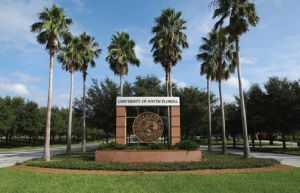
Originally Published October 8, 2013. Updates below. The University of South Florida is at the center of another debate about religious freedom (HT: David Murray). This time it involves a planned event at which Dr. Rosaria Butterfield, a former Lesbian, is to . . . Continue reading →
Grammar Guerrilla: Affect and Effect, Sex and Gender

These two sets of words present two different problems. The first, affect and effect, is that two words sound alike and are formally distinguished by vowels that can be easily confused for one another. Nevertheless, affect and effect do mean different things. . . . Continue reading →
If You’re Waiting To Order Your Copy… (Updated)
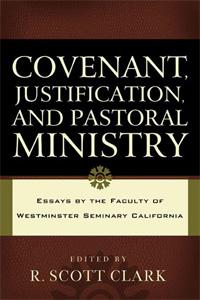
If you’ve been thinking about ordering CJPM but have been waiting, the window of opportunity to get your copy is closing. The WSC Bookstore is out and they were told by P&R that the book is out of print. Amazon still has . . . Continue reading →
New Life In The Shadow Of Death: The Sanctification Crisis In The Reformation

The doctrine of sanctification is a hot topic right now in evangelical and Reformed circles but the church had a doctrine (or doctrines) of sanctification for centuries before the current discussion. Indeed, one way to understand the Reformation is as a response . . . Continue reading →
Dusk in North County With Smoke Rising

This gallery contains 3 photos.
Is Republication Really That Confusing?

A pastor writing a Q&A column in a small Canadian religious newspaper answered a question about republication recently by writing “as a general rule, Reformed Christians agree that the Covenant of Works was established at the start with Adam, and with all . . . Continue reading →
Keep Calm And Cover Up? The Walhout Saga Continues

Recently I’ve been stressing to my students the importance of believing their senses. Maybe it’s because each autumn I re-read the Apostolic Fathers (and other patristic writers) and walk the students through the threats posed by Basilides, Valentinus, and Marcion (pre-Gnostic, Gnostic, . . . Continue reading →
How Large Should A Congregation Be?

A faithful HB reader wrote to ask about a good problem. His confessional Reformed congregation is growing. The question is how to proceed? Should the congregation expand the building or seek to establish new daughter congregations? Below is my reply. § It . . . Continue reading →
The History Of Covenant Theology

Until recently, it was widely held that covenant theology was created in the middle of the seventeenth century by theologians such as Johannes Cocceius (1609–1669). In fact, covenant theology is nothing more or less than theology of the Bible. It is also . . . Continue reading →