Judging by his serene expression, he certainly doesn’t look like a man who should have changed England’s politics, culture and history forever. I refer to Oliver Cromwell and his expression preserved for the ages in his death mask on display at Warwick . . . Continue reading →
Has The Church Replaced Israel?
It is a common canard among Dispensationalists that Reformed theology must teach that the church “replaces” Israel. They call this “Replacement Theology.” That must is what is known as an a priori, something that someone “knows” before they’ve actually looked at the . . . Continue reading →
HeidelQuote
Laura Smit On The Foolishness Of Romantic Dreams About The Mainline
Some of my friends in the CRC seem to think that this would be a good thing. They speak to me with wistful longing about the “freedom” of the PCUSA. This is a romantic vision that is unrelated to the truth. The . . . Continue reading →
The Irony Of The Coming Dark Age (Updated Again)
The old schoolbook story of the middle ages describes the entire period as the “dark ages.” Of course that’s rubbish. There was a period of chaos in the early medieval period but there were also periods of remarkable learning and the renewal . . . Continue reading →
HeidelQuote
Kevin DeYoung Isn’t “Nice” (Because He Laughs At Vanity)
Satire, sarcasm, irony, hyperbole–these are dangerous weapons, only to be wielded in spiritual warfare with caution and with great aplomb. But they are to be wielded at times. To poke fun at the oh-so-important, the perpetually offended, and the self-righteously sentimental can . . . Continue reading →
Renewed And Improved: Gillespie Against The Normative Principle Of Worship
When I first came into contact with the Reformed faith about 33 years ago, there were two things that Reformed folk had to believe: divine sovereignty and the inerrancy of Scripture. It’s not that we actively disbelieved the other elements of the . . . Continue reading →
HeidelQuote
John Rainolds On The Jewishness Of Roman Masses And Instruments
I have showed, how. And if you see it not: the veil may be the cause, which is very likely to be laid on your heart in reading of the new testament, as it was on the heart of others, in reading . . . Continue reading →
New Article: Law And Gospel In Early Reformed Orthodoxy
Richard Muller recently celebrated his 65th birthday to mark that occasion and as part the 20th anniversary of the PhD program at Calvin Seminary, he was presented with a Festschrift (celebration book) in his honor. Jordan Ballor has the details on Opuscula . . . Continue reading →
Office Hours: The Law And The Bible
There’s no question whether Christ is Lord over every square inch. There are, however, many important and difficult questions to be discussed over how Christ exercises his Lordship over all things. Office Hours talks with David VanDrunen about his new book, The Law and the Bible, which . . . Continue reading →
HeidelQuote
Calvin On The Proper Practice Of The Lord’s Supper
43. But as for the outward ceremony of the action — whether or not the believers take it in their hands, or divide it among themselves, or severally eat what has been given to each; whether they hand the cup back to . . . Continue reading →
More North San Diego County Beauty
See all the photos in this category.
The Power Of The Medieval Cathedral
My friends Jared Beaird (a WSC grad), pastor of Covenant URC in Missoula, and Dan Borvan, a graduate of WSC (MA Historical Theology), Oxford University (M. Litt), and a PhD candidate at the University of Geneva, are doing an occasional podcast and . . . Continue reading →
Heidelcast
Heidelcast 44: What’s New About The New Covenant? (Pt 1)
We speak often about the old and new covenants or Old and New Testaments but what are they and especially what is the Old Testament or the old covenant? What is the relationship between the Old and New Testaments and what is . . . Continue reading →
Is Everyone Saved?
There is a Modernist creed. It is a short creed but it is highly influential and it is the default view of many Americans who think of themselves as Christians. That creed says 1) Humans are basically good and getting better; 2) . . . Continue reading →
HeidelQuote
Wollebius On Bible Translation
Prolegomena To Christian Theology “XV. Therefore, their [Scripture] translation into the common language of every nation is necessary. XVI. No translation is authentic except in so far as it agrees with the Hebrew and Greek originals.” Johannes Wollebius | Compendium of Christian . . . Continue reading →
HeidelQuote
When Nice Is The Highest Virtue
In an age when being nice is the highest virtue, publicly confronting error from a well-known Christian is perhaps the last taboo in contemporary evangelicalism. I am a pastor. I write things that a very small number of people here and there . . . Continue reading →
HeidelQuote
Foucault: Homosexuality Is A Social Construct
In his Histoire de la Sexualité, Michel Foucault argues that homosexuality is a social construct, and one constructed terribly recently at that. “As defined by the ancient civil or canonical codes,” he writes, “sodomy was a category of forbidden acts; their perpetrator . . . Continue reading →
Liberal Education, Religious Freedom, And Weak Arguments (Updated Again)
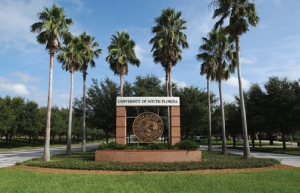
Originally Published October 8, 2013. Updates below. The University of South Florida is at the center of another debate about religious freedom (HT: David Murray). This time it involves a planned event at which Dr. Rosaria Butterfield, a former Lesbian, is to . . . Continue reading →
Grammar Guerrilla: Affect and Effect, Sex and Gender
These two sets of words present two different problems. The first, affect and effect, is that two words sound alike and are formally distinguished by vowels that can be easily confused for one another. Nevertheless, affect and effect do mean different things. . . . Continue reading →
HeidelQuote
Tyndale’s Application of the Regulative Principle
Mark well how many parsonages or vicarages are there in the realm, which at the least have a plow-land a-piece. Then note the lands of bishops, abbots, priors, nuns, knights of St John’s, cathedral churches, colleges, chauntries, and free-chapels. For though the . . . Continue reading →