The Starting point of theory of knowledge ought to be ordinary daily experience, the universal and natural certainty of human beings concerning the objectivity and truth of their knowledge. After all, it is not philosophy that creates the cognitive faculty and cognition. . . . Continue reading →
Recovering the Reformed Confession
Sentiment Is Not A Sacrament
Holidays are a time for great sentiment, which the Oxford American Dictionary defines, in this usage, as an “exaggerated and self-indulgent feelings of tenderness, sadness, or nostalgia.” Who does not watch the annual Christmas movies? They are part of the late-modern communal . . . Continue reading →
Creeds Are Unavoidable
Christianity is a creedal religion. You cannot separate Christianity from its ancient creeds. In fact, every true Christian adheres to the ancient creeds of the church, whether he knows it or not. We all have creeds. Whether formal or informal—whether written or . . . Continue reading →
Always Abusing Semper Reformanda
The Reformation churches have some wonderful slogans that are chock full of important truths. Sometimes, however, these slogans can be misconstrued, misreported, and misunderstood. With the possible exception of sola Scriptura (by Scripture alone), none of these slogans has been mangled more . . . Continue reading →
Junius: There Are Two Kinds Of Theology
Now indeed these two kinds of theology are so different that they cannot truthfully be related to some one, definite head and shared genus. Of course the first kind of theology, which we have named divine and a prototype, does not belong . . . Continue reading →
The Reformed Are Catholic
THE CREEDS OF FOUR COUNCILS RECEIVED. And, to say many things with a few words, with a sincere heart we believe, and freely confess with open mouth, whatever things are defined from the Holy Scriptures concerning the mystery of the incarnation of . . . Continue reading →
Machen: Evangelical Is Not Enough
“Evangelical,” on the other hand, although it is a fine term, does not quite seem to designate clearly enough the position of those who hold specifically to the system of doctrine taught in the Westminster Confession of Faith, as distinguished from other . . . Continue reading →
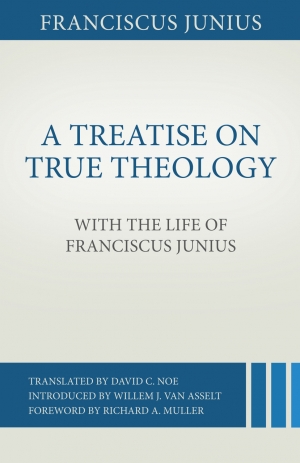
Now In English: Junius On True Theology
Lambert Daneau (1530–95) described Franciscus Junius as “a man of singular learning”—and that he was. His biblical scholarship was cited widely by writers from a variety of traditions in the sixteenth and seventeenth centuries. His influence on the Reformed tradition has been . . . Continue reading →
Look Ma No Instruments! Psalm 85 Set To Ebeneezer
(HT: Chortles Weakly)
Owen: We Are Endowed With Liberty By Christ And His Apostles
Thus far, then, is the liberty given by Christ unto his church preserved entire; and the request seems not immodest that is made for the continuance of it. When men cry to God for the liberty in his worship which was left . . . Continue reading →
Bullinger: We Are Critically Sympathetic To The Fathers
Wherefore we do not despise the interpretations of the holy Greek and Latin fathers, nor reject their disputations and treatises concerning sacred matters as far as they agree with the Scriptures; but we modestly dissent from them when they are found to . . . Continue reading →
Psalms, Hymns, Spiritual Songs, and Instruments In The Latin Bibles (2)
The Latin Bible was a major formative influence on the way the Reformed theologians interpreted Scripture. The King James Version/Authorized Version (1611) particularly reflects the influence of the Latin Bible but its influence reverberates in many English translations. It influenced their word . . . Continue reading →
Psalms, Hymns, Spiritual Songs, and Instruments In The Latin Bibles
We Reformed folk like to think that what we do now in public worship is what we have always done. This is especially easy to do when we are cut off from or unaware of the original sources and practices of our . . . Continue reading →
1920s Arguments Over Absolution In The CRCs (2)
Perhaps a few words regarding the context of this service of reconciliation will not be amiss…. Note first of all that it follows the opening service. In this service the Lord and His people greet each other. After the greeting comes the . . . Continue reading →
Witsius On The Relation Between Human Reason And Divine Authority
III. Let then these things be premised. First. Reason signifies either that faculty of man where by he perceives, and judgeth, and distinguisheth truth from falsehood, or those maxims, aphorisms, or axioms, which are either self evident, or believed to be rightly . . . Continue reading →
Macchiatos Real And False
But, in modern America, a culture not known for its sensitivity to history and precedent, “Reformed” has started to refer to “a different drink”. As Starbucks re-discovered espresso and popularized it, people have re-discovered Augustinianism (i.e., predestination) and are now marketing it . . . Continue reading →
Calvin: People Have Never Liked The Regulative Principle
I know how difficult it is to persuade the world that God disapproves of all modes of worship not expressly sanctioned by His Word. The opposite persuasion which cleaves to them, being seated, as it were, in their very bones and marrow, . . . Continue reading →
Don’t Just Stand There. Come On In!
Kevin DeYoung writes about a conference just held at his congregation with Collin Hansen. He makes a couple of points to which I want to respond. As a minister who has spent a fair bit of time calling people to Christ and . . . Continue reading →
Get This Outstanding Book FREE
When, in 1994, Carl Trueman kindly invited me to co-edit Protestant Scholasticism: Essays in Reassessment there was no such modern introduction to what had long been a forgotten or misrepresented period of Protestant theology. Since the publication of PSER (1998), there have . . . Continue reading →
Progress Or Regress?
So, since our 1973 founding, the PCA has “progressed” from “committed without reservation” to our Standards, to a “good faith subscription” approach that has opened the PCA’s door to paedocommunion, intinction, female pseudo-officers, Federal Vision, theistic evolution (e.g., Biologos), et al, all . . . Continue reading →