About R. Scott Clark

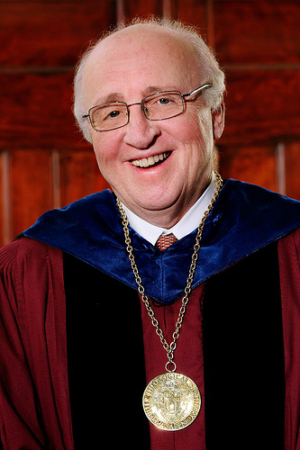
R. Scott Clark is the President of the Heidelberg Reformation Association, the author and editor of, and contributor to several books and the author of many articles. He has taught church history and historical theology since 1997 at Westminster Seminary California. He has also taught at Wheaton College, Reformed Theological Seminary, and Concordia University. Read more» He has hosted the Heidelblog since 2007.

Ministers All?

The uniqueness and centrality of the official preaching of the Word is diminished when we  equivocate between the official, public, ordained administration of the Word and the unofficial witness to the gospel by the laity. The tendency among evangelical is to describe all . . . Continue reading →

Bog Standard Evangelicalism Circa 1962

I’m cleaning out my office and clearing out a great lot of books One of the volumes I found is Carl F. H. Henry, Basic Christian Doctrines (New York: Holt, Rhinehart, Winston, 1962). Included in this collection of very brief entries are G. . . . Continue reading →

How Many Mediators?

In a 15 May essay in The Christian Century, Richard Mouw argues that we Protestants should perhaps re-think the question of praying to deceased Christians. He confesses that he wasn’t really well acquainted with the Roman doctrine of prayer and the intercession . . . Continue reading →
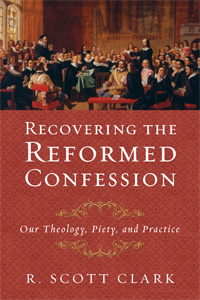
Resources For Those Beginning To Study Covenant Theology

For those just getting started in covenant theology I recommend: R. Scott Clark, “A Brief History of Covenant Theology.” Audio: What Is Covenant Theology And What Are The Implications For The Church And Family? Mike Brown and Zach Keele, Sacred Bond: Covenant Theology . . . Continue reading →
Going Back to Egypt?

The evangelical wing of the internet is buzzing today about an apology last night by Alan Chambers, President of Exodus International, and his announcement that the organization is being disbanded and will be replaced by another entity with a different mission. In . . . Continue reading →

Is Faith a Work?

The question comes (paraphrasing): Since Scripture says, “believe,” (e.g. Acts 16:31) it seems that we are commanded to believe. If the command to believe is an imperative and an imperative is “law,” and if the answer to the command “believe” is faith, . . . Continue reading →

Audio: Covenant Curses and Covenant Blessings

Here’s a recent sermon preached in my home congregation, the Escondido United Reformed Church, on Hebrews 6:4–20: Therefore let us leave the elementary doctrine of Christ and go on to maturity, not laying again a foundation of repentance from dead works and . . . Continue reading →

Jack and the Kingdom of God (Updated)

In a piece that appears in Christianity Today online Ted Olson argues that a plan, which was cancelled, to free the Korean hostages in Afghanistan by taking hostage the families of the kidnappers is a bad idea because the Apostle Paul wouldn’t . . . Continue reading →

Religious Freedom Watch: Chilling Protected Religious Speech In The Military

Todd Starnes reports The Obama Administration “strongly objects” to a proposed amendment to the National Defense Authorization Act that would have protected the religious rights of soldiers – including evangelical Christian service members who are facing growing hostility towards their religion. Rep. John . . . Continue reading →

In Case You’ve Never Heard

One of the reasons why people resist the call to return to historic Reformed (and catholic) worship practices, e.g., singing God’s Word without musical instruments is because it is completely unfamiliar and thus seems implausible or entirely theoretical. It isn’t. Thanks to . . . Continue reading →

Freedom Or Tax Exemption?

Former Arkansas Governor, Presidential candidate, and current Fox News host, Mike Huckabee has raised this question to Southern Baptists (HT: Billy Hallowell). It’s a fair question. I’m not sure I agree with him and I don’t claim to know the answer to the . . . Continue reading →

Imagination

One of the recurring themes of the dialogue between Reformed confessionalists and the more broadly evangelical adherents to aspects of the Reformed soteriology (namely predestination) represented by some members of the Gospel Coalition is the question of how to define the adjective . . . Continue reading →