Augustine Contra The Postmodernists

In Augustinian thought, signs, then play a key role in bringing us into contact with the realities they signify. Drawing lines to the Christian life, Augustine argued that catechesis means explaining how “the signs of divine realities are visible, but the invisible . . . Continue reading →

Junius on Providence

Aristotle said it with style: people who set their heart on, proving to themselves with drawn-out arguments “that some providence is,” actually deserve whips, not words; a reply from an executioner, not a philosopher (nor, I add, a theologian). And what is . . . Continue reading →

Dennis Johnson: Two Truths Of Apostolic Preaching

The skillful and pastoral interweaving of theological discussion and exhortation, of doctrine and application, [as demonstrated in Hebrews] illustrates two truths about apostolic preaching that are often ignored in the polarized atmosphere of contemporary preaching. On the one hand, truly apostolic preaching . . . Continue reading →

Free Speech And The Fifth Circuit

Whether or not the federal government and its myriad agencies will be able to coerce, cajole, encourage, threaten, and browbeat social media companies into removing views it does not like from their platforms was the question before the Fifth Circuit Court of . . . Continue reading →

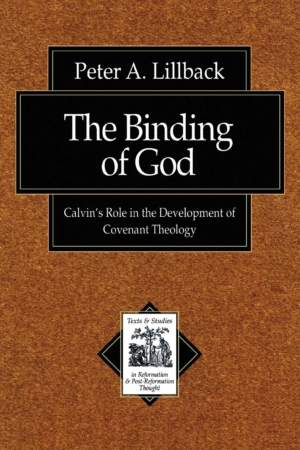
Review: The Binding of God: Calvin’s Role in the Development of Covenant Theology by Peter A. Lillback

Whether Calvin was a covenant theologian has been a matter of considerable confusion and controversy in modern Calvin studies. The answer to this question has usually been determined by whether one considers the rise of covenant theology a positive or negative development, . . . Continue reading →