
In the papacy there is a book containing the legends or accounts of the saints. I hate it intensely, solely for the reason that it tells of revolting forms of worship and silly miracles performed by idle people. These legends and accounts . . . Continue reading →
Piety and Practice
With Theocast On Spiritual Disciplines

It is widely held among evangelicals (of various stripes) that the private reading of Scripture and prayer (“the quiet time” or devotions), Bible memorization, and meditation is the very essence of Christian spirituality and piety. The emphasis is on activity (one prominent . . . Continue reading →
What The Spirit Is Doing Or What We Are Saying? Distinguishing Reformed And Pentecostal Piety

What happens is that contemporary evangelical and charismatic folk describe ordinary phenomena in extraordinary, apostolic terms. They identify non-apostolic phenomena as apostolic. That is cheating but it is rhetorically powerful and persuasive. Many evangelicals do not want to live in the post-canonical, in between time. It is a drag. People want a power religion. Judged against the neo-Pentecostal and charismatic claims, Reformed Christianity seems decidedly weak and powerless (see all of 2 Corinthians). Continue reading →
Heidelberg 118–119: We Ask For All Necessities

I grew up on the Plains. It is not easy for Plainsmen to ask for help. The Plains are the home of rugged individualism, which was a very useful trait for settlers who turned over ground for the first time. Farms were . . . Continue reading →
Avoid Strange Teaching, Endless Genealogies, Speculation, And Self- Appointed Teachers Of The Law
As I urged you when I was going to Macedonia, remain at Ephesus so that you may charge certain persons not to teach any strange doctrine, who hold useless speculations, nor to pay attention to myths and endless genealogies, rather than the . . . Continue reading →
The Author Of The Belgic Confession On 16th-Century Pentecostalism
There be some who have daily some new command from God, to make known unto their brothers and strangers. Some are rapt into an ecstasy and have their appearance and countenance changed, lying upon the ground certain hours. Some tremble and quake . . . Continue reading →
Heidelcast 82: The Holy Law Of God (6)—The Fourth Commandment

That there is a Sabbath is evident in the first chapter in God’s Word. According to Scripture, Almighty God “worked” for six days, six mornings and evenings, and rested the seventh. Have you ever stopped to wonder why Scripture says that God “rested”? Was . . . Continue reading →
1920s Arguments Over Absolution In The CRCs (2)
Perhaps a few words regarding the context of this service of reconciliation will not be amiss…. Note first of all that it follows the opening service. In this service the Lord and His people greet each other. After the greeting comes the . . . Continue reading →
Reformation Worship Conference: Psalms For Preaching & Living

Pastor David Hall and the folks at Midway PCA are hosting their annual Reformation Worship Conference October 23–26, 2014. This year’s conference will present addresses by W. Robert Godfrey, T. David Gordon, Terry Johnson, Steven Lawson, Jon Payne, Richard Phillips, and Mark Ross. As the . . . Continue reading →
Free Book By Warfield: Faith And Life

Anyone who would be Reformed or become Reformed or grow in their Christian faith should read B. B. Warfield (1851–1921) and there’s no better price for a book by Warfield than $0. Monergism.com is giving away a free electronic copy of a . . . Continue reading →
Providence: God’s Active, Almighty, Present, Power (1)

From the moment Adam sought to grasp equality with God (Phil 2), from the moment he mysteriously rebelled against God’s sovereignty and hiddenness (“You shall be as God”), from the moment he ceased to love and adore the triune God, since that . . . Continue reading →
The Addiction to Religious Euphoria

Mark Galli (HT: Alex Webster) has an interesting story in CT Online about the power of religious euphoria. He likens the attraction to, indeed the addiction to euphoria to attraction and addiction to a drug. Galli writes: We disdain faith that is . . . Continue reading →
Is John Piper Reformed? Or Holding The Coalition Together (Updated)

This morning my friend Kevin DeYoung (listen to the Office Hours interview with Kevin here) makes some arguments in defense of a broader definition of the adjective Reformed. This question is at the heart of why the HB exists and and why I wrote . . . Continue reading →
Hodge On The Care And Feeding Of The New Life
It is natural that those who have experienced the agitations which frequently attend upon conversion, and have felt the peace which flows from a hope of acceptance with God, to imagine that the conflict is over, the victory won, and the work . . . Continue reading →
Heidelcast 23: Ecstasy is Not Christianity
Concern about dead formalism or ritualism is legitimate but we should not think that because a religious service is emotionally or psychologically satisfying or that because one has a certain kind of ecstasy that one has escaped dead formalism. There is a . . . Continue reading →
Clarkson: Public Worship To Be Preferred Before Private
“The Lord loveth the gates of Zion more than all the dwellings of Jacob.”—Ps 87:2 THAT we may apprehend the meaning of these words, and so thereupon raise some edifying observation, we must inquire into the reason why the Lord is said . . . Continue reading →
Presbyterians and Quakers Together
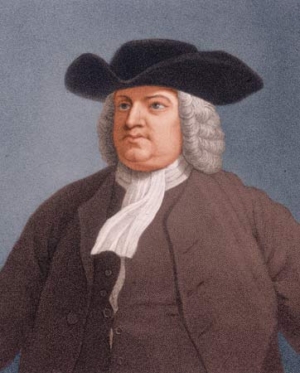
I see that Tony Jones has posted something critical of small/cell groups (I don’t know where and I can’t find it now. You’re welcome to post a link in the comments). Perhaps now that a leader in the Emergent Village has suggested . . . Continue reading →
Calvin On Monasticism
14. Still there was nothing with the Fathers less intended than to establish that kind of perfection which was afterwards fabricated by cowled monks, in order to rear up a species of double Christianity. For as yet the sacreligious dogma was not . . . Continue reading →
Heidelcast 11a: The Secret of Knowing God’s Will (Pt 4)
We like the idea of direct, special revelation that speaks to our particular circumstances. Most of us don’t relish the idea of struggling in prayer, of dealing with doubt, of making a decision in the midst of uncertainty. God could clear things . . . Continue reading →
Calvin On Instruments: "Stupid Imitation"
The musical instruments he mentions pertained to the time of instruction.1 Nor should we stupidly imitate a practice which was proper only for God’s old [covenant] people…. They were for use under the legal cult.2 John Calvin, From his commentary on Ps . . . Continue reading →