
Law, Gospel, Law

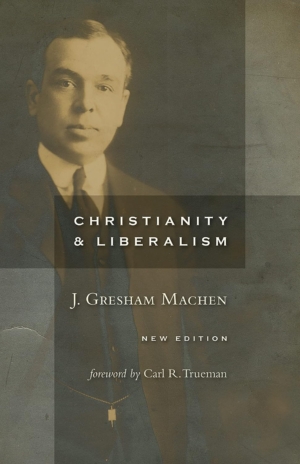
I think, not only the content of preaching, but the order of the content is important; indispensable even. J. Gresham Machen, in Christianity and Liberalism, wrote, The consciousness of sin was formerly the starting-point of all preaching, but today it is gone… . . . Continue reading →

Pervasive Unbelief In The PCUSA

All this is true. But it really does not apply to the situation in the Presbyterian Church in the U.S.A. The point is that Church is very largely dominated by unbelief. It does not merely harbor unbelief here and there. No, it . . . Continue reading →

Machen On Revival And Controversy

I do not know all the things that will happen when the great revival sweeps over the Church, the great revival for which we long. Certainly I do not know when that revival will come; its coming stands in the Spirit’s power. . . . Continue reading →

Carnell’s Ironic Critique Of Machen

The mentality of fundamentalism sometimes crops up where one would least expect it; and there is no better illustration of this than the inimitable New Testament scholar, J. Gresham Machen. Machen was an outspoken critic of the fundamentalist movement. He argued with . . . Continue reading →

Machen On The Present Situation

THE present situation in the Presbyterian Church in the U. S. A. is only one phase of a situation that prevails in the Protestant churches throughout the world. Everywhere—in the countries of Europe and in mission lands—Christianity finds itself in a mighty . . . Continue reading →

Machen’s Warning To MDiv Students

You will have a battle, too, when you go forth as ministers into the church. The church is now in a period of deadly conflict. The redemptive religion known as Christianity is contending, in our own Presbyterian Church and in all the . . . Continue reading →

Machen On Loving The Congregation

I know some preachers who are very good men, and very devoted to Christ, who seem somehow to let their Christianity make them cold and dead to all the movings of friendship. They do not outwardly lead the lives of hermits; on . . . Continue reading →