
The seducers that had infiltrated the Galatians and corrupted the purity of the gospel…Paul stops here, and says that if we are being forced and obliged to perform this task for God and to enter into this covenant with him, Jesus Christ . . . Continue reading →
Justification
Heidelberg 126: Justified Sinners Pray For Forgiveness Of Sins

One of the most persistent temptations Christians face is that of turning the covenant of grace into a covenant of works. As we pray we must always be reminded that we, who trust in Jesus Christ as our substitute and Mediator, are . . . Continue reading →
Heidelberg 114: Between Moralism And Antinomianism (2)

Paul was not a Gnostic, a Valentinian, an Anabaptist, a Familist, nor an Antinomian. He was a sinner saved and justified freely through faith alone, a Christian living in union and communion with Christ, seeking to bring his life into conformity to all of God’s holy moral law. Continue reading →
Heidelberg 114: Between Moralism And Antinomianism (1)
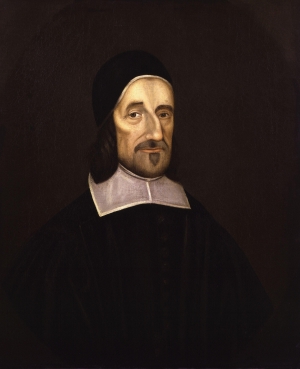
Judged by the mainstream of Reformed theology and particularly by confession of by the Reformed Churches, Richard Baxter (1615–91) was not Reformed. Remarkably, because many are not aware of what Baxter taught about the central issue of the Reformation, the article by . . . Continue reading →
No Compromise On The Imputation Of Christ’s Active Obedience

Recently I had the pleasure of talking with Mike Abendroth, Senior Pastor of Bethlehem Bible Church (West Boylston, MA) and the host of No Compromise Radio. We talked about the importance of the biblical doctrine of the imputation to the believer of . . . Continue reading →
Heidelberg 70: Washed With Christ’s Blood And Spirit—The Double Benefit Of Christ

Baptism testifies and seals to us believers that we have been declared clean on the basis of Christ’s perfect righteousness and condign merit imputed to us. We have come “to Jesus, the mediator of a new covenant, and to the sprinkled blood that speaks a better word than the blood of Abel” (Heb 12:24). It also testifies and seals to us believers that we are being cleansed, i.e., that we are being progressively, graciously sanctified by Christ’s Spirit, that Christ’s sprinkled blood not only justifies but it is unto (toward) actual “sanctification of the Spirit, for obedience to Jesus Christ” (1 Pet 1:2). Continue reading →
Augustine On Justification, Salvation, And Assurance
Our predestination is not wrought in ourselves, but in secret with Him, in His foreknowledge. But we are called by the preaching of repentance. We are justified in the calling of mercy and fear of judgment. He feareth not judgment, who hath . . . Continue reading →
Heidelberg 64: Sanctification By Grace Versus Sanctification By Scolding (2)

64. But does not this doctrine make men careless and profane? No, for it is impossible that those who are implanted into Christ by true faith, should not bring forth fruits of thankfulness (Heidelberg Catechism 64) In part 1 we began to look . . . Continue reading →
Heidelberg 64: Sanctification By Grace Versus Sanctification By Scolding (1)
Usually, if a boss wants greater efficiency and productivity from her employees, she sets up a system of incentives for her employees. If the boss is of the ordinary, uncreative sort, those incentives are likely to be negative. Fail to meet this goal and x (e.g., loss of pay, demotion etc) shall happen. A more creative boss might set up a series of positive incentives: meet this target and you shall receive y reward (e.g., extra paid vacation, flexible scheduling, company car etc). Whatever the nature of the incentive, the very structure is a covenant of works. Continue reading →
Irish Articles (1615): The Covenant Of Law, Christ’s Merits, And Grace To Sinners
21. Man being at the beginning created according to the image of God (which consisted especially in the wisdom of his mind and the true holiness of his free will), had the covenant of law engrafted in his heart, whereby God did . . . Continue reading →
Lloyd-Jones Against Shepherd: Complete Statement
He even talks of eschatological justification and regards it as something that is not complete until the judgment…He does not recognize that justification is entirely God’s forensic act of declaring we are just because he has imputed to us Christ righteousness. The result is no one could ever bring against Shepherd the charge brought against Paul in Rom. 6:1—Dr. D. Martyn Lloyd-Jones Continue reading →
Not “As If” But Actually
Shepard affirms that from a covenantal perspective a person may pass from an elected and justified status to a non-elect and non-justified status. This transition does not mean simply that a person is first treated as though he were elected and justified . . . Continue reading →
W. Stanford Reid: Shepherd Teaches Justification Through Faith And Works
While he speaks in a number of places of faith alone (unhyphenated) as the instrument by which we appropriate justification, he also insists that works must go with it, so closely related that justifying faith and works are almost identical…. This apparently . . . Continue reading →
Next Stop: Osiander
it would be in my opinion and feeling that Norman Shepard, if he should logically continue to expand the position as set forth in all of his documents, would ultimately come to a position like that of Osiander and perhaps even close . . . Continue reading →
Heidelberg 62: Works No Part Of Our Justification

Because the popular rhetoric in evangelical and even in confessional Protestant circles has frequently been that the medieval (or the Roman communion) taught justification by works and the Reformers taught justification by grace well-meaning but misguided Christians sometimes conclude that so long . . . Continue reading →
Iain Murray: Shepherd Has Reconstructed The Protestant Doctrine Of Justification
1. Regretfully I share the view that matters of substance, not merely of terminology are involved…. 2. I am unhappy with the way in which Mr Shepherd represents the historical theology behind the reformed doctrine of justification as stated in the Westminster . . . Continue reading →
Morton Smith: Shepherd Teaches Justification Through Faith And Works
As one who has been trained in, and has taught the classic systematic theology with the biblical theological basis of Professor John Murray’s approach, I find Mr. Shepherd’s original paper, and also his later statements, quite confusing and disturbing. For example, he . . . Continue reading →
R. C. Sproul: Why Can’t We Say That Good Works are Necessary As Evidence?
Thesis #23 illustrates the problem: “…good works…though not the ground of his justification, are nevertheless necessary for salvation from eternal condemnation and therefore for justification.” This thesis is replete with the confusion of formulation that I’ve already mentioned. The good works are . . . Continue reading →
Roger Nicole On A Distinguishing Mark Of Shepherdite Theology
In attempting to claim a fundamental cleavage between Reformed thought and Lutheranism, evangelicalism and other movements on the point of justification, Shepherd appears to abandon the traditional view that there is substantive agreement among all evangelical Protestants concerning this topic. The fact . . . Continue reading →
Ursinus On Christ’s Merits And Sola Fide
1. Because we are justified by the object of faith alone, that is by the merits of Christ only, without which we can have no righteousness whatever: for we are justified for Christ’s sake. Nothing but the merit of Christ can be . . . Continue reading →