
These were the top five posts for the week of January 12–18, 2026. Continue reading →
In this episode Dr. Clark talks conspiracy theory and gnosticism. Continue reading →
These were the top five posts for the week of January 12–18, 2026. Continue reading →
In this episode Dr. Clark talks about AI. Continue reading →
Many Christians have heard the phrase, “God inhabits the praises of His people.” It is often used to suggest that when the church sings, God somehow enters the room or shows up in a special way. That idea is widespread and usually . . . Continue reading →
Our first duty is truth. We owe you the truth. That means we should not mislead you; it means we shouldn’t hide the ball; we shouldn’t be deliberately obscure about what we are telling you. We have an obligation to clarity and . . . Continue reading →
There are moments when the moral confusion of our age feels exhausting. As a Christian, I find it difficult not to grieve the normalization of abortion, the distortion of sex and gender, the redefinition of marriage, and the broader erosion of moral . . . Continue reading →
These were the top five posts for the week of January 5–11, 2026. Continue reading →

Under the types and shadows of the Old Testament, before the death of Christ, circumcision was the sign of God’s covenant promise to be a God to believers and to their children. That bloody sign and seal has been replaced by a . . . Continue reading →
Paul Helm, who died on December 29 at home in Gloucestershire aged 85, was the leading philosophical defender of Calvinism in the United Kingdom over the past 50 years. Helm was the best kind of Calvinist: His steely intellect was concealed by . . . Continue reading →
“Word and sacrament piety” is perhaps an expression with which you are unfamiliar. It is a shorthand way of saying that the way God has ordained to work in the lives of his people is through the ministry of the Word, chiefly . . . Continue reading →
These were the top five posts for the week of December 29–January 4. Continue reading →

In a world marked by constant change, uncertainty, and anxiety, Christians often find themselves asking questions they never expected to ask: Am I really saved? Does God still love me? Can I trust his promises when everything feels unstable? These questions are not new, . . . Continue reading →
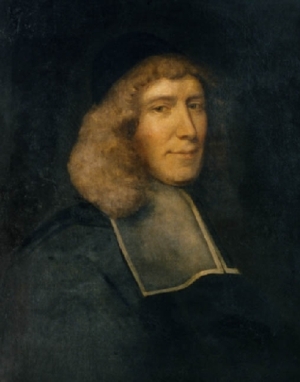
John Owen (1616–83), often called the Prince of the Puritans, was a prominent Reformed pastor-theologian. Serious Christians continue to devote attention to his work, with many thoughtful readers turning to Owen expecting to benefit from his theology. Crossway, for example, is republishing . . . Continue reading →

The case of the murder of Charlie Kirk is a stark example of the amateur confusion of research presented for research conducted. The most probable explanation for the murder of Charlie Kirk is that it was done by a lone gunman, just . . . Continue reading →

These were the top five posts for the week of December 22–28. Continue reading →

In this episode of the Heidelcast, the Superfriends talk about the Scottish Confession and baptismal regeneration. Continue reading →
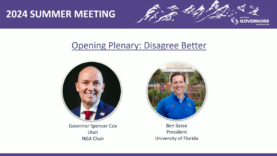
To open the NGA 2024 Summer Meeting, after a presentation of colors by the Utah National Guard and performance of the National Anthem by country artist Cole Hartley, Utah Governor Spencer Cox spoke with University of Florida President Ben Sasse about toxic . . . Continue reading →
Students are embracing the magical abilities of AI tools in ever-increasing numbers. Theological faculties and seminaries are scrambling to respond with appropriate ethical policies. Developers are forever finding new ways to foil AI detection. Unsurprisingly, specialist theological editors and proofreaders (such as . . . Continue reading →

Our series on the Christian’s great hope in the face of death has so far thought about the theological reality of death as God’s judgment on sin, while also observing that Scripture offers a wonderfully tender perspective. In considering the great comfort . . . Continue reading →
Churches should reconsider the practice of congregational nomination and election for those who assist the Diaconate. When the selection process mirrors or closely resembles the election of deacons, it creates unnecessary confusion. It blurs the distinction between ordained officers and those serving . . . Continue reading →