Crisp: Edwards Was A Panentheist

…Such a picture of God’s relation to the creation is undoubtedly striking, combining as it does aspects of classical theism, theological aesthetics, panentheism, and the doctrines of continuous creation and occasionalism (about which, more presently). Far from being the product of some . . . Continue reading →

On “Safetyism”

But these same scenes present an affront to the organs of social control. There would seem to be an inherent tension between the spirit of play and “safetyism” (I parse this tension more fully in my book Why We Drive, which will . . . Continue reading →

Did Abraham Kuyper Become An Anabaptist? Updated With A Postscript

Is theocracy, i.e., an state-established religion and the state enforcement of religious orthodoxy essential to Reformed theology, piety, and practice? That is the question asked and answered recently by Craig Carter, a former Anabaptist turned Particular Baptist theologian in response a recent . . . Continue reading →

Luther Delivered Us From The Doctrine Of Purgatory But Critical Theory Will Have It Reinstated

R. Scott Clark, professor of church history at Westminster Seminary California in Escondido, California, told Campus Reform that “Dr. Thompson calls Lutherans to repent for ‘systemic racism’ and takes for granted that we should all accept this new, rather radical redefinition of racism which, in her account, entails a new, decided un-Lutheran definition of repentance.” Continue reading →

Understanding The New Calvinists: Neither New Nor Calvinists

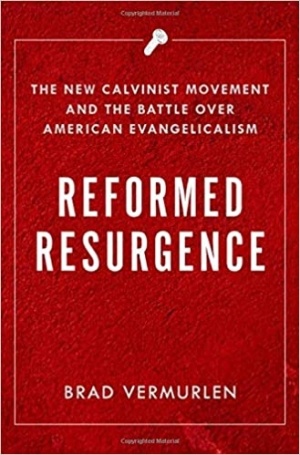
The New Calvinist movement is probably about 20 years old or so. Collin Hanson’s Young, Restless, and Reformed appeared in 2008, just before Recovering the Reformed Confession. Whether it is Reformed is a matter to be debated. In recent years, however, the movement has certainly shown itself to be restless. One prominent figure in the movement has publicly abandoned the Christian faith. Three prominent figures, James MacDonald, C. J. Mahaney, and Mark Driscoll, have been either been removed from their churches or resigned amidst scandals. One might think of them as elephants in the YRR/New Calvinist room. Continue reading →

Muller On The Sources Of Biblicism

The rise and development of Socinianism in the seventeenth century cannot entirely account for the variant trinitarianisms of the age, including the English debates of the 1640s and 1650s, the variant language and historical perspectives of the Cambridge Platonists, and the doctrinal . . . Continue reading →

New Resource Page: On Biblicism

Biblicism is not the attempt to be faithful to Scripture (i.e., to be biblical). Rather, in its extreme form, biblicism is the attempt to read Scripture in isolation. It is the attempt to read Scripture in isolation from the rest of Scripture . . . Continue reading →