A Brief History Of Covenant Theology

The roots of Reformed covenant theology are as deep as the Christian revelation and tradition is old. Its importance to the Reformed faith cannot be overstated. The great Princeton theologian, B. B. Warfield called federal (covenant) theology, “architectonic principle” of the Westminster . . . Continue reading →

Heidelberg 115: The Three Functions Of The Law In The Christian Life

In the ancient world a teacher (a pedagogue) was not your friend nor your therapist. He almost a legal figure whose job it was to see that you had done your lessons properly, that you made memorized your vocabulary and paradigms and . . . Continue reading →

Heidelberg 114: Between Moralism And Antinomianism (2)

Paul was not a Gnostic, a Valentinian, an Anabaptist, a Familist, nor an Antinomian. He was a sinner saved and justified freely through faith alone, a Christian living in union and communion with Christ, seeking to bring his life into conformity to all of God’s holy moral law. Continue reading →

Heidelberg 114: Between Moralism And Antinomianism (1)

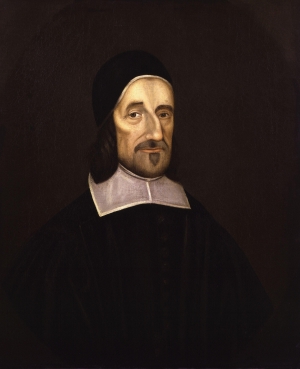
Judged by the mainstream of Reformed theology and particularly by confession of by the Reformed Churches, Richard Baxter (1615–91) was not Reformed. Remarkably, because many are not aware of what Baxter taught about the central issue of the Reformation, the article by . . . Continue reading →

Heidelberg 112: Your Speech Shall Accord With Objective Reality

In  the garden the Evil One began by questioning the veracity of God’s Word: “Has God really said, ‘You shall not eat of any tree in the garden’?” (Gen 3:1b). The woman collaborated with the Evil One by adding to the Lord’s . . . Continue reading →

Heidelberg 110–111: You Shall Not Steal

The eighth commandment says: “You shall not steal” (Exod 20:15). I recall following Mom down the grocery aisle and picking grapes as a I went. I was probably 5 or 6. I saw the grapes. They looked good and I wanted some. . . . Continue reading →

Heidelberg 108–109: You Were Bought With A Price (2)

God’s Word is very clear about sexual immorality. Leviticus 18 illustrates how God views sexual immorality. It prohibits adultery and moves immediately in the next verse to warn against not offering one’s children to Molech, to a prohibition against male homosexuality, which . . . Continue reading →

How We Lost The Psalms

In the course of time the constraint of Calvin’s ideals has gradually come to be less felt in the worship of the Reformed Churches. A modification of view as to the relations of art and worship has permitted the harmonization of congregational . . . Continue reading →