If one is hapless enough to watch television or listen to conservative or religious (or conservative religious) radio, one hears endless rhetorical prefaces that assert the decline of Christianity in the industrialized West (or any of its sub-parts). In almost every case, . . . Continue reading →
The United Reformed Churches In North America Condemn Racism, Kinism
In response to an overture, Synod adopted the following statement: That the 14th Synod of the United Reformed Churches in North America join with the Associate Reformed Presbyterian Church, the Presbyterian Church in America, the Reformed Presbyterian Church of North America, and . . . Continue reading →
Video: Ethno-Nationalism, Kinism, and Racial Essentialism

In this episode, host Rev. Chris Gordon is joined by the regular guest panel, Rev. Dr. Dan Borvan and Dr. R. Scott Clark, to discuss a vital and urgent threat showing up in the theological landscape: ethno-nationalism and kinism. Following recent statements . . . Continue reading →
J. D. Hall Is Wrong Again
Tucker Carlson is at it again—platforming pro-Islamic claims that clash with reality. During a recent episode, Carlson interviewed JD Hall about Christian Zionism… At one point, Hall made the following assertion: The Ottomans didn’t charge churches tax. And so when the Ottomans . . . Continue reading →
The Quest for Unattainable Ecclesial Purity and Why It’s a Pill of the Wrong Color for the PCA Today

My friend Dr. R. Scott Clark employed the quest motif in his important defense of Reformed confessionalism. He identified two tendencies that are counter to Reformed theology, piety, and practice: the quest for illegitimate religious certainty (QIRC1) and the quest for illegitimate religious experience (QIRE2). In today’s Presbyterian . . . Continue reading →
EPC Votes To Allow Ordination Of Celibate “Same-Sex Attracted” Pastors
The Evangelical Presbyterian Church (EPC) voted last week at its General Assembly to approve a “pastoral letter” to churches that opens the door to ordaining celibate, same-sex attracted individuals—a decision that has drawn sharp criticism from within the denomination. The measure passed . . . Continue reading →
Review: Take And Eat: Recovering The Regular Celebration Of The Lord’s Supper By Harrison Perkins
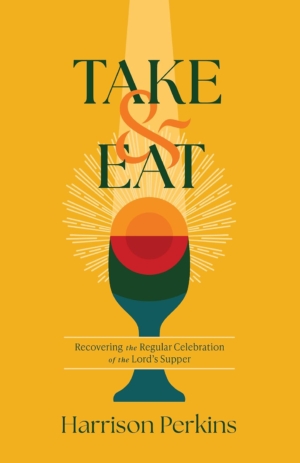
Like preaching, other elements in a church’s order of worship are included every week. Praying and singing, for example, are consistently included for the edification of God’s people. Seldom, if ever, do people think that these should be occasional components of a . . . Continue reading →
Heidelminicast: What’s Wrong With Boys?

In this episode Dr. Clark talks about the culture and boys. Continue reading →
Six Concrete Historical Reasons For Dating The Revelation c. AD 95
(1) Rev. 3.17 has been connected with Laodicea’s unaided recovery from the earthquake of Nero’s reign (Ramsay, SC, p. 428)/ The eivdence here might be variously read, but I argue the strong probability that the reference is to a later stage of . . . Continue reading →
Heidelminicast: These Are Not Illinois Nazis (Part 2)
In this episode Dr. Clark talks about kinism and Christian nationalism. Continue reading →
Becoming Barnabas: The Example Of Encouragement (Part 5): Encouragement In Conflict

Pursuing any vocation costs something. To be a lawyer or physician, you invest years in school to learn the trade. Being a parent costs continually setting yourself aside for what someone else needs from you. Being a spouse costs giving up flexibility . . . Continue reading →
Heidelminicast: These Are Not Illinois Nazis (Part 1)
In this episode Dr. Clark talks about kinism and Christian nationalism. Continue reading →
Kinism and Women Deacons: A Report On The 194th Synod Of The RPCNA
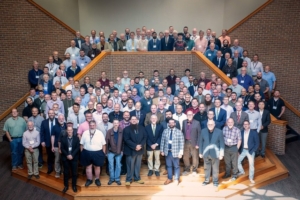
From June 16–19, 2026, delegates from all over the country gathered at Indiana Wesleyan University in Marion, Indiana, for the 194th Synod of the Reformed Presbyterian Church of North America (RPCNA). There are many great things to report and there were many . . . Continue reading →
Why Christians Need Confessions
Despite claims to the contrary, the Christian world is not divided between those who have creeds and confessions and those who just have the Bible. It is actually divided between those who have creeds and confessions and write them down in a . . . Continue reading →
Where Are the Young Men? Ministry and the Crisis of Formation

This year, at assemblies and synods across the country, we are hearing a similar concern: There is a shortage of pastors. Churches need men. Presbyteries need men. Mission works need men. Pulpits are opening, congregations are waiting, and the question keeps coming . . . Continue reading →
Waters On Ordination
Many in the church know that ordination is important, but they may struggle to articulate why that is the case. Ordination is one of the hidden gems of the Bible’s teaching on the church and church office. To appreciate its significance, we . . . Continue reading →
Top Five Posts For The Week Of June 15–21, 2026

These were the top five posts for the week of June 15–21, 2026. Continue reading →
Heidelcast for June 21, 2026: An Interview with Rev. Dr. S. M. Baugh
In this special episode, Dr. Clark talks with the Rev. Dr. S. M. Baugh, Professor Emeritus of New Testament at Westminster Seminary California, about his commencement address at the Westminster Seminary California 2026 graduation ceremony and his forthcoming commentary on the book of Hebrews. Continue reading →
Heidelcast: Superfriends Saturday: Besides Baptism, What are the Differences Between Presbyterian and Baptist Theologies?
In this episode of the Heidelcast, the Superfriends discuss the differences between Presbyterian and Baptist theologies. Continue reading →
Inside “The War for Normal”: How a Christian conference ended up selling Nazi propaganda
To a nerdy homeschooled teenager in the deeply churched South, conferences were a normal part of life. I remember singing martial psalms in the Blue Ridge Mountains during an all-day family seminar, being introduced by my pastor-grandfather to Tim Keller at a . . . Continue reading →