
In adoption, which in the New Testament not only as to the thing is such as it was in the Old, but also as to mode, condition and effects because: (a) in the New Testament it is proposed as having been acquired . . . Continue reading →
HeidelQuote
HeidelQuote
In adoption, which in the New Testament not only as to the thing is such as it was in the Old, but also as to mode, condition and effects because: (a) in the New Testament it is proposed as having been acquired . . . Continue reading →
Heidelminicast

In this episode Dr Clark continues his series on grammar. Continue reading →
Book Review
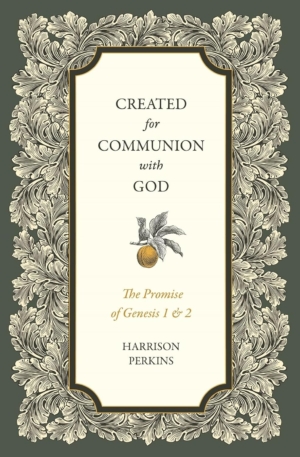
As a Presbyterian minister, I have attended many Presbytery meetings where candidates for licensure or ordination are asked various questions touching on the Bible, theology, church government, and their commitment to the church’s confessional teaching. Inevitably, one question that is almost always . . . Continue reading →
HeidelQuote
In the calling of all nations, which is peculiar to the New Testament as to the full knowledge of circumstance and of mode. This was not attended to by the ancients who thought that the Gentiles would be brought into the old . . . Continue reading →

Dispensationalism has fallen on hard times. What was the dominant eschatological view of twentieth-century Evangelicals, dispensationalism today is overshadowed by the resurgence of postmillennial eschatology and the ever-stalwart amillennial position. This article offers a brief critique of dispensationalism. My remarks about dispensationalism . . . Continue reading →
HeidelQuote
It consists (1) in the advent of the Messiah, his manifestation in the flesh and the fulfillment of the whole law by him (namely, of its ceremonies, prophecies and the entire righteousness prescribed by God in the law). (2) In the abrogation . . . Continue reading →
Heidelminicast
In this episode Dr Clark continues his series on grammar. Continue reading →
Heidelminicast
In this episode Dr Clark continues his series on grammar. Continue reading →
HeidelQuote
Thus far the old dispensation; the new succeeds, the administration of the covenant without the law and ceremonies after the appearance of Christ. It is called “new” not as to the substance of the covenant (which is the same in both) but: . . . Continue reading →

In our previous installments in this series, we have explored our culture’s discomfort with death, noting it as God’s judgment on sin, yet also observing that Scripture offers a wonderfully tender perspective. We discussed how believers, by God’s grace, escape the second . . . Continue reading →

Creeds, confessions, and catechisms are critically important in the evangelical Christian circles in Ethiopia. According to Ethiopian history, evangelical Christianity was introduced about a century ago to the land. It is held that it was first introduced by and as a result . . . Continue reading →
HeidelQuote
Thus it comes about that the doctrine of monergistic regeneration—or as it was phrased by the older theologians, of “irresistible grace” or “effectual calling”—is the hinge of the Calvinistic soteriology, and lies much more deeply embedded in the system than the doctrine . . . Continue reading →
News & Announcements

These were the top five posts for the week of August 25–31. Continue reading →
Unfortunately, when most people think of Reformed theology, they think of the doctrine of predestination. The reasons for this have more to do with the critics of Reformed theology than with what the Reformed themselves confess. Indeed, one of the great weaknesses of the modern Reformed renaissance is that it tends to re-define Reformed theology almost entirely in terms of the doctrine of divine sovereignty. Continue reading →
Heidelcast
In this episode Dr Clark continues the current series, “Nourish and Sustain” Continue reading →
HeidelQuote
The subject of baptism is the faithful people of God, without any distinction of nation, sex, or age. Indeed, infants of the covenanted must be baptized as equally as the infants of the covenanted were once circumcised because the promise made to Abraham . . . Continue reading →
Heidelcast
It’s a Superfriends Saturday on the Heidelcast! Continue reading →

Psalm 17 is about focusing on satisfaction in God even amid our greatest troubles. We find the psalmist here in great distress, calling to God to vindicate him against the wicked. Psalm 17 records his prayer declaring that he was in the . . . Continue reading →
HeidelQuote
One needs to read but a little way into the treatise to perceive how strongly and indeed even passionately Calvinsisted upon this point. The reason for this is that he looked upon election not merely as the warrant for assurance of faith, . . . Continue reading →
Video

Rev. Chris Gordon and Rev. Dr. Dan Borvan tackle a difficult and often misunderstood theological topic: God’s sovereignty in election. They address common objections, like the idea that election is “not fair,” and contrast Reformed theology with Arminianism, which they argue is . . . Continue reading →