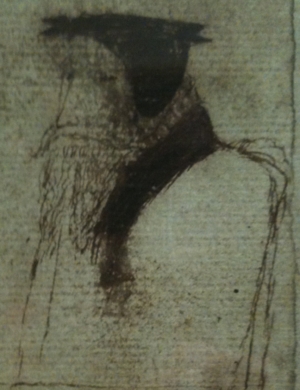
Featley: The Sweet Dipper (Part 6)

And this is the firm tradition of the universal Church, in respect of the baptism of infants, who certainly are as yet unable “with the heart to believe unto righteousness, and with the mouth to make confession unto salvation,” as the thief could do; nay, who even, by crying and moaning when the mystery is performed upon them, raise their voices in opposition to the mysterious words, and yet no Christian will say that they are baptized to no purpose.—Augustine. Continue reading →

Book Reviews

Review: Children At The Lord’s Table? By Cornelis P. Venema (Part Two)

Venema observes that the Reformed churches are committed to the principle of sola Scriptura which means that the Scriptures are to be “regarded as the supreme standard for their faith and life,” but that principle does not mean that we read the Scriptures in isolation from the church or from church history (27). Continue reading →

Book Reviews

Review: Children At The Lord’s Table? By Cornelis P. Venema (Part One)

In this volume Cornelis Venema tackles a serious problem in the Reformed world that needs to be addressed, and he has done so in a thoughtful, thorough, biblical, and confessionally Reformed manner. Background to the Review Before we begin the review, it . . . Continue reading →

Book Reviews

Review: Reformed Scholasticism: Recovering the Tools of Reformed Theology By Ryan M. McGraw (Part One)

Commendations In the wake of Richard Muller’s revolutionary work (he overturned a consensus of more than a century, grounded in the work of Alexander Schweizer [1808–1888] and Heinrich Heppe [1820–1879]), there are questions that remain to be addressed in the study and . . . Continue reading →

Do This and Live: Christ’s Active Obedience as the Ground of Justification

In the controversy between Protestants and Roman Catholics there has been no question whether Jesus obeyed God’s law, but only to what effect. Did Jesus obey the law so as to make it possible for us to cooperate with grace toward future justification, or did he obey God’s law for us (pro nobis) to accomplish our justification once for all? The Protestants affirmed the latter and denied the former. Nevertheless, despite the unity among confessional Protestants on justification, questions have persistently arisen among them concerning the nature, intent, and effect of Jesus’s law keeping and its relation to the justification of sinners. Continue reading →


RESOURCES

Heidelberg Reformation Association
1637 E. Valley Parkway #391
Escondido CA 92027
USA
The HRA is a 501(c)(3) non-profit organization