But touching other nations and specially Christian Commonwealths in these days, the case is otherwise. Some are of the opinion that the whole judicial law is wholly abolished and some again run to the other extreme, holding that the judicial laws bind . . . Continue reading →
Theonomy
What Does “General Equity” Mean?
I. As the ceremonial law was concerned with God, the political was concerned with the neighbor. II. In those matters on which it is in harmony with the moral law and with ordinary justice, it is binding upon us. III. In those . . . Continue reading →
Westminster Confession On The Threefold Distinction In The Law And The Abrogation Of The Mosaic Judicial Laws
3. Beside this law, commonly called moral, God was pleased to give to the people of Israel, as a church under age, ceremonial laws, containing several typical ordinances, partly of worship, prefiguring Christ, his graces, actions, sufferings, and benefits; and partly, holding . . . Continue reading →
Calvin On The Threefold Distinction In The Law And The Abrogation Of The Mosaic Civil Laws
The moral law (to begin first with it) is contained under two heads, one of which simply commands us to worship God with pure faith and piety; the other, to embrace men with sincere affection. Accordingly, it is the true and eternal . . . Continue reading →
Ursinus: The Mosaic Civil Laws Pointed To Christ And Are Fulfilled
The use of the judicial, or civil laws, was, That they might contribute to the preservation of the Mosaic polity. That they might be types of the government of the church in the kingdom of Christ, inasmuch as the princes and kings . . . Continue reading →
Beza On The Threefold Division Of The Law
The law of the Lord our God that was handed down to His people through Moses is partly ethical, partly sacrificial, and partly political.3 The ethical portion shows in what way each person must be disposed of both toward God most of . . . Continue reading →
Strangers And Aliens (20a): Be Not Surprised By Fiery Trials (1 Peter 4:12–19)

Peter was a theologian of the cross, a theologian of suffering, not a theologian of glory. He would never understand those theological systems that anticipate an earthly glory age (e.g., Dominionism, Reconstructionism, Prosperity theology), whether a literal 1000 years (chiliasm) or a figurative millennial glory brought on by gospel preaching (modern post-millennialism). According to some of the Christian Reconstructionists/Dominion theologies, suffering for Christ is only until we gain political power. They tend to treat passages such as these in a quasi-Dispensational fashion, as if turning the other cheek is “for then” but not “for now.” By contrast, For Peter, suffering is the natural state of the Christian in the last days, i.e., that period of redemptive history inaugurated by the ascension of our Lord Jesus Christ. This approach is also quite opposite that of modern “prosperity” preachers. Theirs is a false gospel, i.e., to say no gospel at all. The gospel is not that God will financially prosper those who do whatever the prosperity preachers tell them to do. The gospel is that Jesus is our representative, that he obeyed the law in our place, that he was crucified in our place, that he was raised for our justification, and that he ascended and is reigning now. We receive the benefits of his work for us by grace alone (sola gratia), through faith alone (sola fide). In his mysterious providence, God sometimes materially prospers his people (e.g., Abraham) and sometimes he makes them sit on an ash heap while they scrape their wounds (see Job). There is no magic prayer and no donation to a prosperity preacher has anything to do with Christian faith, piety, or practice. To confess that sinful human beings can control God is nothing but paganism. Continue reading →
Calvin Contra Theonomy (1536)
For there are some who deny that a commonwealth is daily framed which, neglecting the political system of Moses, is ruled by the common laws of nations. Let other men consider our perilous and seditious this notion is.; it will be enough . . . Continue reading →
Turretin On The Threefold Distinction In The Mosaic Law
I. The law given by Moses is usually distinguished into three species: moral (treating of morals or of perpetual duties towards God and our neighbor); ceremonial (of the ceremonies or rites about the sacred things to be observed under the Old Testament); . . . Continue reading →
Refugees And The Twofold Kingdom
Or Worrying About The Theonomy Of The Christian Left

From the early 4th century, when Christianity was declared a legal religion and properties were returned to Christians and persecution of Christians was forbidden, the Christian church gradually become intertwined with the empire. Gradually, paganism was marginalized and then eventually made illegal. . . . Continue reading →
Heidelberg 92: What Is The Law Of God? (3)
There is a way of life, i.e., there is a way that believers live. There is a way of salvation, a path that believers walk toward eternal life, in the grace of Christ, in union with Christ. It is essential to distinguish, however, between is and through or because. The moralist wants to turn is into through or because. We are not saved through obedience. That is Romanism. We are not saved because of our obedience. That is sheer Pelagianism. Nevertheless, it is the case that those to whom God has sovereignly given new life, to whom he has given the grace of faith and through it union with Christ, will and shall seek to live, sola gratia, sola fide according to God’s moral law. Continue reading →
Heidelberg 92: What Is The Law Of God?

God’s Word teaches us to have the highest, most reverent view of God’s law generally. The Psalmist declares “Oh how I love your law! It is my meditation all the day” (v. 97; ESV). To be sure, in Psalm 119 the noun . . . Continue reading →
Postmillennial Constantinianism Drives The Federal Vision
it basically boiled down to this: 1) Have weekly communion; and 2) meet with the local RC priest and treat him as a brother. And then go from there. He has always tended towards mechanism in my mind, because his priority is . . . Continue reading →
For Those Just Tuning In: What Is The Federal Vision?

In talk radio, the host is supposed to “reset” the show at regular intervals. He is to remind listeners of which show they are listening to and on what network or station. One reason why the host does this is that some . . . Continue reading →
A Response To Rachel Held Evans Regarding Wilson And The Definition Of “Reformed”

Jonathan Merritt published a critique of Doug Wilson this morning on his Religion News Service. For younger readers, who might not remember the Federal Vision (FV) controversy, Wilson is the leader of the de facto denominational home of the FV, the Communion of . . . Continue reading →
The Abiding Validity Of The Creational Law In Exhaustive Detail

A correspondent to the HB writes: People can gloss over the term all they want, but secularism is still what it is, a rival religion and ethos to Christianity. The real divide between the FV and anti-FV crowd began with Van Til . . . Continue reading →
Evangelicalism And The Reformed View Of The Law

Note: This post first appeared in February 2008. Since that time the original link to Pulpit Magazine has been taken down. The archives at Pulpit Magazine only go back to 2012. § At Pulpit Magazine, Nathan Busenitz is tackling the question of . . . Continue reading →
We Are Not Polishing Brass On A Sinking Ship

More than 30 years ago, when I first came into contact with Reformed theology, piety, and practice (the Reformed confession broadly defined), I also came into contact with a movement within the Reformed world known as “Christian Reconstructionism” and its child “theonomy.” . . . Continue reading →
The Myth of “Christian America”
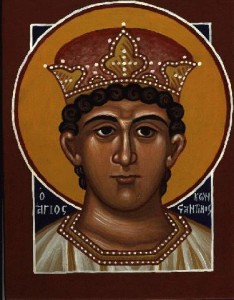
Every four years (and in the interim) the question of whether we should regard the USA as a “Christian” nation re-emerges. There are three ways in which this question might be considered, sociologically, historically, and biblically-theologically. Under each rubric the case for . . . Continue reading →
The World is Watching: Cal Alumni Mag on Rushdoony

The theonomic and reconstruction movements pop up in the oddest places. I recall a PBS documentary in 1988 breathlessly hosted by Bill Moyers warning America about the dangers posed by the movements. Now, in the Fall 2012 issue of the alumni magazine . . . Continue reading →