American evangelical Christianity has both influenced and been influenced by shifts in American culture since before the founding of the Republic. One of the shifts, which has had lasting effects, was the turn toward a more radically democratic turn in politics at . . . Continue reading →
QIRE
The Evangelical Fall From The Means Of Grace
The prayers had been offered, the promises read, and the psalm sung. Two princes stepped forward to receive Communion, but the deacon refused to give them the cup. The superintendent of the city’s pastors ordered a second minister present to take the . . . Continue reading →
Tillich: Pietism And The Enlightenment Both Fought Against Orthodoxy
It is entirely wrong to place the rationalism of the Enlightenment in contradiction to pietistic mysticism. It is popular nonsense that reason and mysticism are the two great opposites. Historically, Pietism and the Enlightenment both fought against Orthodoxy. The subjectivity of Pietism, . . . Continue reading →
Discussing QIRC And QIRE On Presbycast
Chortles Weakly, Wresbyterian (hence the image of “Baron von Raschke,” the “wrasslin” hero of my youth), and I spent an hour last night talking about the Quest for Illegitimate Religious Certainty (QIRC) and the Quest for Illegitimate Religious Experience (QIRE) and their . . . Continue reading →
Confessions Of A Former Charismatic
Dr. Clark, A few weeks ago you posted a warning against the desire for ongoing prophecy. [See also this—Ed.] In it you told a story of what happens when people look to words from God beyond Scripture. I wanted to stand as . . . Continue reading →
Resources On Continuing Revelation
Since the Second Great Awakening, in the 19th century, modern evangelical theology, piety, and practice has come to be dominated by various species of what are really expressions of the original Anabaptist theology, piety, and practice in the sixteenth century. They were . . . Continue reading →
I Have Not Seen Miracles Here: Between Pentecost And The Parousia
And suddenly there came from heaven a sound like a mighty rushing wind, and it filled the entire house where they were sitting. And divided tongues as of fire appeared to them and rested on each one of them. And they were . . . Continue reading →
The Fluid Line Between Revivalism And The Cults In Nineteenth-Century American Religion
To most Millerites, Ellen’s visions were simply another manifestation of the unfortunate religious drift of the times toward “fanaticism.” Early 19th-century America abounded with”prophets” of every description, from little-known frontier seers in Ellen Harmon’s own Methodist Church to prominent sectarian leaders. Mother . . . Continue reading →
Heidelberg 65: Faith, Union With Christ, And The Means Of Grace (2)
65. Since then we are made partakers of Christ and all His benefits by faith only, whence comes this faith? The Holy Spirit works faith in our hearts by the preaching of the Holy Gospel, and confirms it by the use of the . . . Continue reading →
The Difference Between Sola Scriptura And Biblicism
The Reformation solas (by grace alone, through faith alone, according to Scripture alone) are not well understood today. Yesterday, however, was the anniversary of Luther’s famous declaration at the Diet of Worms. Although already under ban for his teachings, Charles V had promised . . . Continue reading →
Pietists And Rationalists Together
Some of theologians of the era tended toward pietism or, among the Dutch Reformed, toward the Nadere Reformatie, and many evidenced affinities for the newer rationalist philosophies. Continue reading →
It Doesn’t Have To Be This Way
Why do evangelicals become Romanists, Eastern Orthodox, or Anglo-Catholics, i.e., Anglicans who identify more with Rome than with the historic Protestant Anglican confession (e.g., the Thirty-Nine Articles and the Anglican Catechism)? Al Mohler reflected recently on a Wall Street Journal story on . . . Continue reading →
“Divine Winds” And Gay Elders: Where The QIRE Leads
The church has long been tempted to use a canon opener since the late 2nd century. As it became clear that the great acts of redemption were complete, that God’s special revelation had ended, the Montanist movement reacted by claiming to receive . . . Continue reading →
Heidelberg 53: We Believe In The Holy Spirit (1)
53. What do you believe concerning the Holy Spirit ? First, that He is co-eternal God with the Father and the Son. Secondly, that He is also given to me, by true faith makes me a partaker of Christ and all His . . . Continue reading →
Now In English: Junius On True Theology
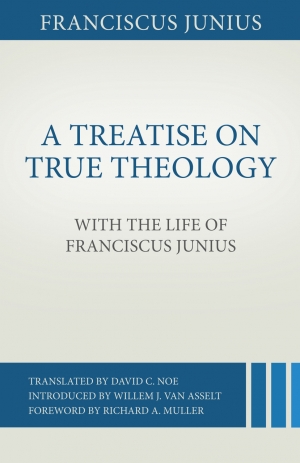
Lambert Daneau (1530–95) described Franciscus Junius as “a man of singular learning”—and that he was. His biblical scholarship was cited widely by writers from a variety of traditions in the sixteenth and seventeenth centuries. His influence on the Reformed tradition has been . . . Continue reading →
Sectarians: Socinians, Arminians, And Pietists
By the end of the seventeenth century, there was a sense that sectarian groups – a list that included Socinians and Arminians, as well as Pietists — were increasingly establishing themselves throughout Europe to the detriment of true Christianity. As Elisée Géraud . . . Continue reading →
Is The Christian Life More Like Colorado Or Nebraska?
For most of my conscious life I have listened to other Americans complain about having to drive across Nebraska on I-80. As soon I tell non-Nebraskans that I am a Cornhusker they have two comments: 1. Your football team isn’t what it . . . Continue reading →

Good Old Fashioned Subjectivist Goo
In the 1920’s, J. Gresham Machen diagnosed not only the intellectual and theological drift of his day but of that which would continue to develop over the next 90 years. He wrote, The depreciation of the intellect, with the exaltation in the . . . Continue reading →
Providence: God’s Active, Almighty, Present Power (2)
In the previous post we considered what it means to say “I believe in God the Father almighty. One of the most scurrilous things that some neo-Pentecostalists have alleged against the historic Christian view of God is that we are Deists. Quite . . . Continue reading →
The Difference Between Reformed And Revived
So the “reformed” and the “revived” make two different kinds of determination when they look for Reformation and revival. Proponents of revival make claims that should be reserved for God, that is, whether a soul has truly come to new life in . . . Continue reading →