

When teaching his disciples about prayer, our Lord said: And when you pray, you must not be like the hypocrites. For they love to stand and pray in the synagogues and at the street corners, that they may be seen by others. . . . Continue reading →
When teaching his disciples about prayer, our Lord said: And when you pray, you must not be like the hypocrites. For they love to stand and pray in the synagogues and at the street corners, that they may be seen by others. . . . Continue reading →

It is widely thought among Christians that God is still revealing himself to believers apart from Scripture. It is not at all uncommon for a Christian to say, “I believe in Scripture alone” (sola Scriptura) in one breath and “The Lord told . . . Continue reading →

If it does not care much about the Lord’s Supper (either to observe it or as to who communes) neither does it necessarily have a vital interest in the facts of the history of salvation. This tendency is plainly evident in two great figures in the history of Pietism, Friedrich Schleiermacher (1768–1834) and Walter Rauschenbusch (1861–1918). Both were raised in the Pietist tradition and both abandoned historic Christianity. Continue reading →

Thomas Müntzer (c. 1489–1525) was a university-trained pastor and theologian. Martin Luther recommended him to be the pastor of St Catharine’s Church in Zwickau (117 km south of Leipzig). There he came into contact with three fiery souls, Nicholas Storch (c. 1500–25), Thomas . . . Continue reading →

In recent weeks there has been a remarkable confluence of articles that, in their own way, are right on time. Let us start chronologically. In November John Frame reviewed James Dolezal’s excellent book, All That Is In God. In the course of . . . Continue reading →

One of the first things I learned when I became an evangelical Christian in 1976, the year America elected a self-proclaimed “Born Again” Christian (Jimmy Carter), was that every Christian should expect to hear a “still small voice” from God. I learned . . . Continue reading →

And with great power the apostles were giving witness to the resurrection of the Lord Jesus and great grace was upon them all (Acts 4:31). Perhaps since the rise of the late-medieval mystics, who desired nothing so much as to be absorbed . . . Continue reading →

You can see it here.
In the papacy there is a book containing the legends or accounts of the saints. I hate it intensely, solely for the reason that it tells of revolting forms of worship and silly miracles performed by idle people. These legends and accounts . . . Continue reading →

I spent some time yesterday talking to Chris Buskirk (filling in for Seth Leibsohn) on 960AM the Patriot (Phoenix) about the election, the place of Christians in politics, civil life, and religious liberty. Here’s the audio:
Americans and Republicans, remember: You asked for this. Given the choice between a dozen solid conservatives and one Clinton-supporting con artist and game-show host, you chose the con artist. You chose him freely. Nobody made you do it. —Kevin Williamson

I am not a political analyst and I do not play on TV or radio (nor in the pulpit) but Christians do live in a twofold kingdom and I was happy to talk with Chris Buskirk, host of Downstream Politics, about media, . . . Continue reading →

Here’s today’s episode of Janet Mefferd Today in which we discussed the “social gospel,” Walter Rauschenbusch, the emergent/emerging church movement and what it means that evangelicals seem to be heading back to this well for inspiration. We also talked about some alternative . . . Continue reading →
With regard to political action: American Christians (particularly evangelicals) must get over the microwave mentality. We need to think more in terms of camp fires and cook outs. It takes a long time to make a decent meal outdoors and it might . . . Continue reading →

Evangelical involvement in politics has perhaps never been more intense. The George W. Bush administration had an office of faith-based initiatives. The Obama administration continues to hold prayer breakfasts and regularly invokes the Christian faith when it serves favored policy goals. The . . . Continue reading →
Some of theologians of the era tended toward pietism or, among the Dutch Reformed, toward the Nadere Reformatie, and many evidenced affinities for the newer rationalist philosophies. Continue reading →
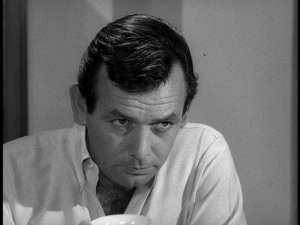
One of the television shows I remember watching as a boy, briefly when it was first run (1963–67) and then again re-runs, was The Fugitive. It was the story of a man who was falsely convicted of murder and who sets out . . . Continue reading →

In the 1920’s, J. Gresham Machen diagnosed not only the intellectual and theological drift of his day but of that which would continue to develop over the next 90 years. He wrote, The depreciation of the intellect, with the exaltation in the . . . Continue reading →

Mark Galli (HT: Alex Webster) has an interesting story in CT Online about the power of religious euphoria. He likens the attraction to, indeed the addiction to euphoria to attraction and addiction to a drug. Galli writes: We disdain faith that is . . . Continue reading →
Perhaps it may be objected that if we continue to be tolerated, we shall harm the church by an insistence upon the maintenance of a strict view of its doctrinal standards. I think that just from the “Liberal” point of view there . . . Continue reading →