
There is yet something more required; it is not enough that we are not guilty, we must also be actually righteous,—not only all sin is to be answered for, but all righteousness is to be fulfilled. By taking away the guilt of . . . Continue reading →
Justification
Bible Presbyterian Church: We Reject A Final Justification Through Works
In every generation, the doctrine of justification by faith alone comes under attack. As the heart of the gospel, the doctrine of justification is most fundamental to the definition of salvation and any adequate understanding of the atoning work of the Lord . . . Continue reading →
Godfrey on Shepherd In 1978

Editor’s Preface During the controversy at Westminster Seminary (Philadelphia), not only did faculty devote meetings to the highly objectionable views of Norman Shepherd, but they also wrote articles for the seminary’s theological journal and even used class lectures to counter arguments from . . . Continue reading →
Olevianus: The First Benefit Of The Resurrection Is The Certainty Of Our Justification
The resurrection of Christ is a sure testimony to us that God considers us to be as just and righteous in His eyes as the body of Christ was when He arose from the dead out of all of our sins. Continue reading →
Clark Contra Shepherd (2001)
One of the gravest problems raised by Rev. Shepherd’s book, The Call of Grace is its refusal to honor the Biblical, confessional and Reformed theological distinction between Law and Gospel as expressed in the two covenants in the historia salutis. The covenant . . . Continue reading →
Resources On Norman Shepherd
Resources Explaining the Errors in the Theology of Norman Shepherd and in the So-Called Federal Vision Movement Continue reading →
Not For Others Only But For Me Also
Therefore read these words “me” and “for me” with great emphasis, and accustom yourself to accepting this “me” with a sure faith and applying it to yourself. Do not doubt that you belong to the number of those who speak this “me.” . . . Continue reading →
The Logic Of Fruit As Evidence

The charge made by Rome and the Anabaptists, among others, was that the evangelical doctrine of salvation sola gratia, sola fide would make Christians cold and careless about their sanctification. The Reformed churches refuted that charge by arguing that the same grace by which we have been given new life also produces faith and it is “impossible for this holy faith to be unfruitful.” True faith is God’s gift. It unites us to the risen and ascended Christ who, by his Spirit, works in us conformity to himself and to his moral will. This is how we understand “faith working through love” (Gal 5:6). Rome, remember, turned “faith working through love” into “faith formed by love” (on this see part 1). In response, Calvin wrote on Galatians 5:6, “When you are engaged in discussing the question of justification, beware of allowing any mention to be made of love or of works, but resolutely adhere to the exclusive particle.” Continue reading →
N. T. Wright Is Still Wrong
I merely want to focus our attention on what I think is the most detrimental theological claim advanced in this book. Wright polemicizes by arguing that we should change the famous line “justification by faith” to “justification by loyalty.” He reasons, “If . . . Continue reading →
Justification In The Earliest Christian Fathers

Perhaps the first post-Apostolic use of the New Testament verb “to justify” (δικαιόω) occurs in 1 Clement, written just after 100 AD to the same Corinthian congregation to whom Paul had written half a century earlier. There is no claim of authorship . . . Continue reading →
N. T. Wright Contra The Imputation Of Christ’s Active Obedience: Not A God One Wants To Worship
Among New Testament scholars, Mark Seifrid, influenced by Clifford’s interpretation of Protestant orthodoxy, says that it “added the imputation of Christ’s righteousness to the forgiveness of sins.” The distinction between active and passive righteousness is “unnecessary and misleading” and arose from a . . . Continue reading →
Owen Defended The Imputation Of Christ’s Active Obedience Against Richard Baxter
After the Westminster Assembly, John Owen defended the imputation of active obedience against Piscator, turning to Christ’s active obedience as a source of encouragement and consolation for the Christian. According to Owen, Christ had to provide active obedience because Adam was under . . . Continue reading →
Resources On the Imputation Of The Active Obedience Of Christ

SO THANKFUL FOR THE ACTIVE OBEDIENCE OF CHRIST.
NO HOPE WITHOUT IT. Continue reading →
Richard Baxter On Initial And Final Justification Through Faith And Works
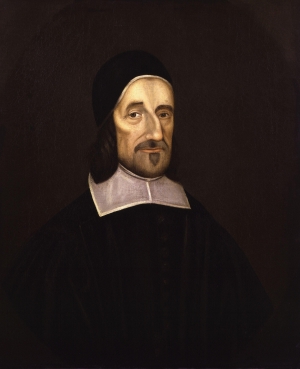
The magisterial Protestant churches (i.e., the Lutheran and Reformed) and their theologians did not speak of, teach, or confess a “two-stage” doctrine of justification or even a “two-stage” doctrine of salvation (justification, sanctification, and glorification). Yet, today, one sees leading evangelical and . . . Continue reading →
With Megiddo Radio On The Current Justification Controversy

It was good to talk with Paul Flynn of Megiddo Radio today about the ongoing controversy over justification and salvation. It was a wide-ranging discussion. Paul and his family are members of Loughbrickland Reformed Presbyterian Church of Ireland. Click on the link . . . Continue reading →
John Murray: Justification Is Still The Article Of The Standing Or Falling Of The Church
This is what is meant when we insist that justification is forensic. It has to do with a judgment given, declared, pronounced; it is judicial or juridical or forensic. The main point of such terms is to distinguish between the kind of . . . Continue reading →
Sola Fide Es El Instrumento Para La Justificación Y La Salvación
Las controversias pueden ser desagradables y dolorosas y la reciente controversia sobre la santificación ha sido ambas en algunos momentos. De igual manera las controversias pueden ser útiles al traer mayor claridad y esta controversia ha sido útil en este sentido. Algunos . . . Continue reading →
With Abounding Grace Radio On Justification By Grace Alone, Through Faith Alone

When Scripture uses the verb “to justify” (δικαιόω) as it does in Romans 3:20, “wherefore out of the works of the law will no flesh be justified before he, for through the law comes the knowledge of sin,” it means to say, . . . Continue reading →
The Reformation Began In Jerusalem
Then after fourteen years I went up again to Jerusalem with Barnabas, taking Titus along with me. I went up because of a revelation and set before them (though privately before those who seemed influential) the gospel that I proclaim among the . . . Continue reading →
Initial Justification Sola Fide And Final Salvation Through Faithfulness Is Federal Vision Theology
“[T]his double justification doctrine (initial justification by faith alone, followed by a second justification according to works in the eschatological judgment) is re-emerging as a “consensus position” among today’s leading evangelical and Reformed biblical theologians. Rich Lusk, “The Reformed Doctrine of Justification . . . Continue reading →