

Trick or Treat! Continue reading →

In this episode Dr Clark continues the series, “Have This Mind” Continue reading →
Trick or Treat! Continue reading →
It’s a Superfriends Saturday on the Heidelcast! Continue reading →
Psalm 134: Come, bless the Lord, all you servants of the Lord, who stand by night in the house of the Lord! Lift up your hands to the holy place and bless the Lord! May the Lord bless you from Zion, he . . . Continue reading →
Interestingly, it was Calvinists, not Lutherans, who in 1617 first proposed a centennial marking Luther’s attack on indulgences. Alarmed by an increasingly assertive Tridentine Catholic Church and lacking legal status in the Holy Roman Empire, early in that year church and royal . . . Continue reading →
But how can Christians champion the Ten Commandments as a moral standard if they themselves do not obey them? Yes, the Incarnation transforms the Decalogue. All Christian churches agree on that in principle. But most Christians disregard the Commandments without reflection and . . . Continue reading →

We confess sola gratia (by grace alone) and sola fide (through faith alone), as the response to the Romanist doctrine that we are justified and saved by the infusion of a medicinal substance (which they call grace), with which we are said to cooperate unto sanctification and thence, eventually, to justification. No, salvation (deliverance from the wrath to come, righteousness with God, and progressive sanctification) is God’s free gift. Grace is not a medicinal substance with which we are infused. It is God’s favor merited for us by Christ’s perfect righteousness earned for us and freely imputed to us by God. Faith is not a virtue formed by love but the gift of God with which we freely receive, rest in, and trust Christ and all of his righteous and suffering obedience for us. Continue reading →

Michael Kruger challenges the modern assumption that the Bible was chosen arbitrarily. With clarity and care, he explores the historical, theological, and cultural evidence that the canon wasn’t imposed, but emerged within the early Christian community. RESOURCES Subscribe To The Heidelblog! Download the . . . Continue reading →
It was one of the most important revolutions in modern history—and yet no blood was spilled, no bombs were thrown, and no monarch was beheaded. What happened was this: In the middle of the 18th century, huge numbers of ordinary people began . . . Continue reading →
In this episode Dr Clark talks about the federal vision. Continue reading →
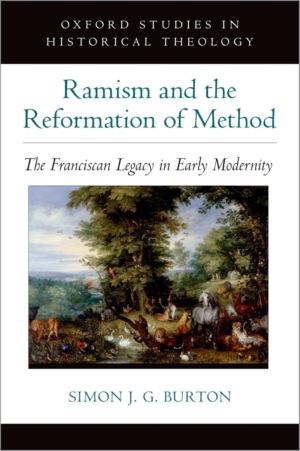
Philosophy and the way that we frame issues has always played an important role in expressing the truth. We have an “apparatus” to our thought. We use certain conventions to be able to articulate what we mean even in theology. Whether we . . . Continue reading →
By most accounts, the Reformation began when a young monk challenged ecclesiastical and academic authorities to debate a controversial practice that had developed in the late-medieval period. Why do we continue to remember it roughly five hundred years later? Waving off Martin . . . Continue reading →
In this episode Dr Clark talks about “The American Experiment” Continue reading →

I grew up in Nebraska, a Husker football fan by necessity. I still remember the first game I attended—my family and I saw our beloved Cornhuskers beat the Southern Miss Golden Eagles on a warm September afternoon in 1998. I was part . . . Continue reading →

Authenticity is the banner of our time for what is supposed to be good. The notion is that striving for conformity to any norm outside of ourselves means we are not genuine. That view results in antagonism toward every stable aspect of . . . Continue reading →
R. Scott Clark talks with Jonathan Landry Cruse about his book, “Paradox People: Learning to Live the Beatitudes” Continue reading →
I don’t like writing about this, but I like ecclesial lawlessness even less. And I don’t seek this stuff—it is thrust upon me. Is there any reason unordained persons should lay hands on ruling elders being ordained in a PCA church? Is . . . Continue reading →

These were the top five posts for the week of October 20–26. Continue reading →

My church has ministered in the local prison for twenty-five years or more. The call came from inside the prison. As I remember the story, an inmate became convinced of the Reformed faith through literature he had obtained and contacted a publisher . . . Continue reading →
“What is man?” So urgent is the question of man that the question of God has re-emerged among our intellectual and cultural leaders. Ayaan Hirsi Ali, Niall Ferguson, Paul Kingsnorth, and Russell Brand have all recently professed faith. Tom Holland and Elon . . . Continue reading →