These were the top five posts for the week of November 17–23. Continue reading →
Heidelminicast: The Israel Of God (4)
In this episode Dr. Clark continues his series “The Israel of God”. Continue reading →
These were the top five posts for the week of November 17–23. Continue reading →
Recently a theological controversy that had been simmering in podcasts and blog articles for many months finally reached a painful, public climax. In the first week of November, ministries that had been respected pillars of the online Particular Baptist world fractured. Justin . . . Continue reading →
“Behold, I stand at the door and knock. If anyone hears my voice and opens the door, I will come in to him and eat with him, and he with me.” Revelation 3:20 There’s a saying that “a text without context is . . . Continue reading →
In this episode Dr Clark continues the series, “Have This Mind” Continue reading →
In this episode of the Heidelcast, Dr. R. Scott Clark talks about demonic possession. Continue reading →
At least four large sources of income fueled Geneva’s new economic engine during this period. First, revenue for Geneva increased dramatically from 1550 to 1570 primarily due to the large number of new citizens (refugees). In two years (1555-1556), Calvinist refugees who were flocking . . . Continue reading →
What David says in Psalm 18:20–30 is a little bit startling, and his statements should probably give us pause before we are willing to say them in reference to ourselves. Continue reading →
“Hear, O Israel, the Lord our God, the Lord is one!” (Deut 6:4) In contrast to the polytheistic religions of her neighbors, Israel was made deeply conscious of the fact that there is only one God (hence, the term, monotheism). The monotheistic . . . Continue reading →
The backstory of our Canons of Dork comics. Continue reading →
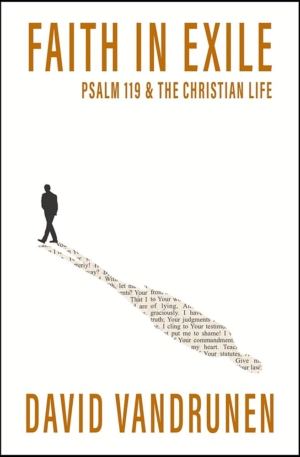
There are seasons when sin is only a word, and others when it is a weight. Not the light sting of conscience either, but the slow crush of truth. David knew it, the feeling that one’s own soul has become its own . . . Continue reading →
In the statement, Mater Populi Fidelis, the Roman Catholic Church clarifies and modifies some of its language about Mary. As a Protestant, Pastor Adriel Sanchez shares what he appreciates, and where he still pushes back, on Marian Catholic teaching. RESOURCES Subscribe To . . . Continue reading →
I cannot absolve myself from the guilt of failure to exercise critical responsibility toward my own radical ideals. I was guilty of judging capitalism by its operations and socialism by its hopes and aspirations; capitalism by its works and socialism by its . . . Continue reading →
In this episode Dr. Clark continues his series “The Israel of God”. Continue reading →
It is a familiar experience: A non-Reformed believer finds out you are of a Calvinistic persuasion, and before long there is an either explicit or implicit assertion that you do not have a prominent place for the Holy Spirit in your theology. . . . Continue reading →
Recent events in Canterbury and Rome underscore this year’s significant anniversaries. I am not thinking here of the obvious one: the 1700th year since the first ecumenical council set in motion the creedal discussions that culminated in the Nicene Creed of 381. . . . Continue reading →
In this episode Dr. Clark continues his series “The Israel of God”. Continue reading →
“Are we going to make it?” That is a question we all ask from time to time. Will we be able to turn in our paper by the submission deadline? Will our team hold on to their lead until the clock strikes . . . Continue reading →
Artificial intelligence (AI) stands at the forefront of technological advancement, representing a simulation of the real—a virtual reality. AI systems and bots can imitate humans, even fulfilling aspects of the cultural mandate. Continue reading →
This year, the Nicene Creed is 1700 years old, and here we are still paying attention to it. By any measure, that is an impressive achievement. The number of historical and cultural artifacts to which we still pay attention and which we . . . Continue reading →