

People often say, “Freedom is not free. You have to fight for it.” This is true in the realm of individual liberty. And it is true all the more in the realm of the gospel, because if you believe the gospel of . . . Continue reading →

In this episode Dr. Clark talks about a seminary education. Continue reading →
People often say, “Freedom is not free. You have to fight for it.” This is true in the realm of individual liberty. And it is true all the more in the realm of the gospel, because if you believe the gospel of . . . Continue reading →

These were the top five posts for the week of April 20–26, 2026. Continue reading →
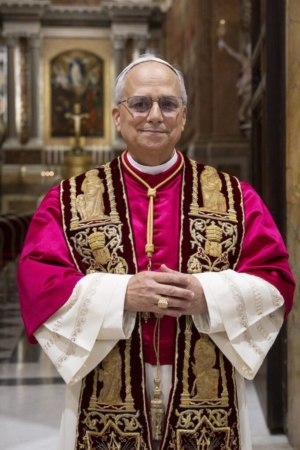
On April 5, for Easter 2026, the current Bishop of Rome (in the Roman Catholic Church) published an “Urbi et Orbi” (to the city and to the world) address which he delivered from from his balcony (the loggia) in St. Peter’s Basilica . . . Continue reading →
They were “kidnapping our loved ones and replac[ing] them with a bitter hollow shell of what they once were.” This sounds like a line from the campy 1978 sci-fi horror flick Invasion of the Body Snatchers, about aliens from a dying planet . . . Continue reading →
In this episode Dr Clark continues the series, “Have This Mind” Continue reading →
The U.S. Department of Justice announced earlier this week that it has secured an indictment against the Southern Poverty Law Center (SPLC) for wire fraud, false statements to a federally insured bank, and conspiracy to commit concealment money laundering. According to the . . . Continue reading →
In this episode of the Heidelcast, the Superfriends give advice for couples who are from different Christian traditions. Continue reading →

The previous installment in this series reflected on the significance of making an entrance. We see in Psalm 24 the importance of an entrance before God since God’s presence is where blessing is found forevermore. In considering Psalm 24:1–2 about God as . . . Continue reading →
For convincing a man of sin, righteousness, and judgment, by the gospel. As for convincing a man of sin, and righteousness, and judgment, by the gospel, or covenant of grace, he must understand three things: 1. That not believing in Jesus Christ, . . . Continue reading →

Dr. R. Scott Clark explores the neurobiological “dopamine effect” that fuels addictions to gambling, porn, and social media. He discusses the severe consequences of compulsive gambling and highlights historical theological warnings against “wasteful gaming.” Continue reading →
In this episode Dr. Clark talks about confessional membership. Continue reading →

Divine grace is a beautiful thing. Though it is not a thing that we can hold on to or put under a microscope, it is a disposition of an Almighty God. What makes this grace of God so beautiful is that we . . . Continue reading →
The sum of the gospel, or covenant of grace and reconciliation, is this: “If thou flee from deserved wrath to the true Redeemer Jesus Christ, (who is able to save to the uttermost all that come to God through him,) thou shalt . . . Continue reading →

In 1535 the Reformation was about fourteen years old. The Protestants had gained some legal status within the empire, but the existence of the movement was by no means secure. Internally, it was wracked with dissension over the moral and theological implications . . . Continue reading →
The covenant of grace, set down in the Old Testament before Christ came, and in the New since he came, is one and the same in substance, albeit different in outward administration: For the covenant in the Old Testament, being sealed with . . . Continue reading →
In this episode Dr. Clark talks about confessional membership. Continue reading →
This same literal interpretation was a marked feature of Old Testament interpretation. Jerome, in rejecting the strict literal method of interpretation, “calls the literal interpretation ‘Jewish,’ implies that it may easily become heretical and repeatedly says it is inferior to the ‘spiritual.’”1 . . . Continue reading →

Short Prayers: Christian Perspectives from the Past Notable Christians from the past have not always emphasized long prayers. Some of them highlighted the benefit of short prayers. For example, when he was discussing Jesus’s teaching on prayer, Augustine (d. AD 430) emphasized . . . Continue reading →
In this episode Dr. Clark talks about confessional membership. Continue reading →