

As a young boy I certainly believed in Santa. We made the annual cookie oblation and went to bed under the conditional covenant that he would not come if we did not sleep (or at least stay in bed). Nevertheless, I think . . . Continue reading →
As a young boy I certainly believed in Santa. We made the annual cookie oblation and went to bed under the conditional covenant that he would not come if we did not sleep (or at least stay in bed). Nevertheless, I think . . . Continue reading →

Ben Shapiro recently gave a speech in which he issued a strong indictment against conspiracy theories and those who traffic in them. He warned, [t]he conservative movement is also in danger from charlatans who claim to speak in the name of principle . . . Continue reading →

Part of Saturday was spent trading tweets with Matthew Milliner, who teaches Art History at Wheaton College. We had a good, genial conversation from two different confessional traditions. I am not sure, but judging by his arguments, I inferred that Matthew may . . . Continue reading →
And they were devoting themselves to the teaching of the apostles and to the communion, that is, the breaking of the bread, and to the prayers. (Acts 2:42)1 Teaching The first words to consider here are “devoting” and “teaching.” The first expression . . . Continue reading →

Matt Tuininga, a friend and former student, wrote an interesting post at Christian in America in which he tells about the conflict between the consistory and some of the people in Geneva over the question of how the people should name their . . . Continue reading →
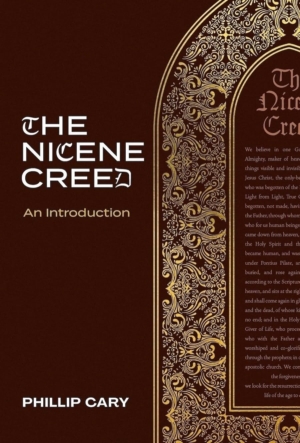
As 2025 draws to a close, you may know by now that this is the 1,700th anniversary of the promulgation of the creed of the Council of Nicaea in AD 325. This was a monumental event, first because the Council of Nicaea . . . Continue reading →
Being included into the visible, Christ-confessing covenant community (the church) is only the beginning of the story of our Christian life. There is still the living of the Christian life. As the Reformed churches understand Scripture, the church is essential to the . . . Continue reading →

When discussing the success of Mormons, who prefer to be known as Latter Day Saints, in spreading their religion, people point to four points of persuasion: They have good families. They are nice people. They have had an intense religious experience. They . . . Continue reading →

You have probably seen the recent television commercial starring Saturday Night Live’s Pete Davidson in which Davidson is talking to an AI bot about whether he should change his name. He floats a couple of possibilities to the bot but ultimately decides . . . Continue reading →
“So the Father is God, the Son is God, and the Holy Ghost is God. And yet they are not three Gods, but one God” (Athanasian Creed). How can God be truly one and also three distinct, co-eternal subsistences or persons is a mystery; and yet we are bound to say that he is. Continue reading →
“Hear, O Israel, the Lord our God, the Lord is one!” (Deut 6:4) In contrast to the polytheistic religions of her neighbors, Israel was made deeply conscious of the fact that there is only one God (hence, the term, monotheism). The monotheistic . . . Continue reading →
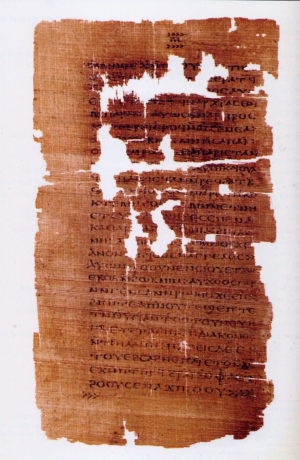
If you ever want to get the ear of a crowd just whisper these words: I have a secret. The crowd will come to order quickly and listen with rapt attention. It is almost as if we are wired to hear secrets. . . . Continue reading →

One of my favorite radio programs is This American Life starring Ira Glass. I stumbled across this show several years ago, and for a while I did not understand why I was so attracted to it. Glass does not have a classic . . . Continue reading →
There was a time when most of the world was outside the promises and people of God (Eph 2:12). From the formation of the national Israelite church under Moses, the world was, from the biblical perspective, divided between Jews and Gentiles. The temporary ceremonial and judicial laws, which were fulfilled by Christ and which expired with and were abrogated by his death (Acts 10 [all]), taught that not only certain foods were unclean (and illegal) and defiling but also that whole people groups were also unclean and defiling. Since the Lord instituted the sacrament of circumcision under Abraham (Gen 17:9–14) the Jewish church had been literally and figuratively cut off from the surrounding Gentile religions. Continue reading →
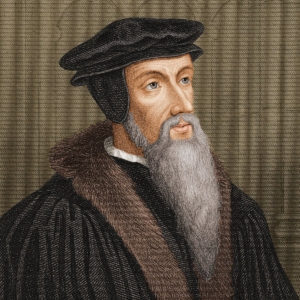
In 2007, a prominent evangelical (Bible church) pastor suggested that were Calvin alive today he would be premillennial and that true Calvinists should be (pre-trib, Dispensational) premillennialists.1 Some of us were a little surprised about this breakthrough in Calvin studies coming from . . . Continue reading →
There are Christian traditions that speak of Jesus’ death as primarily an example and there are those that speak exclusively of Jesus’ death relative to his victory over death but the most basic choice we must make is whether he died as . . . Continue reading →

We confess sola gratia (by grace alone) and sola fide (through faith alone), as the response to the Romanist doctrine that we are justified and saved by the infusion of a medicinal substance (which they call grace), with which we are said to cooperate unto sanctification and thence, eventually, to justification. No, salvation (deliverance from the wrath to come, righteousness with God, and progressive sanctification) is God’s free gift. Grace is not a medicinal substance with which we are infused. It is God’s favor merited for us by Christ’s perfect righteousness earned for us and freely imputed to us by God. Faith is not a virtue formed by love but the gift of God with which we freely receive, rest in, and trust Christ and all of his righteous and suffering obedience for us. Continue reading →
For a fellow who has been dead since 1564 and for a movement that, socially considered, is little more than a demographic blip (about 600,000 people in North America) Calvin and Calvinism continue to receive a remarkable amount of attention in the . . . Continue reading →
Since salvation belongs to God, it is he who grants us new life and true faith. As a consequence of the fall, all of Adam’s children (Rom 5:12–21) are, as Paul says, “dead in sins and trespasses” (Eph 2:1). The good news can be expressed in two words: “But God . . .” Continue reading →

One of the most frequent claims made in defense of the self-described Federal Vision (hereafter FV) is the claim that they are “only following the Bible.” A corollary of that is the claim that Reformed confessionalists “have already decided in advance what . . . Continue reading →