William Whittaker Contra Lent

“But you tell us, why we do so much avoid the Fathers.” I had rather you would tell us why you do so carefully avoid the Scriptures. “For” (say you) “they that cannot away with set times of Fasting, must needs be . . . Continue reading →

Richard Sibbes Contra Lent

Some make a mockery of the holy things of God. One part of the year they will be holy; a rotten, foolish affection of people that are popish. In Lent they will use a little austerity, oh! they will please God wondrously! . . . Continue reading →

William Perkins On General Equity

But touching other nations and specially Christian Commonwealths in these days, the case is otherwise. Some are of the opinion that the whole judicial law is wholly abolished and some again run to the other extreme, holding that the judicial laws bind . . . Continue reading →

Engaging With 1689

Recently I had opportunity to engage in a friendly dialogue with some Baptist academics over the merits of the project proposed in Recovering the Reformed Confession. That project is, as they say, wending through the publication process. Because of space limitations I was unable to do a couple of things, namely, to engage more fully with some of the texts and approaches to Baptist covenant theology (as distinct from Reformed covenant theology). Continue reading →

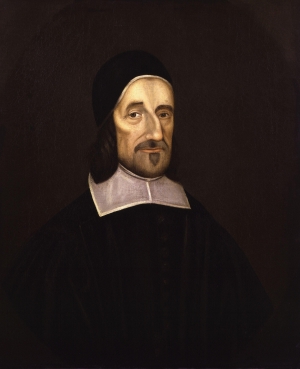
Richard Baxter On Initial And Final Justification Through Faith And Works

The magisterial Protestant churches (i.e., the Lutheran and Reformed) and their theologians did not speak of, teach, or confess a “two-stage” doctrine of justification or even a “two-stage” doctrine of salvation (justification, sanctification, and glorification). Yet, today, one sees leading evangelical and . . . Continue reading →