
86. Since then we are redeemed from our misery by grace through Christ, without any merit of ours, why should we do good works? Because Christ, having redeemed us by His blood, also renews us by His Holy Spirit after His own . . . Continue reading →
Sola Gratia
What The Heidelberg Liturgy Teaches Us About Grace, Faith, And Sanctification

The medievals had a saying: the law of praying is the law of believing (lex orandi, lex credendi). By it they meant to say that what we do in worship affects our theology. If you want to change theology of the future change . . . Continue reading →
Strangers And Aliens (3): The Good News Of The Salvation Has Now Been Announced (1 Peter 1:10–12)

What is the central unifying narrative thread in the history of redemption? For many American evangelicals the default answer to this question is: national Israel. For them it is a mark of faithfulness to Scripture to assume that the central, unifying thread . . . Continue reading →
John Brown of Haddington On Conditions In The Covenant Of Grace
When condition is improperly taken, and signifies no more than what particular duties as performed must, in the order of nature, precede the enjoyment of particular promised benefits, many things may be called conditions; for holiness must precede eternal happiness…. True repentance . . . Continue reading →
The Question Is Not Whether But Why?
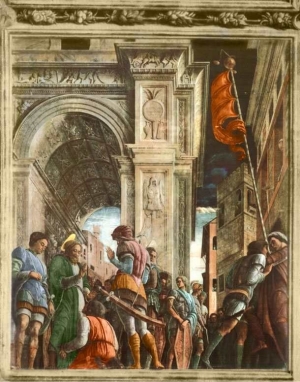
Do Reformed Christians ignore the Epistle of James? Particularly, have those who confess the Reformed theology, piety, and practice been guilty of ignoring James’ teaching in 2:14–17. Whether James has been ignored in recent years is a difficult assessment to make. How . . . Continue reading →
The Principal Acts Of Saving Faith
…the principal acts of saving faith are accepting, receiving, and resting upon Christ alone for justification, sanctification, and eternal life, by virtue of the covenant of grace. —Westminster Confession of Faith 14.2
Witsius: The Law Of Works And The Law Of Faith Are Antecedent And Consequent Conditions
Disputing in his Panstrat. vol. iii. book xv. chap. iii. against Bellarmine, [Chamier] teaches that the true and determinate difference between the law of works and that of faith, is the condition of works and of faith; that is, that the law . . . Continue reading →
What The Socinians Denied And Taught On Faith And Justification
1. That justifying faith, or that faith whereby we are justified, is our receiving of Christ as our Lord and Saviour, trusting in him and yielding obedience to him. 2. That faith, in justifying, is not to be considered as a hand . . . Continue reading →
The Logic Of Fruit As Evidence (1)

The Patristic Period One of the earliest concerns of the Christian church, beginning with the apostles and intensifying through the patristic and medieval periods, was that those who profess the Christian faith should live in a way befitting their profession of faith. . . . Continue reading →
Does Hebrews 12:4 Teach Sanctification Through Works?

The argument is being made that Hebrews 12:4 teaches us that sanctification is resisting sin, which involves our free cooperation with grace, ergo sanctification is not by faith alone (sola fide). Once more, there is no question whether believers must be sanctified and whether they must resist sin. The question is whether our sanctification and our resisting sin is a part of the instrument of our salvation or whether it contributes to our salvation or whether our resisting of sin is the consequence and evidence of our gracious salvation. Continue reading →
Goodwin: Salvation Is Through Faith Alone But Good Works Are A Necessary Consequence
God requires humiliation indeed afore, because men will not believe else; and he requires obedience after, as that which necessarily follows upon faith, so as a man cannot truly believe but it will follow, as heat follows light. Yet, upon believing, the . . . Continue reading →
Perkins: As Signs Thereof
Nothing within man, and nothing that man can do, either in nature, or by grace, concurreth to the act of justification before God, as any cause thereof, either efficient, material, formal, or final, but faith alone; all other gifts and graces, as . . . Continue reading →
Goodwin: Faith Is The Alone Condition Of The Covenant Of Grace
When we are in the state of salvation, faith doth all; for whenas all graces else would soon be overcome and cast out again by lusts, and would soon be tripped up from off their standing, faith is able to keep its . . . Continue reading →
Witsius: Works Are Necessary Effects And Evidences Of Salvation
For because Paul had taught, that a man is justified by faith without works, hence some inferred, that in whatever manner a man live, it, equally suffices, that he persuade himself that Christ is his Saviour. Which they could have inferred with . . . Continue reading →
Berkhof: Perseverance Is By Grace Alone Through Faith Alone
The doctrine of perseverance may also be proved in an inferential way. a. From the doctrine of election. Election does not merely mean that some will be favored with certain external privileges and may be saved, if they do their duty, but . . . Continue reading →
Godfrey: Salvation Sola Fide Vs Salvation By Faith Formed By Love
The medieval church consistently taught that faith, in its essence, was simply or implicitly a mental category or habit to which the believer must assent, fides informis. Thomas Aquinas wrote, “Hence if anyone wishes to reduce these words to the form of . . . Continue reading →
Machen: Salvation Is By Grace Alone Through Faith Alone
If Christ provides only a part of our salvation, leaving us to provide the rest, then we are still hopeless under the load of sin. For no matter how small the gap which must be bridged before salvation can be attained, the . . . Continue reading →
Heidelberg 126: Justified Sinners Pray For Forgiveness Of Sins

One of the most persistent temptations Christians face is that of turning the covenant of grace into a covenant of works. As we pray we must always be reminded that we, who trust in Jesus Christ as our substitute and Mediator, are . . . Continue reading →
No Compromise On The Imputation Of Christ’s Active Obedience

Recently I had the pleasure of talking with Mike Abendroth, Senior Pastor of Bethlehem Bible Church (West Boylston, MA) and the host of No Compromise Radio. We talked about the importance of the biblical doctrine of the imputation to the believer of . . . Continue reading →
Heidelberg 65: Faith, Union With Christ, And The Means Of Grace (2)

65. Since then we are made partakers of Christ and all His benefits by faith only, whence comes this faith? The Holy Spirit works faith in our hearts by the preaching of the Holy Gospel, and confirms it by the use of the . . . Continue reading →