I. The law given by Moses is usually distinguished into three species: moral (treating of morals or of perpetual duties towards God and our neighbor); ceremonial (of the ceremonies or rites about the sacred things to be observed under the Old Testament); . . . Continue reading →
Moral Law
Heidelberg 114: Between Moralism And Antinomianism (2)

Paul was not a Gnostic, a Valentinian, an Anabaptist, a Familist, nor an Antinomian. He was a sinner saved and justified freely through faith alone, a Christian living in union and communion with Christ, seeking to bring his life into conformity to all of God’s holy moral law. Continue reading →
Heidelberg 114: Between Moralism And Antinomianism (1)
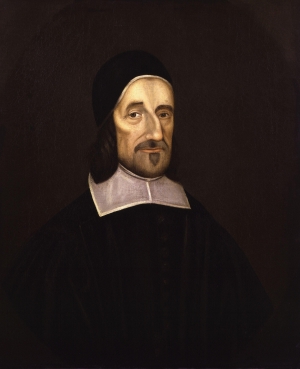
Judged by the mainstream of Reformed theology and particularly by confession of by the Reformed Churches, Richard Baxter (1615–91) was not Reformed. Remarkably, because many are not aware of what Baxter taught about the central issue of the Reformation, the article by . . . Continue reading →
Heidelberg 113: Being Content

In a world in which we seem to be surrounded by death and corruption, it is most difficult to imagine what it must have been like to be without sin but we were created “in righteousness and true holiness.” We were not . . . Continue reading →
Heidelberg 112: Your Speech Shall Accord With Objective Reality

In the garden the Evil One began by questioning the veracity of God’s Word: “Has God really said, ‘You shall not eat of any tree in the garden’?” (Gen 3:1b). The woman collaborated with the Evil One by adding to the Lord’s . . . Continue reading →
Heidelberg 110–111: You Shall Not Steal

The eighth commandment says: “You shall not steal” (Exod 20:15). I recall following Mom down the grocery aisle and picking grapes as a I went. I was probably 5 or 6. I saw the grapes. They looked good and I wanted some. . . . Continue reading →
Heidelberg 108–109: You Were Bought With A Price (2)

God’s Word is very clear about sexual immorality. Leviticus 18 illustrates how God views sexual immorality. It prohibits adultery and moves immediately in the next verse to warn against not offering one’s children to Molech, to a prohibition against male homosexuality, which . . . Continue reading →
Heidelberg 108–109: You Were Bought With A Price (1)
In reaction to the latest phase of the sexual revolution, in response to the discovery by a 5–4 majority of the Supreme Court of the United States of “right” to same-sex marriage, in reaction to the rise of a militant “transgender” (transsexual) movement and the normalization of homosexuality generally, it has become accepted wisdom in some quarters that sexual sin is no different than any other sin. Continue reading →
Heidelberg 105–107: You Shall Not Murder (2)

Imagine four American states utterly vacant. Since 1973 Americans have killed as many people as were killed during World War II. Continue reading →
Heidelberg 105–107: You Shall Not Murder (1)

The equivocal translation “you shall not kill” is a little confusing but it is odd that people should think that “you shall not kill” would be absolute. The very same Torah teaches that sometimes, in some cases, some people are to be put to death. This was taught even before the law given to Moses at Sinai. Continue reading →
Heidelberg 104: Authority And Submission (3)

Nevertheless, despite all our natural resistance to authority and despite our suspicion of the church the fact is that our Lord Jesus, whom we profess to love and whose Word we profess to believe, instituted the very visible church against which we so easily rebel. Continue reading →
Heidelberg 104: Authority And Submission (2)

In the first part we considered the most basic teaching of the fifth commandment. There are, however, several implications of this commandment on which the New Testament reflects explicitly. For example, the Apostle Paul spoke directly to the relationship between employers and . . . Continue reading →
Heidelberg 104: Authority And Submission

In the fall Adam chose to exercise autonomy, to rebel against God. Since the fall humans have carried on Adam’s ignominious tradition. Cain rebelled against worshiping God truly and, in a jealous rage, murdered his brother who did worship God truly. We, . . . Continue reading →
Heidelberg 103: The Christian Sabbath (3)

103. What does God require in the fourth Commandment? In the first place, God wills that the ministry of the Gospel and schools be maintained, and that I, especially on the day of rest, diligently attend church, to learn the Word of . . . Continue reading →
Heidelberg 103: The Christian Sabbath (2)

There are three parts to the Christian faith: theology, piety, and practice. Theology is what we confess and teach the Scriptures to reveal. Piety is our relation to God and practice is the practical outworking of those things. There is a Reformed . . . Continue reading →
Heidelberg 103: The Christian Sabbath (1)
If there was a time when the church needed to stop its business, to rest, to worship, and to set aside time for the care of the poor in their midst, that time is now. At no time in its history has . . . Continue reading →
Heidelberg 99–100: Sanctifying The Lord’s Name

In 2013 there was a court case in Miami in which a teen-ager was sentenced to 30 days for showing disrespect to a judge and to the court. The defendant did not seem to be able to comprehend that she was in . . . Continue reading →
Heidelberg 96–98: Worshiping The True God Truly (2)

The regulative principle of worship, however, does distinguish confession Reformed and Presbyterian churches from the broad evangelical traditions, many of whom are descended from the Pietists and the Anabaptists. The confessional Lutheran churches, the Anglican church, and the Romanists all operate on the normative principle. That principle works for many things in daily life. May one cross this street? Yes, certainly. It is not forbidden. The regulative principle, however, does not work for daily life. “Must I cross this street?” It was never intended to applied to daily life, outside of public worship. In the same way, the normative principle does not work for public worship. Continue reading →
Heidelberg 96–98: Worshiping The True God Truly (1)

Few topics are more incendiary in the church than that of public worship. Yet no topic is more important to the Christian faith and life than public worship. This is a recipe for a crisis, which is where we find ourselves. Feelings . . . Continue reading →
Heidelberg 94 and 95: What Does God Require In The First Commandment?

On one level it’s easy to tell the difference between idols and the God who is. We did not fabricate him and we cannot change or kill him. He just is (Gen 1:1; Exodus 3:14). Idols, on the other hand, are not necessarily. An idol might exist or it might not exist. Its existence, as such, is contingent upon the will of its human creator. Of course, we confess with the Apostle Paul that “an idol has no real existence” (1 Cor 8:4). Whether we fabricate them with our hands, in our minds, or in our hearts, idols change. They come and go. When they disappoint us, we chuck them and make another hoping for a better outcome. Continue reading →